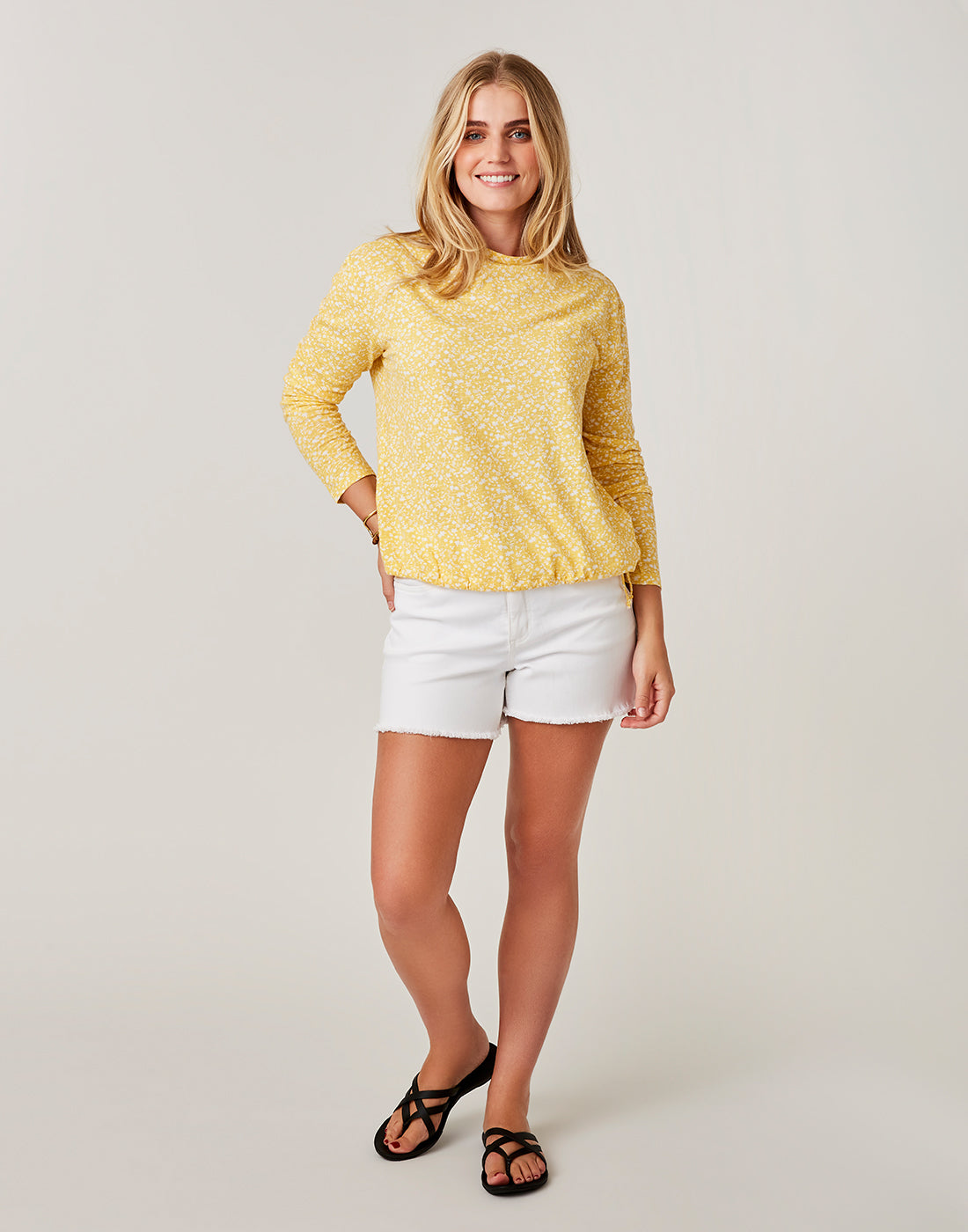
Four-inch shorts are shorts with an inseam that measures approximately four inches from the crotch seam to the leg opening, measured along the inside leg seam. That number describes the length of the leg, not the rise of the waistband or the total length of the garment. On many women, a four-inch inseam lands around the upper to middle thigh, although the exact placement depends on height, leg proportions, rise, and how the shorts sit on the body. The appeal is straightforward: a shorter silhouette with a little room between a barely-there hem and a longer, more covered cut. For everyday wear, that can mean shorts that feel equally at home on a neighborhood walk, at a picnic table, or tucked into a travel bag beside a favorite tee. The category spans different fabrics and constructions, so inseam alone does not determine how a pair feels or what it does best. Denim offers familiar texture and structure, twill can create a cleaner, more tailored look, and soft woven fabrics can give the same length an easy drape. Athletic versions may use stretch fabrics, liners, or shaped hems for particular activities, but a four-inch length does not automatically make a pair suitable for running, swimming, or training. Those uses depend on the fabric and design. For casual outfits, four-inch shorts work with simple tanks, relaxed button-downs, and tees that can be tucked, half-tucked, or left loose. A fitted top balances a roomier leg, while an easy shirt softens a more structured short. Sneakers keep the look ready for a day on foot; flat sandals make it feel a little more unhurried. The length leaves plenty of room for personal style without requiring an elaborate outfit formula. Think less planning in front of the closet and more time getting on with the day, whether that means a coffee stop, a gallery visit, or the scenic route back to the car.
Fit makes the biggest difference in how four-inch shorts wear beyond the first try-on. A high rise places the waistband farther up the torso, while a mid-rise fit sits lower; neither changes the stated inseam, but each affects the overall silhouette and where the hem falls. Two pairs with the same inseam can therefore look noticeably different. Waist and hip proportions, the shape of the seat, and the width of the leg opening all matter. A waistband should feel secure without digging in when seated, and the fabric across the hips should have enough ease for a comfortable stride. Pulling at the front pockets, pronounced tension across the seat, or hems that continually climb can suggest that a different size or cut would feel better. A relaxed leg opening allows space around the thigh, while a closer cut follows the body more closely; the better choice is the one that supports the intended activity and feels comfortable. Sitting down, taking a few longer steps, and bending to tie a shoe reveal more than standing still in front of a mirror. For an online purchase, comparing the size chart with body measurements and checking a well-loved pair of shorts can help put the numbers in context. Measure that familiar pair flat along the inside seam rather than estimating from the outer edge. Fabric then adds another layer to fit. Rigid denim usually feels more structured, whereas denim with a small amount of stretch can offer more give through the hips and seat. For that particular fabric and length combination,
4 inch denim shorts bring the familiar character of jeans to a shorter silhouette. Cotton twill can feel smooth and substantial, linen blends often have a more textured surface and relaxed drape, and some synthetic blends are designed to dry more readily. Fiber content, weave, fabric weight, and finishing all influence the result, so a fabric name alone is not a complete picture of softness, stretch, or performance.
Practical details help distinguish shorts that simply look good from shorts that earn repeat wear. Pockets deserve a closer look, especially for anyone who likes to leave a bag behind for a quick errand. A shallow pocket may hold a small key but let a phone shift when seated, while deeper pockets or secure closures can be useful when carrying essentials. Pocket placement also affects how the fabric lies across the hips. A zip-and-button closure gives a familiar, structured feel; an elastic waist or adjustable drawcord can offer flexibility, depending on the construction. Flat, neatly finished seams help reduce bulk, and reinforced stitching at stress points can support durability. None of those details replaces choosing the right shorts for the activity. Casual four-inch shorts can suit everyday walking, sightseeing, and relaxed outings, but sustained exercise may call for purpose-built fabric and a cut tested for repetitive motion. Anyone who prefers coverage where the thighs touch may find a longer inseam more comfortable for extended walks. Personal comfort is a better benchmark than a length label. Care also plays a part in keeping the fit and finish enjoyable over time. Follow the care label first, since denim, cotton blends, linen blends, and stretch fabrics can need different treatment. When the label allows, washing with similar colors, using a gentle detergent, and avoiding unnecessary high heat can help protect color and fabric integrity. Empty pockets before washing, address marks promptly according to the fabric’s care directions, and avoid repeatedly overdrying stretch styles. Small repairs, such as securing a loose button or catching an unraveling seam early, can keep an otherwise dependable pair in rotation. For a gift, four-inch shorts make the most sense when the recipient’s preferred rise, size, and inseam are already familiar; fit is personal, even with an everyday staple. A thoughtfully chosen pair should feel like an easy addition to an existing wardrobe, ready to accompany the tops, shoes, and routines someone already loves.