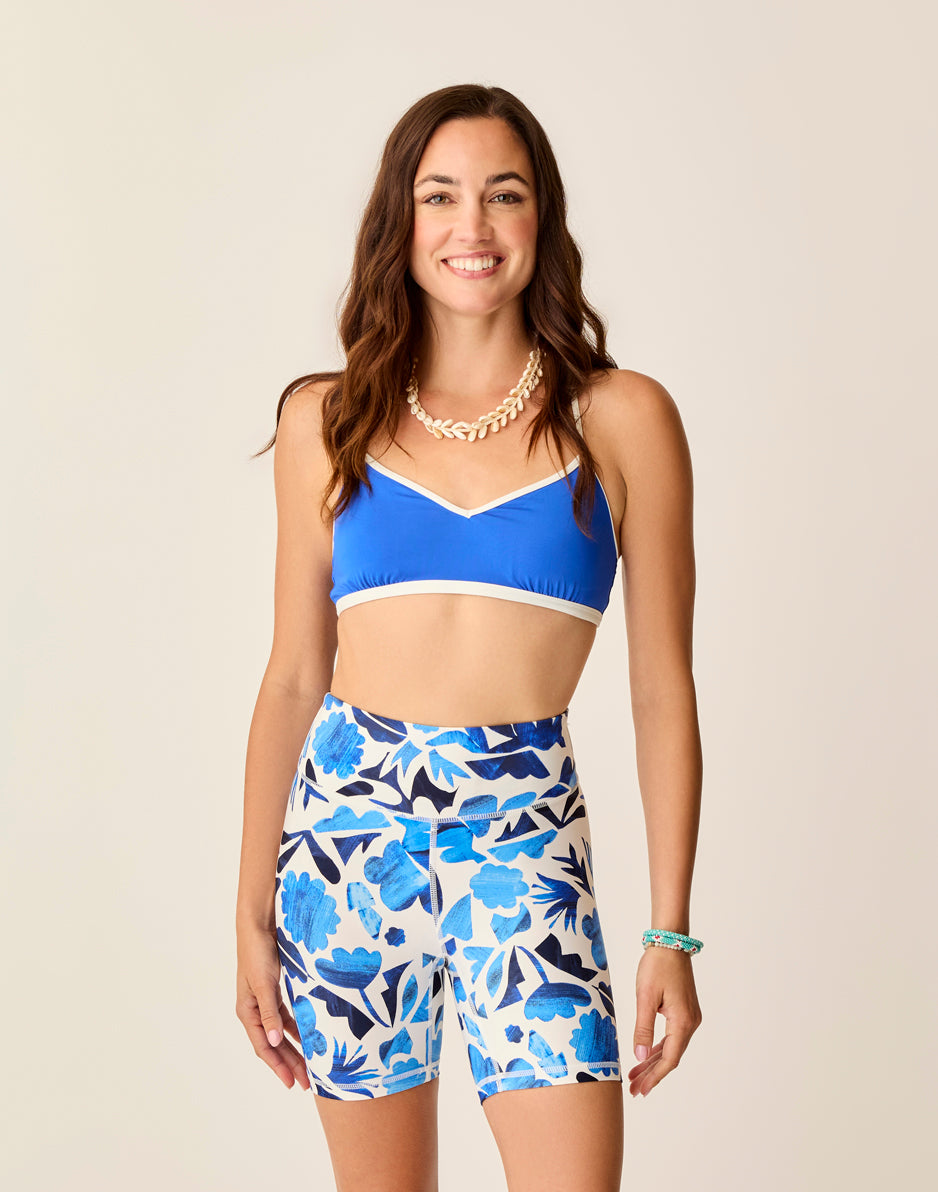
Activewear for petite women is designed with more than a shorter pant length in mind. Petite proportions can include a shorter inseam, a smaller distance from shoulder to waist, a shorter rise, and sleeves or hems that need a little less room to land comfortably. The right fit should feel balanced from every angle, whether you are stretching on a studio mat, walking a wooded trail, commuting by bike, or fitting in a quick workout before the rest of the day begins. When comparing activewear, start with the size chart rather than relying on your usual size alone. Look for petite or short sizing when available, and pay close attention to inseam measurements. An inseam around 23 inches often creates a cropped or 7/8 length on a petite frame, landing near the ankle or lower calf without overwhelming the leg. A 25- to 26-inch inseam may offer a true full-length fit for many women under 5'4", though your proportions and preferred coverage matter just as much as height. If you are between lengths, consider how you plan to wear the garment: a shorter cut can feel especially easy for studio workouts and warmer days, while a longer length may provide extra coverage during outdoor walks or cooler-weather layering. A well-fitting hem should stay clear of the floor, shoes, and bicycle pedals, with no excess fabric pooling around the ankle. The same thoughtful approach applies to the waistband and rise. High-rise and extra-high-rise styles can offer comfortable support, but petite women with shorter torsos may prefer a rise that sits securely without reaching too far up the ribs. A waistband should lie flat when you bend, squat, or sit, and it should feel held in place rather than tight enough to distract you from your movement. Look for flexible stretch, a smooth finish, and fabric that recovers after wear so your activewear keeps its shape through warmups, errands, and the occasional extended coffee stop.
The best activewear for petite women works with the rhythm of real life instead of reserving itself for one kind of workout. Breathable, moisture-managing fabrics can help during a brisk run or an indoor class, while soft stretch and a gentle hand feel make a piece just as useful for long walks, travel days, light hikes, and weekends spent moving between home and the outdoors. Consider the level of support, coverage, and compression that feels right for your routine. A more supportive fit can be helpful for running, jumping, and higher-impact training, while a lighter, flexible feel may be preferable for yoga, Pilates, strength work, or everyday layering. Details matter on a petite frame because there is less extra length to disguise an awkward seam or misplaced pocket. Check that pockets sit where you can reach them easily, shoulder seams rest close to the shoulder edge, and armholes allow movement without gaping. Tops should offer enough length to stay tucked or comfortably overlap the waistband without bunching at the waist. Layers should be easy to add as temperatures shift, especially during the cooler months when an early walk may begin in crisp air and end in soft afternoon warmth. A lightweight outer layer, a comfortable base, and bottoms that move easily can carry you from a neighborhood loop to a grocery run without requiring a full outfit change. Fabric care is another practical consideration. If you plan to wear activewear often, choose durable materials that can handle regular washing, and follow the care instructions to preserve stretch, color, and softness. Washing with similar fabrics, avoiding unnecessary heat, and allowing pieces to air dry when possible can help extend their useful life. For a more complete warm-weather wardrobe, petite shoppers may also appreciate the proportions and coverage found in
Swimwear For Petites, particularly for days that move from a morning workout to time near the water.
Petite activewear can also make a thoughtful gift for someone whose days are full of motion. It is a practical choice for a friend who has started a walking routine, a family member who enjoys weekend hikes, or a traveler who prefers clothing that can move from the airport to an afternoon outdoors. Since fit preferences vary, a gift card or a carefully chosen size based on the recipient’s measurements can be more useful than guessing from height alone. If you are shopping for yourself, take a moment to notice where your current clothing causes small annoyances: leggings that gather at the ankle, sleeves that cover the hands, a waistband that rolls during a forward fold, or a top that rides up whenever you reach overhead. These details are helpful clues when choosing a better proportion. Petite sizing is not about making a garment smaller in every direction; it is about adjusting the relationship between length, rise, sleeve placement, and overall shape so the clothing feels intentional on your body. Fit should support your plans, whether that means walking beside the water on a bright afternoon, layering for a cool morning trail, stretching at home while dinner simmers, or settling into a travel day with plenty of miles ahead. Look for versatile colors, comfortable textures, and silhouettes that pair naturally with the rest of your wardrobe. When the length is right and the fabric moves with you, activewear becomes one less thing to think about—and leaves more room for the good parts of the day, including muddy shoes, scenic detours, and a well-earned pause afterward.