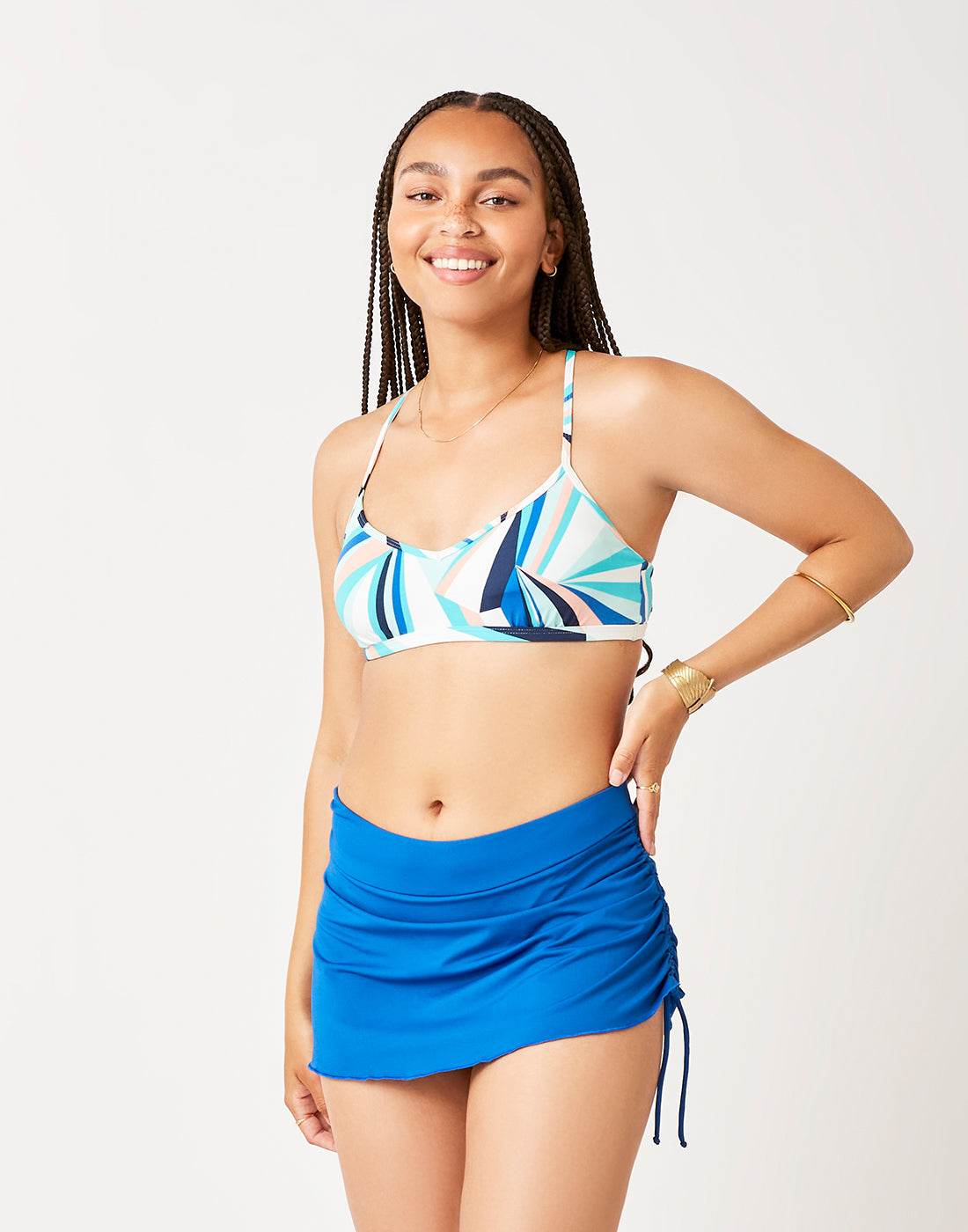
Beach cover-up skirts are lightweight layers worn over swimwear, adding coverage from the waist down without hiding the whole swimsuit. Their appeal is simple: a comfortable layer for the walk from the water to a lounge chair, a little extra coverage at the pool, and an easy way to feel dressed when a beach day wanders onto a shaded patio. The category spans tie-on sarongs, adjustable wrap skirts, pull-on minis, and flowing midi and maxi silhouettes. Each brings a different balance of coverage, movement, and packability. A short sarong leaves legs free for a stroll along the shoreline, while a longer skirt offers more coverage when sitting or stretching out with a book. Wrap styles often have overlapping panels and side ties that let the waistband sit at a comfortable height; pull-on shapes keep things simple with elastic or a drawstring. Side slits and asymmetrical hems can give longer silhouettes room to move, though an open slit or loosely overlapping wrap may reveal more of a swimsuit when walking or catching a breeze. That makes the way a skirt moves just as useful to consider as its length. Sheer mesh and open crochet let a swimsuit remain part of the outfit, while a more opaque woven fabric creates a more covered look. Neither approach needs to be complicated: a bikini top, a skirt, sandals, and a sun hat can carry an afternoon quite nicely. For lunch away from the pool, an opaque skirt paired with a separate top may feel more appropriate, depending on the setting. Beach cover-up skirts are primarily made for time beside the water rather than swimming itself, unless their construction and care information say otherwise. They suit poolside readers, shoreline wanderers, vacation packers, and anyone who likes a separate layer that slips on without a full outfit change. A swimsuit does the swimming; a cover-up skirt handles the sandy path back.
Fabric has a lot to do with how a beach skirt feels through those transitions. Lightweight cotton is breathable and soft, with a relaxed texture that works well for dry lounging and everyday wear, although it can hold moisture after contact with a wet swimsuit. Linen offers an airy feel and a naturally rumpled finish that suits an unstructured beach day. Rayon and viscose often have a fluid drape, giving longer skirts movement without a stiff or bulky shape; their care requirements deserve attention because some constructions need especially gentle handling when wet. Polyester and nylon fabrics can offer relatively quick drying, depending on their weight, knit, and finish. Mesh allows airflow and keeps the swimsuit visible, while crochet adds an open, textured look whose weight and drying time vary with the yarn. An open weave does not automatically mean a fabric will dry quickly, and a lightweight skirt does not necessarily provide rated sun protection. Shade and sunscreen still have their place, with clothing protection best judged by a stated ultraviolet protection rating rather than appearance. When choosing between fabrics, the most useful distinction is often the kind of afternoon ahead: repeated dips in the pool call for different priorities than a dry, breezy lunch overlooking the water. Softness against bare skin matters in either case, especially at the waistband and wherever a tie or seam rests against the hip. Smooth stitching, neatly finished edges, and securely attached ties are practical details that help a frequently worn skirt hold up. Open-knit fabrics can catch on rough benches or bag hardware, while very fine woven fabrics benefit from a little space away from scratchy accessories. For those drawn to lower-impact materials, clearly identified organic cotton or recycled fibers offer more useful information than broad environmental language alone. Fiber content, construction, and a style that earns repeat wear together tell a fuller story. A well-chosen cover-up should feel good beyond the first sunny outing, not just look lovely folded beside a beach towel.
Fit is personal, and the best beach cover-up skirt leaves room to enjoy the day without constant adjusting. Waist measurements and garment measurements are more dependable than a size label alone, particularly when comparing a fitted mini with a generously cut wrap. Adjustable ties make it possible to fine-tune the waist, but the amount of fabric across the hips still determines how much a wrap overlaps. A comfortable fit should allow sitting, stepping up stairs, and bending to retrieve a sandal without the waistband digging in or the front panels pulling apart unexpectedly. Elastic offers easy pull-on wear, while a drawstring can add adjustability; neither needs to feel tight to look polished. Length also changes with height and where the waistband sits. A midi hem may clear a sandy path easily, while a maxi can brush the ground, particularly with flat sandals. For travel, a lightweight skirt that folds small can make room for other layers, and a fabric with a naturally crinkled texture is forgiving after a few hours in a tote. During cooler coastal mornings or breezy evenings,
beach cover-up sweaters add an upper layer while keeping that relaxed, waterside feel. A skirt can also make a thoughtful gift for someone planning a beach getaway, especially when their preferred length, coverage, and waist size are known. Keeping it ready for the next outing starts with the care label: some fabrics tolerate machine washing, while others need hand washing or a gentler drying method. Salt, chlorine, sunscreen, and body oils can affect fabric over time, so prompt care according to those directions helps protect its feel and finish. Damp skirts are better dried as directed than left bundled inside a beach bag, and delicate mesh or crochet benefits from protection against snags during washing. Small habits like these help preserve the details that make a cover-up worth reaching for: a soft waistband, an easy drape, and enough freedom to follow the day wherever the shoreline leads.