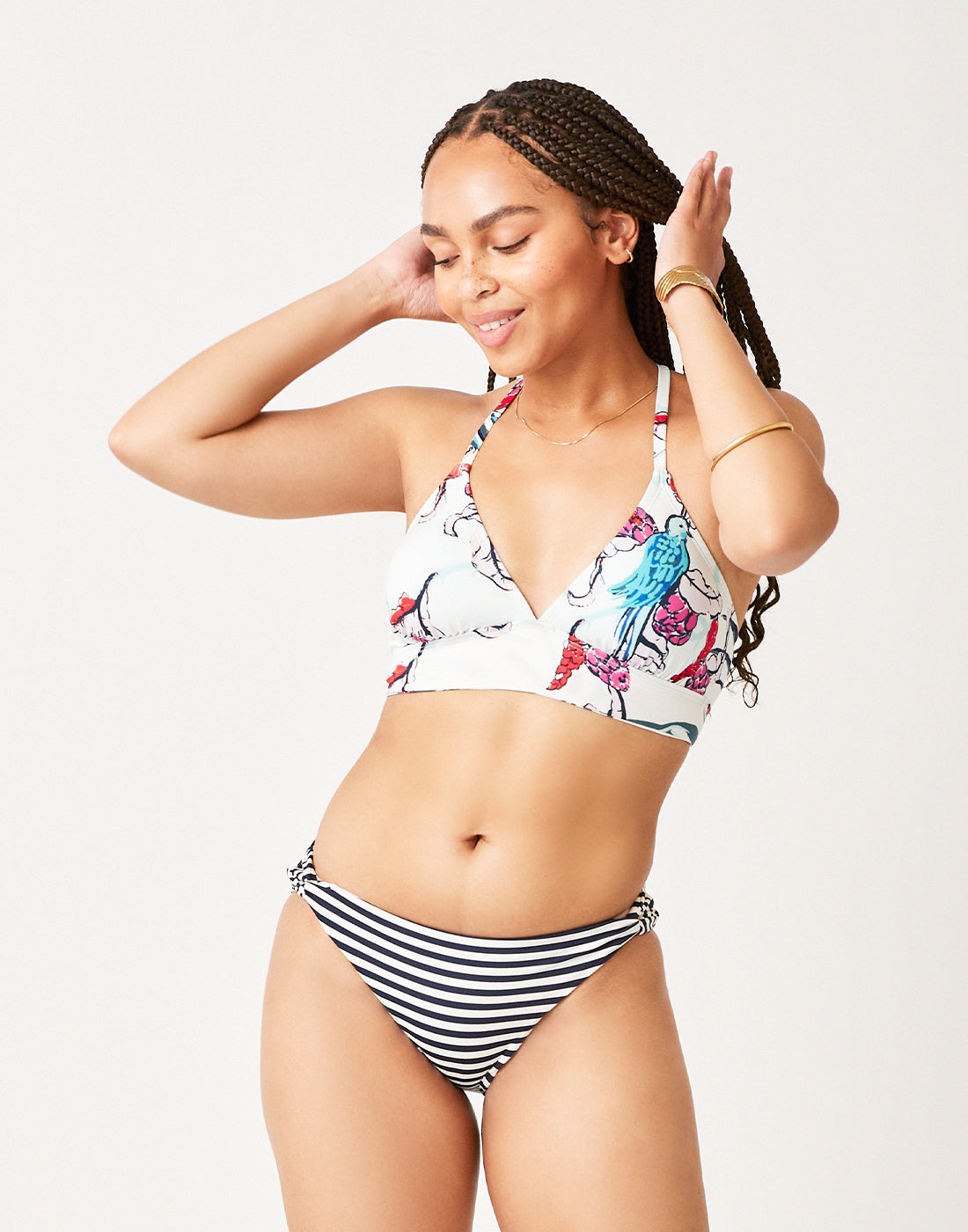
Bikini bottoms for teens are swim separates that come in a range of rises, coverage levels, and waistband designs, allowing for a comfortable fit for swimming, beach games, and pool days. Choosing bottoms separately from a top makes it easier to match different sizes and create a combination that feels personal rather than prescribed. Low-rise styles sit closer to the hips, mid-rise shapes fall between the hips and natural waist, and high-rise bottoms offer more coverage through the waist. Rise and seat coverage are separate details, though: a higher waistband does not automatically mean fuller coverage in back. Looking at both helps create a clearer picture of how a style will feel. Fuller-coverage backs can be appealing for teens who prefer more fabric while diving for a volleyball or climbing onto a paddleboard, while other cuts offer a different balance of coverage and freedom of movement. Neither choice needs to follow a trend; comfort gets the deciding vote. Waistband construction matters just as much as the silhouette. A wider band can distribute pressure across a larger area, while a narrow elastic edge creates a lighter outline. Adjustable ties allow some flexibility, although secure knots and neatly managed ends are worth considering for active swimming. Fixed sides offer a straightforward, pull-on fit without extra ties to adjust. Sizing is best based on the relevant size chart and waist and hip measurements rather than age alone, since teen and adult sizing can vary considerably. The fabric should sit smoothly without pinching, sagging, or requiring constant repositioning. A quick movement check—sitting, bending, reaching, and taking a few steps—can reveal more than standing still in front of a mirror. If the waistband rolls or the leg openings dig in, another size or cut may feel better. The goal is a pair that stays comfortable through the actual day, not just the first try-on. Personal coverage preferences deserve the same attention as measurements, especially when choosing swimwear for someone else.
Fabric and construction influence how bikini bottoms feel in the water and how well they hold their shape afterward. Swim fabrics commonly combine nylon or polyester with elastane, bringing together a smooth surface and the stretch needed for movement. The exact blend, fabric weight, and construction all affect the result, so fiber names alone do not tell the whole story. A fabric with good recovery returns toward its original shape after stretching; that matters when bottoms need to feel secure through repeated swims rather than become loose after a few wears. A soft lining can improve comfort and coverage, while smooth seams help reduce rubbing during longer stretches of activity. Lighter colors and some prints may look different when stretched or wet, making lining and opacity details useful considerations. For frequent pool swimming, look for a stated chlorine-resistance claim rather than assuming every swim fabric handles regular exposure equally well. Similarly, recycled fibers can be a thoughtful material choice when they are identified in the fabric details, but recycled content does not remove the need for careful washing and drying. Intended use can help narrow the shape as much as the fabric. Swim practice, jumping into the pool, and playing in the surf call for a dependable fit with little need for adjustment. Relaxed swims and time spent reading on a towel may leave more room to prioritize a favorite silhouette or color. Pattern and texture bring personality without changing those basic needs: stripes, small-scale prints, and solid colors each offer different ways to pair with a swim top. A textured surface may also feel different against the skin than a smooth knit, so softness remains worth considering. Older teens who wear adult sizes can also explore
Black Bikini Bottoms For Women for a classic color that coordinates with a wide range of tops. Whatever the palette, choosing the bottom and top sizes independently helps keep the focus on fit instead of making a matching set do all the work.
Thoughtful care helps bikini bottoms stay comfortable and ready for the next swim. Rinsing with fresh water soon after use helps remove salt, chlorine, and sand before they linger in the fabric. The care label should always set the routine, but many swim fabrics benefit from gentle hand washing with a small amount of mild detergent. Avoid twisting or wringing, which can put unnecessary stress on stretchy fibers; gently pressing out excess water is a kinder approach. Drying flat in a shaded, ventilated place helps limit exposure to heat and direct sunlight, and a damp pair should not stay bundled in a towel or sealed inside a swim bag for long. A separate pouch is useful for the trip home, followed by an unpacking routine that gives everything a chance to dry. Rough pool edges, concrete benches, and splintered docks can snag or abrade fabric, so sitting on a towel is a simple habit that helps preserve the surface. Sunscreen belongs in the day's routine, too, although allowing it to absorb before dressing can help reduce transfer onto swim fabric. Check the care instructions before trying to treat any marks, since harsh cleaners may affect color or stretch. Over time, a waistband that no longer recovers, thinning fabric, or seams that have begun to separate can signal that a pair is no longer offering its original fit. For teens who swim often, alternating between pairs allows each one to dry fully between outings. When bikini bottoms are a gift, the most useful details are the recipient's preferred rise, coverage, size, and favorite colors—not assumptions based on age or someone else's style. Giving a teen a say in those choices makes the gift more personal and more likely to become a favorite. From a lap at the community pool to an afternoon of paddleboarding, the best match is swimwear that feels easy to move in, simple to care for, and comfortably their own.