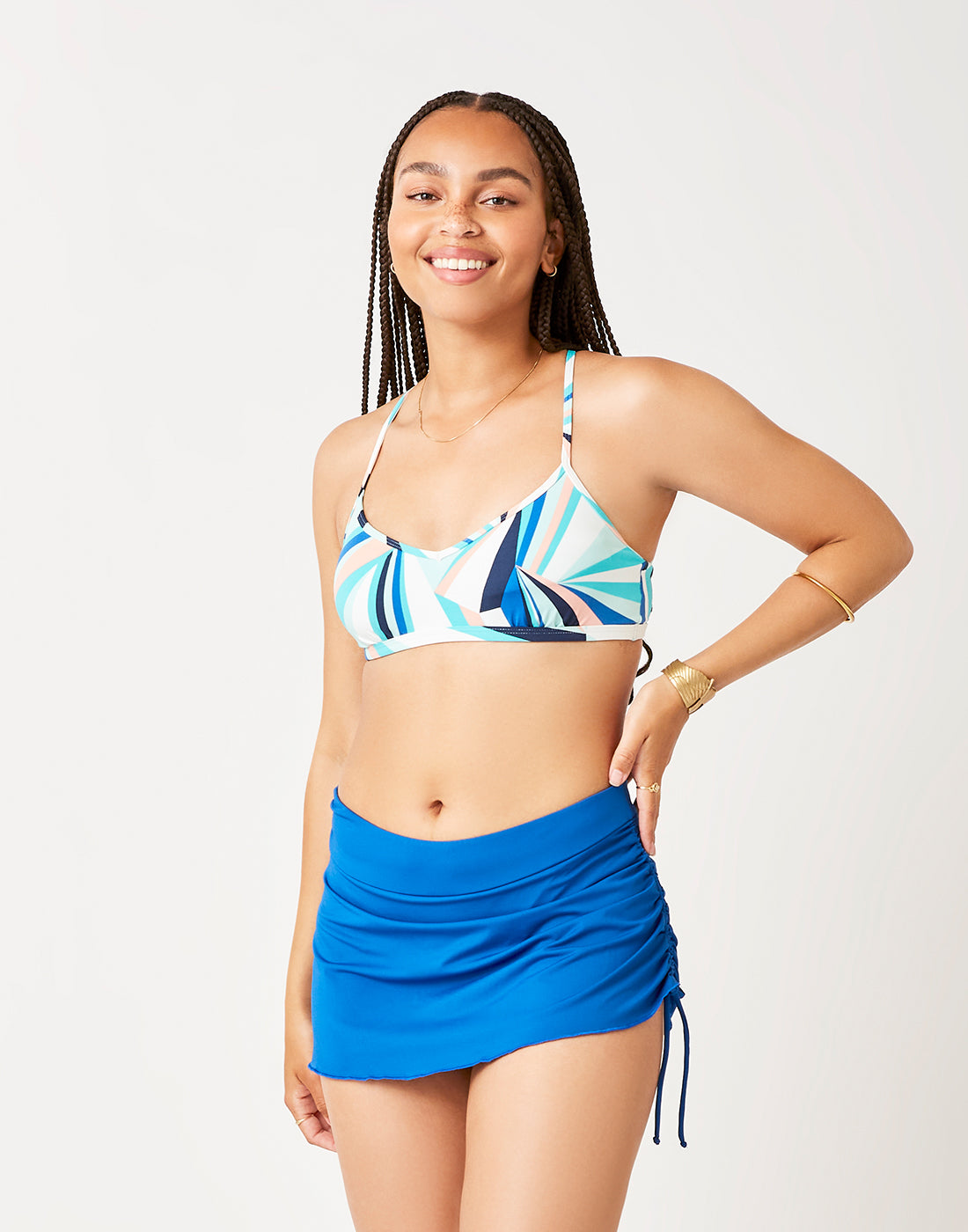
Blue bikini bottoms are swim separates in shades ranging from pale sky and sea-glass blue to bright cobalt and deep navy, with silhouettes that vary in waist height, leg shape, and back coverage. The color feels at home beside a pool or along a rocky shoreline, but its appeal goes beyond the water: blue pairs easily with crisp white, warm coral, leafy prints, and other blues for a swim outfit that feels personal rather than overly coordinated. Navy bikini bottoms offer a classic, understated foundation, while turquoise and aqua bring a brighter, tropical feel. A matching top creates a cohesive look, though mixing shades or pairing a solid bottom with a patterned top leaves plenty of room for individuality. High-waisted bikini bottoms sit higher on the torso and often provide more coverage through the front, with a shape that nods to vintage beach style. Low-rise cuts rest closer to the hips, while mid-rise options fall between the two. These waist heights do not automatically determine back coverage: a high-waisted bottom can still have a cheeky back, and a low-rise style can offer fuller coverage. Likewise, a high-cut leg describes the opening around the thigh, not necessarily how much fabric covers the seat. Side ties allow some adjustment at the hips, while fixed sides create a smoother profile without bows. Fuller-coverage shapes, cheeky cuts, and everything between them serve different preferences rather than different rules about who can wear what. The most useful distinction is how a bottom feels during the day ahead, whether that means stretching out with a paperback, swimming a few easy laps, or carrying a paddleboard down to the beach. During the cooler months, blue swim separates also earn their place in a bag packed for an indoor pool or a warm-weather escape, bringing a little shoreline spirit wherever the water happens to be.
Fabric and construction shape the experience as much as color does. Blue bikini bottoms commonly use nylon or polyester blended with elastane, also called spandex, to provide stretch and help the fabric return to its original shape. The fiber blend matters, but so do the fabric’s weight, knit, lining, and elastic: two bottoms with similar fiber labels can feel quite different against the skin. Smooth fabrics create a clean surface, while ribbed and crinkle textures add dimension without relying on a print. Texture alone does not guarantee greater support, and a thicker feel does not automatically mean better durability. A lining can improve comfort and opacity, especially in lighter blues, although coverage when wet depends on the complete fabric construction. Some swim fabrics contain recycled fibers; the stated fiber content is the place to look for that detail rather than assuming every blue swimsuit shares the same sustainability features. For fit, waist and hip measurements are a useful starting point, followed by the size chart and the cut’s intended coverage. A comfortable waistband should sit securely without digging in, while the leg openings should stay close without pinching. Fabric that pulls sharply across the front, gaps at the back, or repeatedly rolls at the waist may signal that a different size or silhouette would feel better. Sitting, bending, and taking a few steps during a try-on can reveal more than standing still in front of a mirror. A secure fit is particularly helpful for swimming, paddling, and playing at the water’s edge, when repeatedly tugging a bottom back into place is nobody’s idea of relaxation. Ties should hold securely without needing to be pulled painfully tight, and decorative rings or other hardware should rest comfortably rather than press into the hips. For a broader look at shapes beyond a single color family, the
Best Bikini Bottoms collection offers another starting point for finding a silhouette that suits the way the day unfolds.
Thoughtful care helps blue bikini bottoms retain their stretch, color, and comfortable feel through repeated wear. A rinse in cool, fresh water after swimming helps remove salt, chlorine, and other residue before it has time to linger in the fabric. Follow the care label for washing; when hand washing is specified, a mild detergent and gentle handling are kinder to swim fabric than vigorous scrubbing or twisting. Pressing out excess water carefully, rather than wringing the bottom into a tight rope, helps protect elastic fibers. Drying away from direct heat and strong sunlight can also help preserve the fabric, and a swimsuit should be fully dry before it goes back into a drawer or travel bag. A wet bottom left bundled in a towel after a pool visit has little chance to dry properly, even if the rest of the day gets busy. Rough pool edges, textured loungers, and rocky surfaces can snag or abrade fabric, so a towel between the suit and the seat is a small habit with a practical payoff. Sunscreen remains essential for exposed skin; allowing it to absorb before dressing, as directed on its label, may help limit transfer onto the fabric. Frequent pool swimmers may want to look for fabrics specifically described as chlorine resistant, while remembering that resistance is not immunity and regular rinsing still matters. Color also deserves a practical note: blue swimwear can be harder to distinguish against pool water or open water, depending on the shade, light, and surroundings. Swim color is no substitute for attentive supervision, suitable flotation equipment, or safe swimming habits. Beyond care and use, a blue bikini bottom can be a thoughtful gift for someone whose size and preferred rise and coverage are already known, especially when paired with a top they love wearing. The lasting appeal is simple: a versatile color, a comfortable cut, and fabric suited to time in the water make room for more swimming, more lounging, and fewer distractions from either.