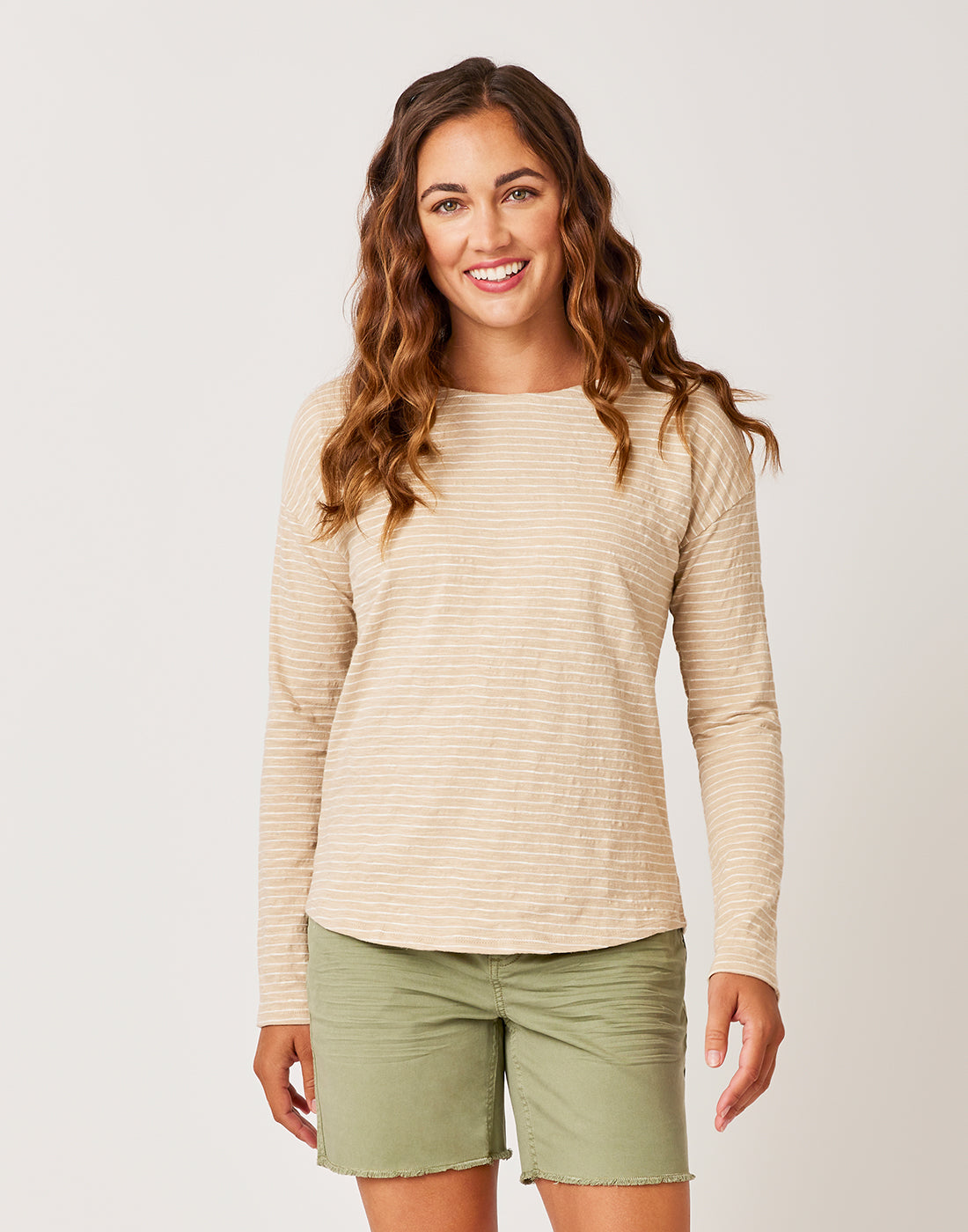
Coastal style clothing brings the ease of life near the water into everyday dressing through relaxed silhouettes, breathable fabrics, and colors borrowed from sand, sea, and sky. Cotton, linen, gauze, and textured knits give this style its soft, tactile character, while cream, sandy beige, washed blue, seafoam, and navy create a palette that feels calm without fading into the background. Nautical stripes add definition; subtle embroidery and open-knit textures bring interest without needing much else. The appeal is less about dressing for a postcard and more about feeling comfortable wherever the day wanders. A morning walk along the harbor, a quiet lunch outdoors, and an afternoon back in town can all call for the same easy balance of softness and structure. Beach-inspired clothing can be airy, but it does not have to be reserved for hot weather or a vacation suitcase. During the cooler months, denser cotton, relaxed denim, and soft knit layers carry that same coastal feeling into crisp mornings and breezy evenings. An open neckline under a warm layer, a gently rolled cuff, or a mix of smooth and nubby fabrics can make an outfit feel considered without looking overly coordinated. Shape matters as much as color: a flowing lower half feels balanced with a closer-fitting top, while a roomier upper layer pairs easily with a straighter silhouette below. There is no need for every detail to announce a nautical theme. One stripe, a faded blue, or the natural texture of linen is often enough. This is clothing for people who like a little breathing room in their day and in their closet, whether home is steps from the shore or several states away. Its versatility comes from familiar shapes that can feel casual with flat sandals, grounded with sneakers, or a little more polished with ankle boots when the air turns cool.
Fabric choice shapes how coastal clothing feels, drapes, and holds up to regular wear. Cotton is breathable and absorbent, making it comfortable for everyday activities, though fabric weight and construction can change its feel considerably. Cotton gauze has a softly crinkled surface and an airy structure, while a denser weave offers more coverage and a firmer outline. Linen is known for its strength and ability to release moisture readily; its natural creases are part of its relaxed appearance rather than something that always needs correcting. A cotton-linen blend can balance that distinctive texture with a softer hand, depending on the weave and proportions. Longer-staple cotton, including Pima, can create a smooth fabric with fewer exposed fiber ends, although yarn quality and care also influence lasting softness. Knit fabrics offer flexibility through their looped construction, and a small amount of stretch fiber can add give to closer-fitting shapes. Organic cotton describes how the cotton was grown, not a guarantee of a particular fit, thickness, or finish, so fiber details are best considered alongside the fabric itself. For cooler days, an airy base beneath a more substantial knit provides adaptable warmth without losing the relaxed look. Open stitches let air pass through, however, and a cozy appearance alone does not mean a layer will block a waterfront wind. Fit deserves the same practical attention. Relaxed should mean room to sit, reach, and walk comfortably, not a neckline that slips or a shoulder seam that pulls. Garment measurements and fabric stretch help clarify how a silhouette will feel beyond a photograph. A waistband should stay comfortable through a seated lunch, sleeves should allow an easy reach for an overhead bag, and a longer hem should clear the ground in the shoes it will be worn with. Pale shades and loose weaves may also look more translucent in bright daylight, making lining, fabric density, and preferred underlayers worth considering.
The lasting appeal of a coastal wardrobe is how easily its pieces settle into real routines. Breathable layers suit a weekend away, relaxed shapes make long travel days more comfortable, and simple colors leave plenty of room for personal touches. For a one-piece approach,
Coastal Dresses bring that same beach-inspired ease to silhouettes that can shift from a casual daytime outing to dinner with a change of shoes and a warmer layer. A flowing shape offers freedom through the hips and legs, while waist definition can come from cut, seams, or an adjustable detail rather than a tight fit. The best choice depends on how the clothing will be used: walking several blocks calls for an unrestricted stride, packing for a getaway favors fabrics with appealing natural texture, and frequent everyday wear rewards sturdy construction and straightforward care. Even an easygoing wardrobe benefits from a little attention at laundry time. The care label takes priority, since fiber blends, dyes, linings, and decorative details can require different handling. When permitted, cool washing and lower drying temperatures can help limit shrinkage and reduce stress on fibers. Separating rough hardware from delicate textures helps prevent snags, and avoiding an overloaded washer gives clothing room to rinse properly. Substantial knits often keep their shape better when dried flat, while woven fabrics may benefit from gentle reshaping before they dry. Salt, sunscreen, and body oils are part of days near the water; treating marks promptly according to the care label helps keep them from settling in. Durability also shows up in even stitching, secure seams, and fabric that suits the activity, not simply in how heavy something feels. Folded storage can spare heavier knits the pull of a hanger, and small repairs can keep a favorite in rotation longer. Coastal clothing can also make a thoughtful gift for someone who enjoys relaxed dressing, travel, or time outdoors, especially when their preferred fit and fabric feel are familiar. Comfort is personal, and the most useful choices make space for it: soft textures, practical layers, and shapes that feel as natural on an ordinary afternoon as they do beside the ocean.