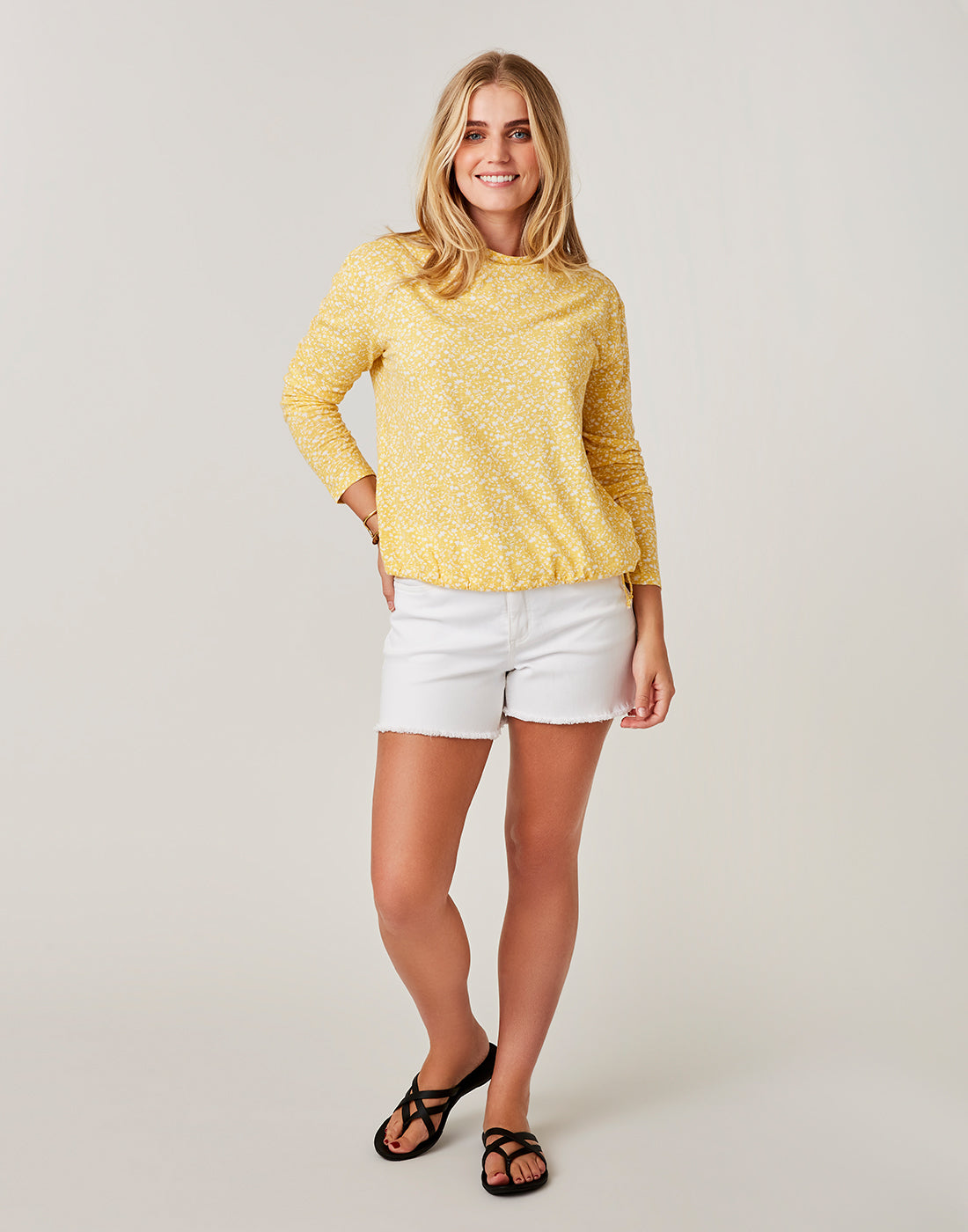
Cut off shorts are casual shorts defined by a cut, unfinished hem, often with soft fraying along the edges. Traditionally made by shortening a pair of jeans, they bring that same easygoing character to ready-made styles, with the fit and proportions designed as shorts from the start. Denim is the classic choice, but cotton twill and other woven fabrics can carry the cut-off look, too. The appeal is in the balance: enough structure to feel put together, enough ease to sit on a picnic blanket, wander a boardwalk, or settle into a favorite café without making an outfit complicated. Raw hems can range from a fine fringe to longer, more noticeable threads, while washes span pale denim, deeper indigo, and neutral shades. Those details change the personality of a pair without changing its everyday usefulness. Fabric composition makes a meaningful difference in how cut off shorts feel and wear. All-cotton denim generally has a more structured feel at first and gradually softens with use, while denim blended with a small amount of elastane offers stretch for bending, sitting, and moving. Cotton twill typically has a smoother surface than denim, giving the same relaxed silhouette a slightly different texture. Fabric weight matters as well: a substantial weave holds its shape differently from a lighter fabric with more drape. Neither approach is automatically better; the right match depends on whether a crisp silhouette or a softer feel sounds more comfortable. Organic cotton, when identified in the fabric details, adds another consideration for shoppers who care about how their clothing fibers are grown. Construction deserves attention alongside fabric. Secure stitching, neatly finished pocket openings, and a sturdy waistband help a deliberately undone hem feel intentional rather than unfinished everywhere. The best everyday appeal comes from that contrast: a little fringe at the edge, with dependable structure where it counts.
Fit gives women’s cut off shorts much of their character, and the rise and inseam are useful starting points. High-rise shorts sit higher on the torso and can pair comfortably with tucked tees, shorter tops, or a button-down tied at the waist. Mid-rise styles sit lower, while low-rise shapes rest closer to the hips; the most comfortable choice is the placement that feels natural when standing and sitting. The waistband should feel secure without digging in, and the fabric across the hips should have enough room for ordinary movement. A short inseam creates a leg-baring silhouette, while a longer inseam offers additional coverage and a different proportion with tops and shoes. Leg openings matter just as much as length. A relaxed opening leaves more space around the thigh, while a closer fit follows the body more closely. With rigid denim, that distinction can be especially noticeable when sitting down or stepping up onto a curb. Stretch denim adds flexibility, but stretch alone does not determine fit; the cut through the seat and thighs still matters. Checking garment measurements against a well-fitting pair can be more useful than relying on a size label alone, especially when trying a different rise or silhouette. Raw edges also deserve a look beyond the stated inseam, since an angled hem or longer fringe can change how the shorts feel against the legs. Styling can stay refreshingly uncomplicated. A soft tank and flat sandals lean beachward, a cotton shirt and sneakers suit a day of exploring, and a simple knit top gives textured denim a cleaner counterpoint. Front pockets are handy for small essentials, although their depth and placement vary by design. For a different shape with a similar relaxed edge,
Cut Off Skirts carry that raw-hem character into an easy skirt silhouette. Both lend themselves to repeat outfits built around familiar pieces, rather than a wardrobe that needs rearranging for every plan.
Care helps cut off shorts keep the qualities that made them appealing in the first place: comfortable fabric, a reliable fit, and a hem with just enough personality. The garment’s care label is the best reference because denim washes, fiber blends, and decorative details can require different handling. When machine washing is recommended, turning shorts inside out and washing with similar colors can help reduce surface abrasion and limit unwanted color transfer. Dark denim deserves particular attention around pale upholstery and lighter clothing, especially before its first few washes. A gentle wash routine and avoiding unnecessary heat can help preserve fabric and stretch fibers, while air drying, when appropriate for the garment, reduces exposure to dryer heat. Cotton may change in feel or fit after laundering, and denim with stretch can respond differently, so drying instructions are worth following rather than assuming every pair behaves alike. Raw hems naturally develop some additional fraying with wear and washing; that evolving edge is part of the look. An occasional long thread can be carefully trimmed with sharp scissors instead of pulled, which can disturb more of the weave. Fraying that reaches beyond the intended hem, loose seams, or damage around pockets calls for a closer look and, when practical, a small repair. Durability is not simply a matter of heavier fabric. Sound construction, a comfortable fit that does not put excessive strain on seams, and thoughtful care all contribute to how well shorts hold up. For travel, their usefulness comes from pairing easily with several tops and fitting into casual plans, from a beach walk to lunch after sightseeing. They can also make a thoughtful gift for someone whose size, preferred rise, and favorite denim feel are already familiar; those personal details matter more than guessing which silhouette looks appealing on a hanger. Ultimately, cut off shorts earn their place through wearability. A pair that feels good while walking, sitting, and getting on with the day brings the effortless character that a raw hem promises, without requiring an outfit to try too hard.