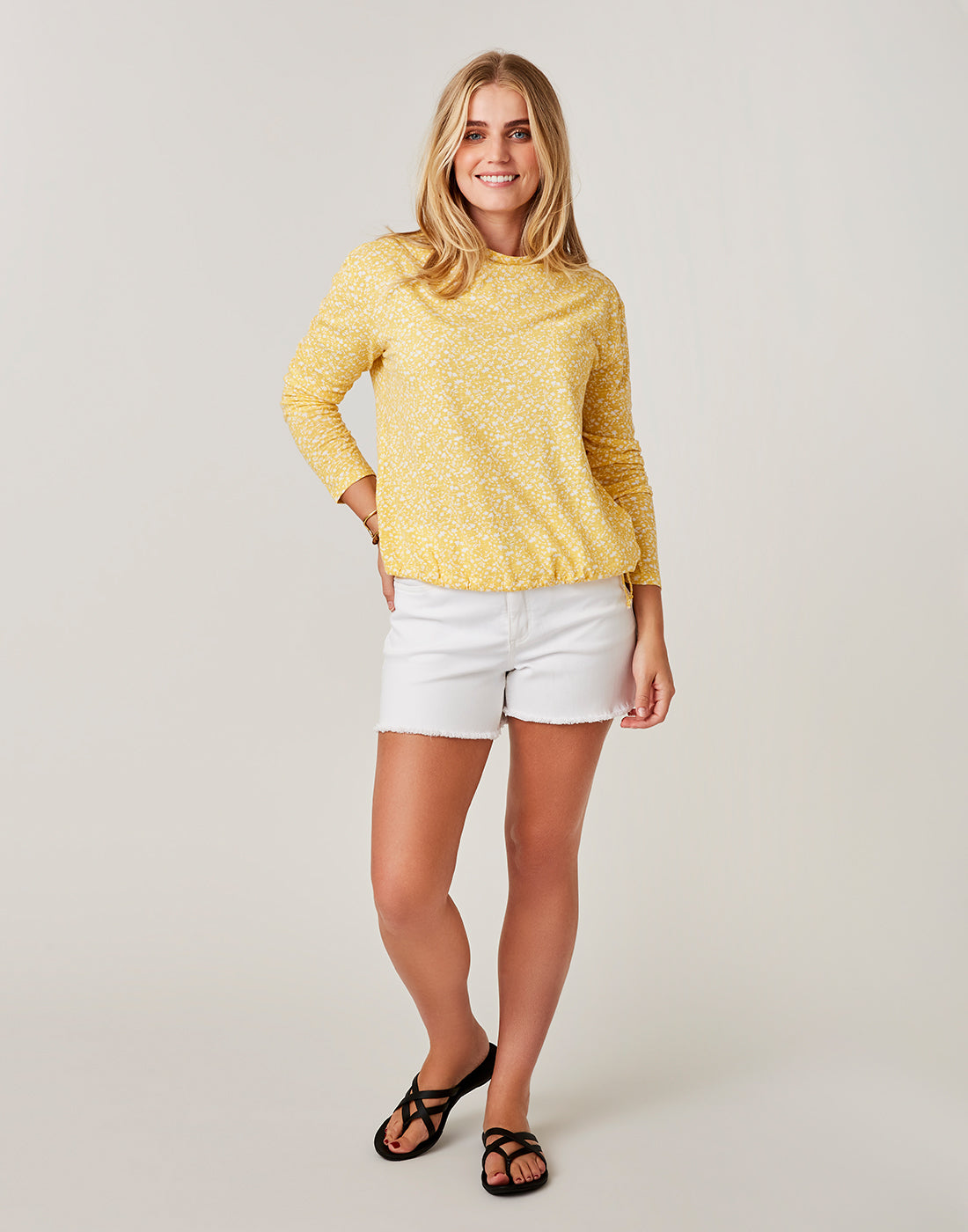
Denim shorts are short-length bottoms made from denim, a sturdy twill fabric traditionally woven from cotton. Also called jean shorts or jorts, they bring the familiar character of jeans to a shorter silhouette, with rises, inseams, washes, and leg shapes that create distinctly different fits. Cutoffs have a raw or frayed hem, while finished hems offer a cleaner edge; either can feel relaxed without looking like an afterthought. Their appeal is partly practical and partly personal: denim has texture, holds its shape, and tends to develop character through repeated wear. A faded wash can feel right at home with a striped tee and canvas sneakers, while a dark, even wash pairs easily with a tucked blouse and leather flats. White or ecru denim offers another approach, giving simple outfits a lighter visual palette without needing much extra styling. For women who move between neighborhood walks, casual lunches, travel days, and time near the water, jean shorts can be an easy foundation rather than a whole outfit to figure out. A pull-on tank, a favorite button-down, or a soft knit changes their mood with very little effort. Details make a difference here: contrast stitching adds definition, tonal stitching looks quieter, and the placement and size of back pockets influence the overall appearance. Front pockets should be useful as well as flattering, especially when the day involves carrying keys or slipping a hand into a pocket between stops. A secure waistband and a comfortable leg opening matter more than a size label alone. The best-fitting denim shorts leave room for ordinary life: sitting cross-legged on a picnic blanket, stepping onto a boat, or settling into the passenger seat for a long drive. They can feel polished, playful, or pleasantly lived-in, depending on the cut and what accompanies them. That versatility gives a familiar piece plenty of room for individual style.
Fit comes from the relationship between rise, inseam, and shape, not just whether a pair buttons. The rise is the distance from the crotch seam to the top of the waistband; a high rise generally sits near the natural waist, a mid-rise sits below it, and a low rise rests closer to the hips. Those descriptions vary by design and body proportions, so measurements are more useful than labels when comparing fits. The inseam runs along the inside leg from the crotch seam to the hem. A shorter inseam leaves more of the thigh uncovered, while a longer inseam adds coverage and changes where the hem meets the leg. The same inseam can look different on two people because height, torso length, and leg proportions all affect the result. For a longer silhouette,
denim Bermuda shorts typically extend toward the knee, creating an alternative to shorter cutoffs while keeping the familiar structure of denim. Straight-leg shapes follow a relatively even line through the thigh, relaxed fits allow extra ease, and gently flared leg openings create more space at the hem. None belongs to just one body type; comfort and personal preference are the useful starting points. A waistband that feels comfortable standing should also allow an easy seated position without digging in. Likewise, enough room through the seat and thigh helps prevent pulling across the front or a hem that continually rides upward. Stretch can help with flexibility, but it does not replace a well-proportioned cut. Cuffed hems add visual weight and can shorten the wearable inseam, while raw edges create a more casual finish and may continue to fray. Paired with a simple tee, a longer, tailored shape feels understated; teamed with a loose linen shirt, a relaxed cutoff feels ready for an unhurried afternoon. The goal is a silhouette that feels like an extension of the person wearing it, not a set of rules to follow.
Fabric composition gives denim shorts much of their personality. Rigid denim, often made from 100 percent cotton, has little inherent stretch and offers a more structured feel. It can soften and relax with wear, though that change should not be relied on to fix a fit that starts out uncomfortable. Denim blended with elastane provides stretch, and the amount of give and recovery depends on the blend and construction rather than the fiber percentage alone. Some fabrics also incorporate fibers such as lyocell for a softer hand or a more fluid drape. Fabric weight matters, too: lighter denim generally feels less substantial, while heavier denim offers a firmer shape and can take longer to break in. Neither is automatically better; the right choice depends on whether softness, structure, flexibility, or a balance of those qualities feels best. For shoppers interested in materials, organic cotton and recycled cotton are details worth looking for in the fabric description, without assuming that one fiber claim explains a garment’s entire environmental impact. Durability also comes from construction, including secure seams, reinforced stress points, and a dependable zipper or button closure. Care plays a part in how those details hold up. The sewn-in care label takes priority, but washing denim inside out in cold water with similar colors generally helps limit fading and dye transfer. Spot cleaning between washes can reduce unnecessary laundering, and avoiding excessive dryer heat helps protect stretch fibers and limit shrinkage. Raw hems may need occasional loose threads trimmed rather than pulled; distressed areas benefit from gentler handling because their exposed fibers are more vulnerable to tearing. Dark washes can transfer color, particularly before the first few washes, so care around pale upholstery and light accessories is worthwhile. As a gift, denim shorts are most personal when the recipient’s preferred rise, inseam, and measurements are known; a familiar size alone may not translate across different cuts. Chosen with those everyday details in mind, they become the kind of easygoing favorite that earns its place through repeat wear, comfortable movement, and the simple pleasure of feeling at home in an outfit.