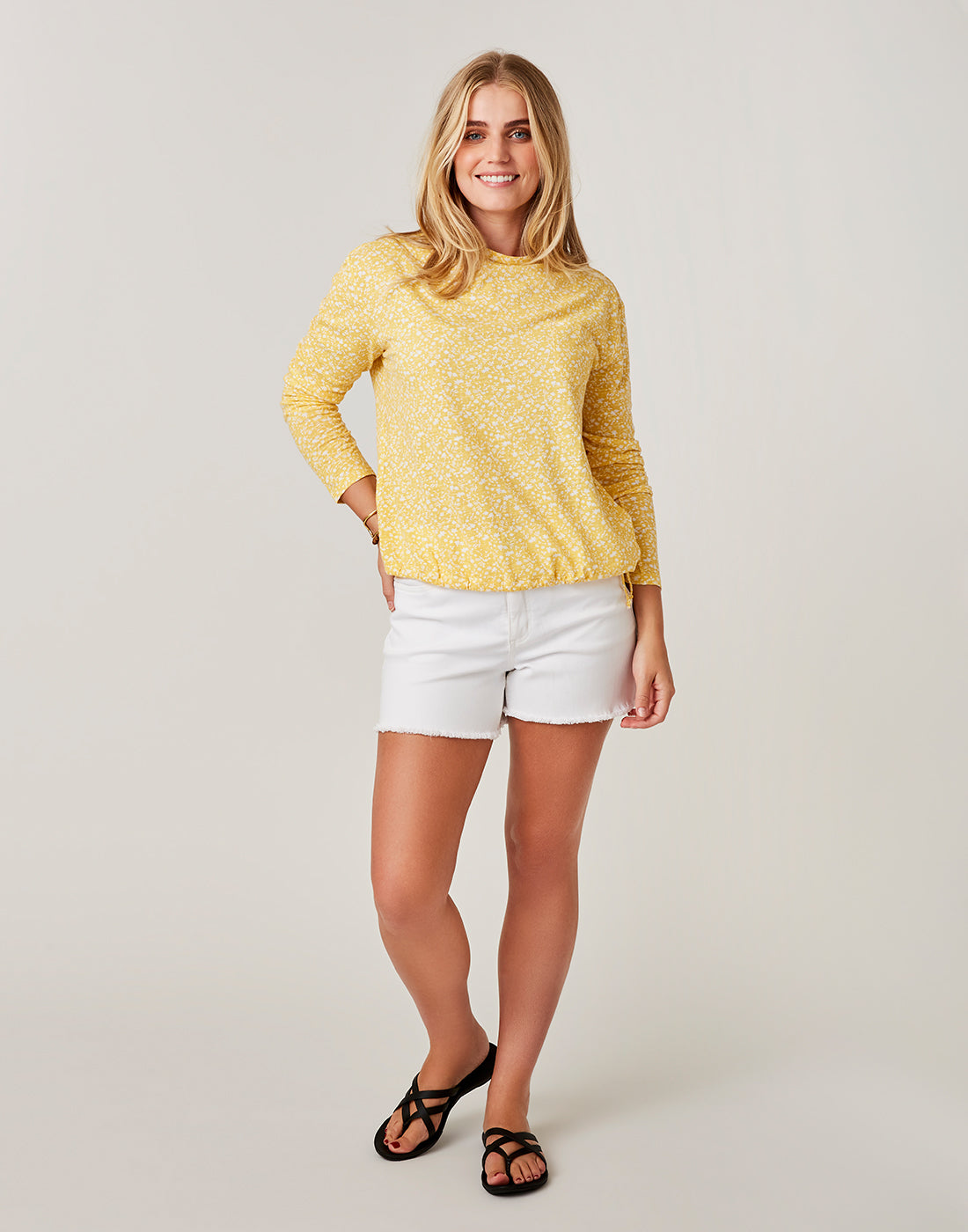
Fashionable denim shorts bring together the familiar character of jeans and the freedom of a shorter silhouette, with shapes that range from close-fitting cutoffs to loose, knee-skimming styles. Their appeal goes well beyond a beach day: the same pair can feel easy with a sun-faded tee, polished with a crisp cotton shirt, or cozy with a slouchy sweater when the air turns cool. Much of that versatility comes down to proportion. A-line denim shorts widen gently from the waist toward the hem, leaving room around the thighs while keeping a defined shape through the upper body. Relaxed dad-fit shorts have an easy cut through the hips and legs, while longer jean shorts, often called jorts, offer a roomier silhouette with a laid-back feel. Bermuda shorts generally reach toward the knee and can look especially clean with an unfussy hem and an even wash. Short cutoffs and micro lengths leave more of the leg exposed, with the rise determining whether the waistband sits closer to the hips or higher on the torso. None of these shapes belongs to a particular body type; the useful distinction is how each one feels while sitting, walking, and going about an ordinary day. A longer inseam may feel comfortable for a stroll along the waterfront, while a shorter, flared leg opening can offer welcome freedom on a warm afternoon. Wash and finish add another layer of personality. Faded blue denim has a familiar, lived-in quality, darker washes create a more uniform appearance, and white or ecru denim brings a lighter visual touch. Raw hems and subtle distressing lean casual, while finished hems and minimal fading feel a little more pulled together. A cuff adds definition at the leg opening, though its thickness can change the way the shorts sit against the thigh. The best-looking shape is often the one that leaves enough room to forget about adjusting it.
Fabric makes a noticeable difference in how denim shorts wear, from the first try-on to the end of a full day out. Traditional rigid denim is typically made without stretch fibers, giving it a structured feel that gradually softens and develops character with use. That sturdy hand can help an A-line leg or a longer, roomy cut hold its shape, though the waistband still needs to fit comfortably from the start. Cotton denim with a small amount of elastane offers more give, which can be useful in closer-fitting silhouettes or during a long stretch in the passenger seat. Stretch content alone does not tell the whole story: the weave, fabric weight, and construction also influence softness, flexibility, and how well the shorts recover their shape after wear. Lightweight denim tends to feel less bulky in warm conditions and packs easily for a coastal getaway, while heavier denim has more substance and may feel reassuringly substantial around pockets and seams. Fabric crafted from organic cotton or containing recycled cotton offers another consideration where the composition is identified, but fiber content is only one part of a garment’s overall footprint and lifespan. Fit deserves just as much attention as fabric. The rise describes the distance from the crotch seam to the top of the waistband, and the inseam runs from the crotch seam down the inside leg to the hem. Together, those measurements give a clearer picture than labels such as short, regular, or long. A high rise can sit comfortably with a tucked tee, a mid-rise can work well with loose layers, and a low rise rests farther down the torso. Waistbands should feel secure without digging in when seated, and pockets should lie comfortably rather than pull open across the hips. Room at the leg opening matters, too, especially for anyone who prefers a little space between fabric and skin. Thoughtful details, including secure pocket stitching, a smoothly operating zipper, and even seams, help make denim shorts dependable beyond their first outing.
The everyday usefulness of jean shorts comes from how naturally they fit into different routines. They are an easy choice for a casual lunch, a walk through a seaside town, or a weekend spent moving between the garden and the porch. For travel, a comfortable waistband and pockets that hold small essentials without sagging can matter more than elaborate detailing. Denim is not usually quick-drying, so shorts intended for the boardwalk or a waterside café are better kept separate from swimwear for time in the water. During cooler months, longer cuts pair comfortably with substantial knits, socks, and ankle boots where the climate allows; for a warm-weather escape, a breezy shirt and flat sandals keep things simple. The wider mix of fabrics and silhouettes found in
Fashionable Summer Shorts offers additional context for choosing between denim’s structure and a softer, more fluid feel. Denim shorts can also make a thoughtful gift for someone whose preferred rise, inseam, and size are already familiar, particularly if relaxed dressing is part of their everyday life. Keeping a favorite pair in good condition starts with the care label, since washes, dyes, stretch fibers, and decorative finishes can call for different treatment. When machine washing is allowed, turning shorts inside out and using cold water with similar colors can help reduce surface abrasion and color transfer. Dark indigo may rub onto light upholstery or bags, especially early in its life, so any dye-transfer notice is worth attention. Washing when needed rather than automatically after every brief wear can reduce unnecessary laundering, while spot-cleaning a small mark may be enough between washes. Air-drying away from strong direct sunlight can help limit heat exposure; if tumble drying is permitted, the recommended setting matters. Raw hems may continue to fray, and distressed areas can become more open with wear, particularly where the fabric bends or catches. Small repairs to loose stitching or a pocket edge can keep a well-loved pair in rotation. With comfortable proportions, suitable fabric, and a little care, denim shorts earn their place through repeat wear, not just a good first impression.