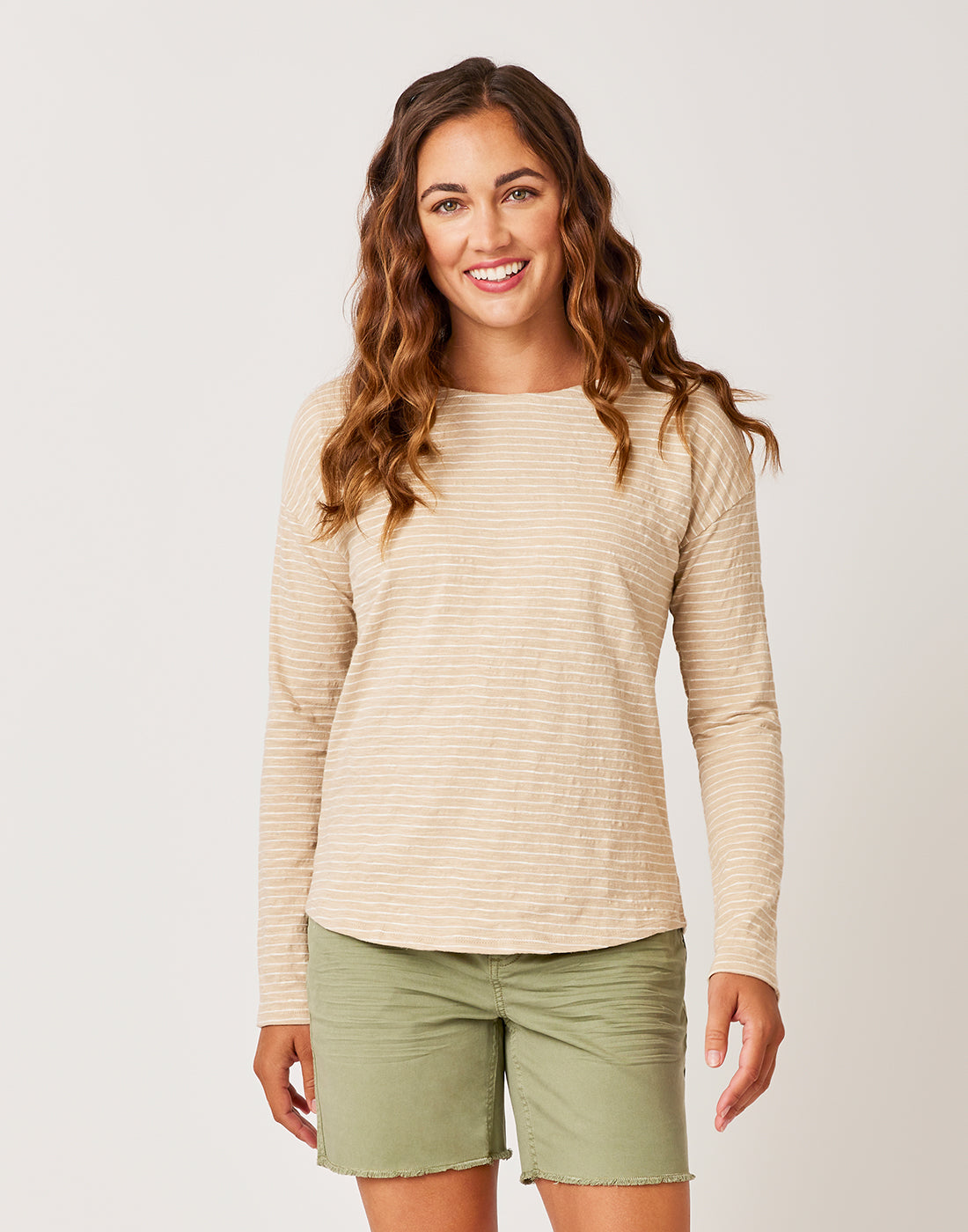
Fitted crew neck tops pair a rounded neckline with a close-to-the-body shape, creating an easy foundation for outfits that move between laid-back and pulled-together. Unlike a relaxed tee, a fitted style follows the torso rather than hanging loosely from the shoulders, while the crew neckline sits near the base of the neck. That combination brings a clean line to everything from wide-leg denim to a soft skirt, without needing much more than favorite shoes and a jacket tossed over one shoulder. The appeal is partly in the proportions: a neat upper half lets fuller pants, textured layers, or a flowing hem have their moment. It is also in the everyday practicality. A fitted crew neck can slip beneath a cardigan without a tangle of extra fabric, sit smoothly under a blazer, or make an easy partner for overalls on a cool, bright afternoon. Short sleeves work well beneath warmer layers and in comfortably heated spaces, while long sleeves offer extra coverage for breezy walks and chilly mornings. Sleeveless versions leave arms free and reduce fabric beneath close-cut jacket sleeves. Each variation keeps the familiar rounded neckline, giving the category a consistent look with room for different routines. A smooth knit feels understated and tidy; a ribbed crew neck adds subtle texture that stands on its own with simple bottoms. Solid colors can create a continuous line when paired with similar shades, while contrasting colors draw a clearer boundary at the waist. For anyone exploring other neckline shapes alongside this familiar favorite,
Fitted Tops offers a broader starting point. Whether the day includes a casual office, a long drive toward the coast, or dinner after an afternoon outside, the best-fitting crew neck feels like part of the outfit rather than something that needs constant adjusting. Its simplicity leaves plenty of room for personal style, from a delicate necklace resting over the fabric to a patterned scarf tucked inside a coat.
Fabric makes a noticeable difference in how a fitted crew neck top feels, drapes, and holds its shape. Cotton is a familiar choice for softness and breathability, with a natural feel suited to everyday wear. When organic cotton is specified, it identifies how the cotton was grown rather than promising a particular thickness, stretch level, or finish. Those qualities still depend on the knit and fabric blend. Modal and lyocell blends often bring a fluid drape and smooth hand, which can feel especially comfortable in a layer worn close to the skin. A small amount of elastane can add stretch and help the fabric recover after reaching, sitting, and moving through the day. Ribbed knits have their own give because of their construction, although the amount of stretch and recovery varies. Their raised vertical texture also gives a simple top a little visual depth, making it feel finished even without an outer layer. Smooth jersey usually has a flatter surface and can slide easily beneath a sweater or overshirt. Fabric weight matters just as much as fiber content: a lighter knit is useful when several layers are involved, while a more substantial knit can provide greater coverage and a firmer drape. Neither automatically means warmer or longer-lasting, and light colors may reveal underlayers even when the fabric feels fairly substantial. For an active commute or a brisk walk, a fabric specifically described as moisture-wicking may help move sweat away from the skin; an everyday cotton tee should not be assumed to perform the same way. Softness is only one part of comfort, too. A smooth neckline, flexible seams, and sleeves that do not pinch can make a close-fitting top easier to wear for hours. People who prefer less cling may appreciate a slightly denser fabric or a cut that follows the body with a little breathing room. The goal is a comfortable shape, not a fabric that argues with every stretch.
A good fit starts at the shoulders and carries through the chest, waist, and hem. On a traditional set-in sleeve, the shoulder seam generally sits close to the shoulder edge, while the fabric across the chest lies comfortably without persistent pulling. The rounded neckline should rest flat rather than press into the throat or stand away from the body. Close-fitting does not have to mean restrictive: there should still be room to reach for a high shelf, bend to tie a shoe, and settle into a seat without the top feeling strained. Sleeve length and upper-arm room deserve equal attention, particularly when a long-sleeve crew neck will be layered beneath another fitted piece. Torso length changes the experience as well. A shorter hem can meet high-rise pants neatly, while a longer cut provides more fabric for tucking and may stay anchored more comfortably through a busy day. Checking the size chart, fabric content, and fit notes together gives a fuller picture than choosing by size alone, since two knits can behave differently on the same body. These details also make fitted basics a thoughtful gift for someone whose preferred size, sleeve length, and feel are already familiar, especially a traveler or someone who enjoys building several outfits around a few versatile layers. Lasting wear depends on both construction and care. Even stitching, a neatly finished neckband, and fabric that springs back after gentle stretching are useful qualities to look for. The care label remains the best reference for washing and drying; cool water and a gentle cycle may suit many everyday knits, but not every fiber blend has the same needs. Washing with similar colors and keeping rough hardware away from soft fabric can help reduce friction and snags. High dryer heat may contribute to shrinkage or affect stretch fibers, so air-drying is worth considering when the label allows it. Folding stretchy knits rather than leaving them on narrow hangers can also help preserve their shape. With a comfortable cut and suitable care, a fitted crew neck earns its place through repeat wear, ready for cool-weather layers, quiet mornings, and whatever the day has planned.