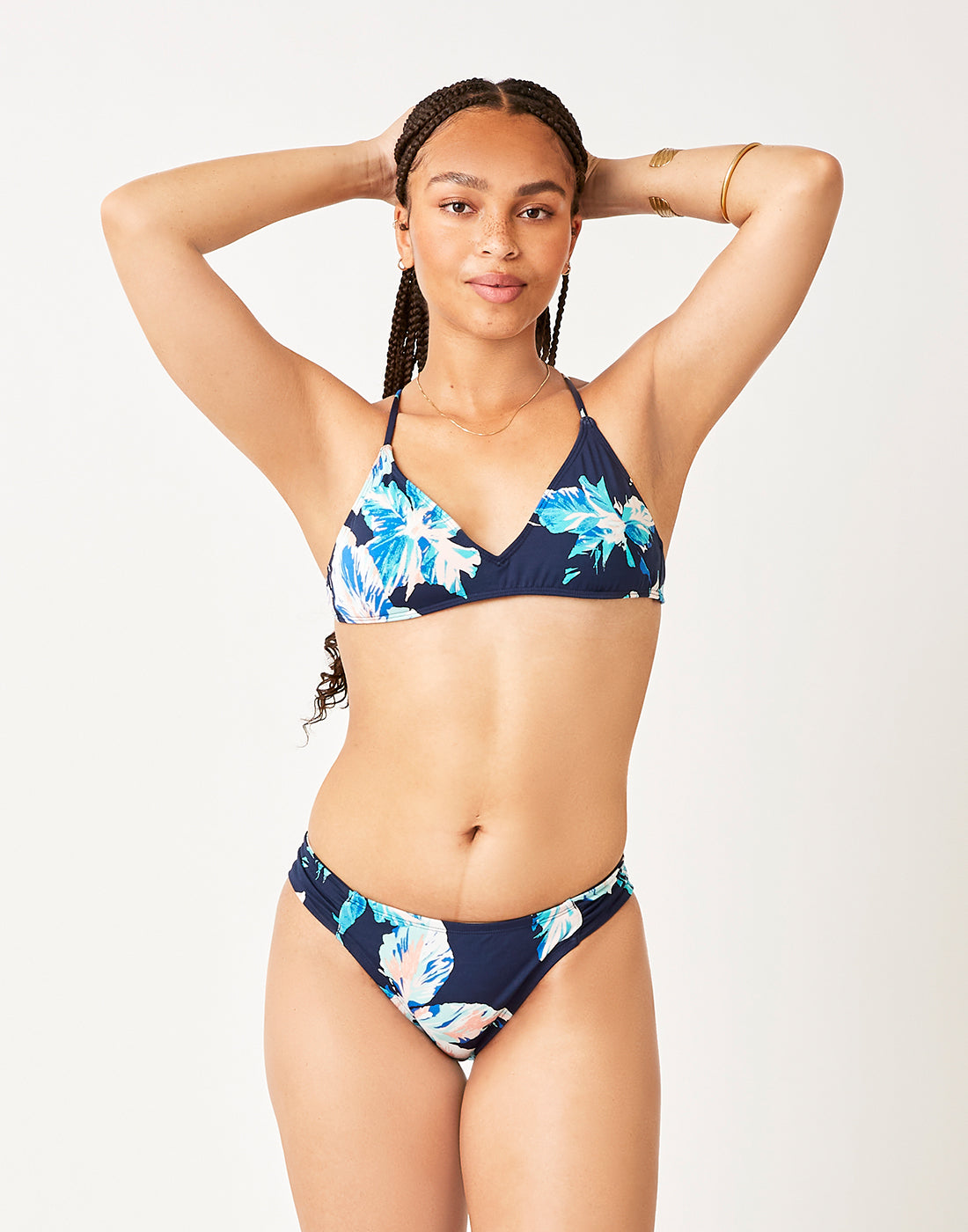
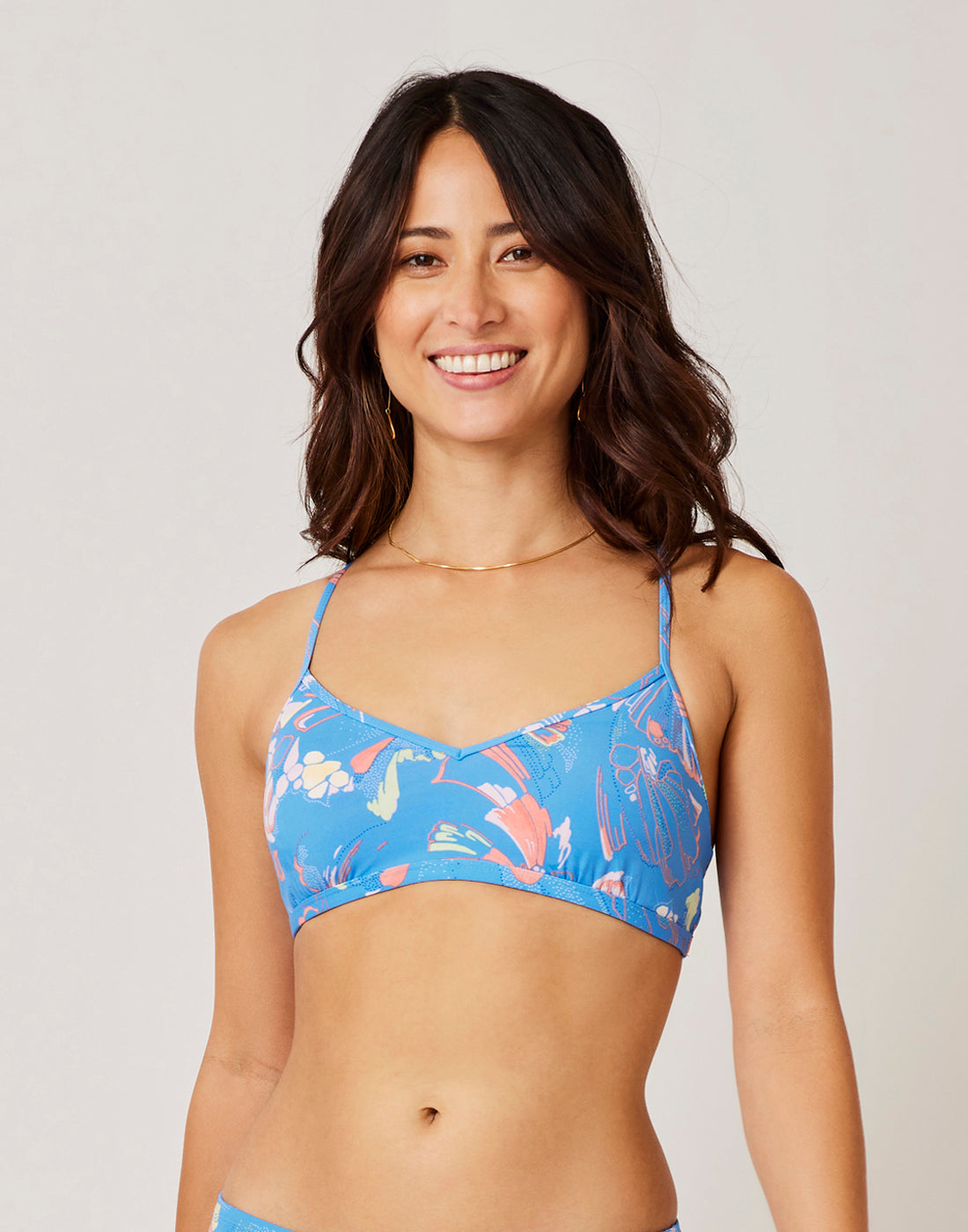
Flattering bikinis make room for personal style, comfortable movement, and the simple pleasure of feeling at home by the water. There is no single silhouette that looks best on every body, and a good fit has little to do with following rules about what to hide. It comes down to proportions that feel balanced to the person wearing them, coverage that suits the day, and details that stay comfortable after the first dip. A two-piece offers particular freedom here: tops and bottoms can fit independently, which is useful when a fuller bust calls for more support or hips need a different size than shoulders. High-rise bottoms offer coverage through the waist, while mid-rise and lower-rise cuts create different lines without making one shape the better choice. A higher leg opening can give a lengthened look; a lower leg opening offers another kind of ease, especially for anyone who prefers more coverage at the hip. Across bikini tops, a scoop neckline brings a clean, uncomplicated feel, a triangle shape allows for a more adjustable look, and a higher neckline can offer extra coverage across the chest. Color and print add another layer of personality. A solid shade lets the cut take center stage, while stripes, small-scale patterns, and expressive prints bring their own rhythm to a swim wardrobe. Coordinating separates create a pulled-together look, but mixing colors can feel just as intentional when one shade carries through both pieces. The appeal of flattering bikinis is that these choices belong to the wearer, whether the destination is a quiet stretch of sand, a resort pool during the cooler months, or a familiar swimming spot close to home. For a broader look at swim silhouettes,
flattering swimsuits offer another way to explore shapes and coverage preferences. A bikini can be playful, sporty, understated, or a little of each, with no need to dress for anyone else’s idea of a beach body.
Comfort becomes much easier to recognize when a bikini is considered in motion rather than only in a mirror. Reaching overhead to gather wet hair, sitting on a pool step, and bending to pick up a beach bag all reveal how a top and bottom settle against the body. A supportive bikini top should feel secure through the band without making breathing uncomfortable, and its straps should sit comfortably rather than carry all the weight at the shoulders. Depending on the construction, adjustable straps, wider bands, underwire, or shaped cups can offer different kinds of support. Removable pads can provide flexibility in coverage, though they are not a substitute for a well-fitting top. Tie closures allow some adjustment, while fixed closures offer a simpler setup; either can work well when the shape and size suit the wearer. Bikini bottoms should rest smoothly at the waist and leg openings, without pinching or needing constant repositioning. Gentle gathering or a folded waistband can change the feel and appearance of a cut, but no detail makes up for a size that feels restrictive. Swim fabrics also influence the fit. Nylon or polyester blended with elastane is common because stretch helps fabric follow the body, while recovery helps it return toward its original shape. The exact blend, knit, lining, and construction all affect how a bikini feels dry and wet. A soft lining can make a noticeable difference against the skin, and well-finished seams help reduce rough edges in places that move often. Some swim fabrics include recycled fibers, a consideration for shoppers who value using existing resources, though fiber content alone does not establish durability or overall environmental impact. Fabric weight matters, too: a substantial feel may appeal to someone who likes a held-in sensation, while a lighter construction may feel less restrictive. Neither is automatically more flattering. The useful distinction is whether the suit feels comfortable, offers the desired coverage when wet, and moves naturally through the activities planned for it.
Different days by the water ask different things of a bikini. For relaxed laps, paddleboarding, or a beach walk that turns into an unexpected swim, secure straps and dependable coverage can take the fidgeting out of the afternoon. For reading beside the pool or floating in calm water, a simpler shape with fewer structural details may feel just right. Ties, clasps, and decorative accents deserve a little thought when the plan includes lying on a towel, wearing a life jacket, or carrying a surfboard against the hip; details that look lovely standing up should feel equally comfortable during the actual day. A flattering two-piece can also travel easily, pairing with a breezy button-down and soft shorts between the room and the shoreline. During cooler weather at home, it earns its place in a suitcase headed toward sunshine or in a bag packed for an indoor pool. With regular use, care becomes part of keeping that familiar fit. Fresh-water rinsing after swimming helps remove salt, chlorine, and other residues that can wear on swim fabric over time. The care label should set the routine, but gentle washing with mild detergent and avoiding unnecessary heat are common ways to protect stretch fibers. Wringing, hot dryers, and long stretches left damp in a tightly packed bag can be hard on a suit. Drying out of direct sunlight, away from rough surfaces, helps preserve its feel and appearance, while rotating between suits gives each one time to dry fully. Sunscreen remains essential for exposed skin; allowing it to absorb before dressing may help reduce transfer onto fabric. Rough pool edges and textured seating can snag even well-made swimwear, so a towel offers a useful buffer. As a gift, a bikini is most personal when the recipient’s preferred size, support, and coverage are already known rather than guessed. For personal wear or a thoughtfully chosen present, the lasting appeal is the same: a comfortable fit, a shape that feels like an individual choice, and one less distraction from the water.