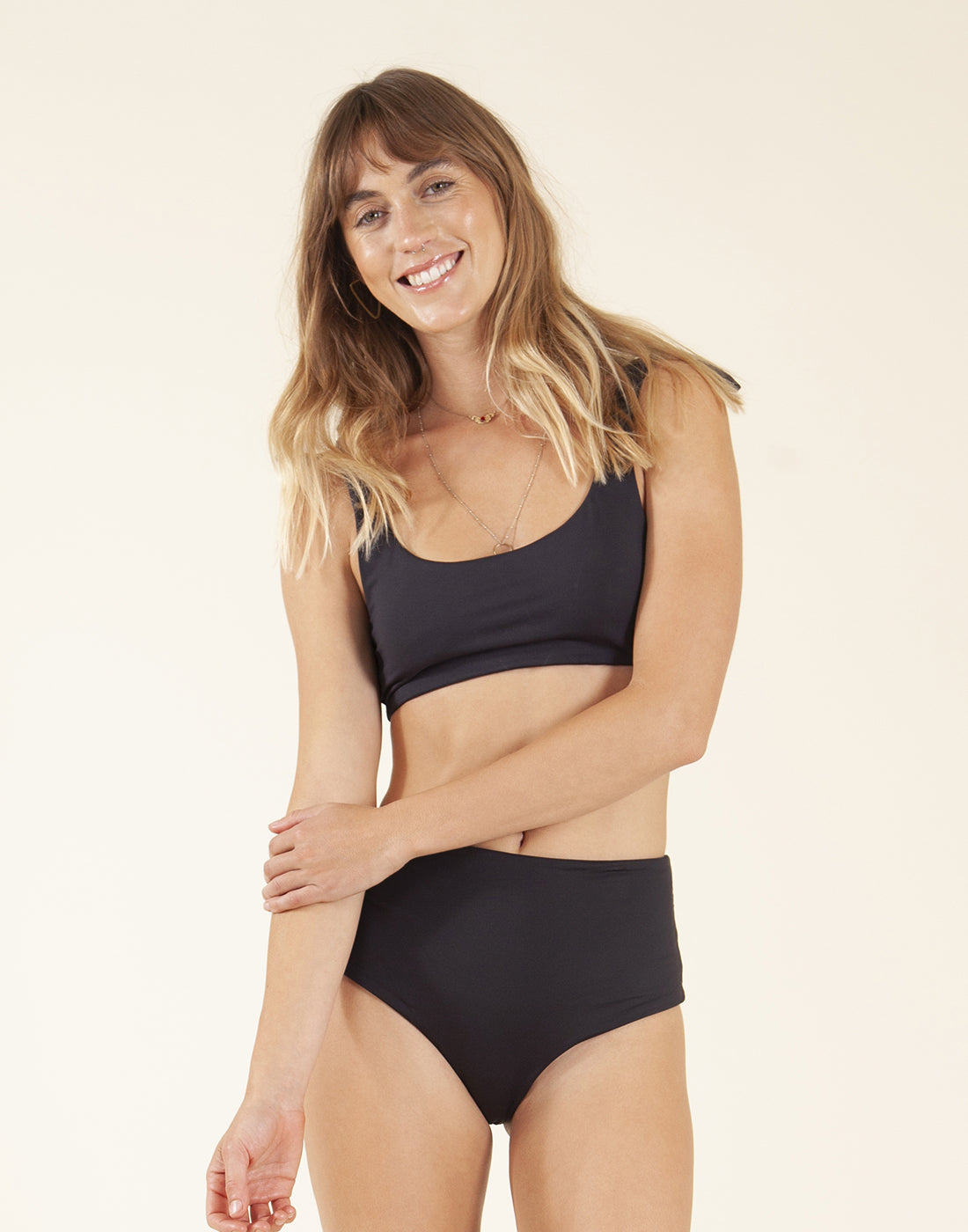
Flattering black bikini bottoms bring an easy sense of balance to a swim outfit, with a color that pairs just as naturally with a bright printed top as it does with a matching black one. The most flattering fit is the one that feels good sitting on a beach towel, walking along the shoreline, and stretching out for another lap—not just standing in front of a mirror. Rise, leg opening, and rear coverage each play a different part in that comfort. High-waisted bikini bottoms sit higher on the torso, often near the natural waist, while mid-rise cuts generally land between the waist and hips. Low-rise and hipster silhouettes sit lower, leaving more of the torso uncovered. A higher leg opening can create a longer-looking leg line without necessarily offering less coverage in back; cheeky, moderate, and full coverage describe a separate part of the fit. That distinction makes it easier to find the combination that feels right rather than settling for a silhouette based on its name alone. For a higher-rise shape,
high waist black bikini bottoms pair naturally with both cropped swim tops and longer tankini silhouettes. A scoop-front or V-shaped waist creates a different visual line than a straight waistband, while gathers and wrap-inspired details add dimension to solid black fabric. Side ties allow some adjustment at the hips, though they do not change the underlying size or coverage of the suit. None of these details is a rule about which bodies belong in which cuts. A fuller-coverage bottom can feel every bit as playful as a cheeky one, and a low-rise shape can be just as comfortable as a high waist when the proportions suit the wearer. Black keeps the overall look grounded, leaving room for personal preference in the details: a clean edge, a little texture, a curved seam, or a waistline that lands exactly where it feels best.
Fabric and construction give flattering black swim bottoms their feel, shape, and staying power. Swim fabrics commonly blend nylon or polyester with elastane, sometimes labeled spandex, to combine a smooth surface with stretch. The percentage of stretch fiber tells only part of the story; the knit, fabric weight, lining, and elastic placement also affect how a bottom moves and recovers. A supple fabric that returns to its original shape after stretching helps the fit stay consistent through repeated wear. Ribbed textures add subtle depth to black, while smooth finishes create a clean, understated look. Neither texture alone guarantees support or coverage. Lining can add comfort and opacity, but black fabric is not automatically opaque when wet or stretched, so fabric density and a well-proportioned fit matter. A broad waistband may spread pressure more evenly than a narrow elastic edge, while firm shaping panels, when included, provide a more held-in feel. A high waist by itself does not mean a bottom has tummy-control construction. Ruched sides create soft folds and visual texture, but they should still feel comfortable against the hips rather than tight or bulky. At the leg openings, secure edges should follow the body without persistent digging, rolling, or gaping. The best size allows comfortable movement without relying on excessive tension to hold everything in place. Sitting, bending, and taking a few steps during a try-on can reveal more than a still reflection, especially around the waistband and seat. Hip and waist measurements are useful starting points, alongside the size chart and fit details for the particular cut. For someone between sizes, the preferred coverage and the fabric’s firmness can help inform the choice; sizing down is not a reliable shortcut to support. Thoughtful construction is often quiet: seams that lie comfortably, lining that stays in place, and edges that do their job without becoming the main event.
Black bikini bottoms earn their place in a swim wardrobe through versatility, whether the plan involves pool laps, an ocean dip, a lakeside afternoon, or a leisurely float with friends. For more active swimming, a secure waistband and a fit that stays comfortable through a full range of motion are useful priorities. For lounging and casual dips, adjustable sides or a preferred level of coverage may carry more weight. Coverage alone does not determine how secure a suit feels, and a snug fit should still leave room to breathe and move freely. Solid black also makes mixing separates pleasantly uncomplicated. It can anchor a tropical print, sit alongside a soft neutral, or create a simple coordinated look with a black top. Different fabrics and dye lots may produce slightly different shades of black, so matching separates are worth considering when a uniform finish matters. Bikini bottoms can make a thoughtful gift for someone whose size, favorite rise, and coverage preferences are already known; those details are more helpful than guessing from another clothing category. Once a comfortable fit is found, a little consistent care helps protect it. A fresh-water rinse after swimming helps remove salt, chlorine, and other residue, while washing according to the care label addresses sunscreen and body oils that a rinse may leave behind. When hand washing is recommended, cool water and a gentle detergent are generally kinder to stretch fabrics than aggressive scrubbing. Gently pressing out excess water rather than wringing helps avoid unnecessary strain, and drying away from direct heat helps preserve elastic fibers. Rough pool edges, textured benches, and rocky surfaces can snag even a well-made swim knit, making a towel a useful buffer. Fabric made with recycled fibers may be part of a more considered choice when its composition is clearly stated, but durability still depends on construction, use, and care. The lasting appeal is straightforward: a dependable black bottom that feels like itself each time it goes on, ready to pair with a favorite top and leave the adjusting behind.