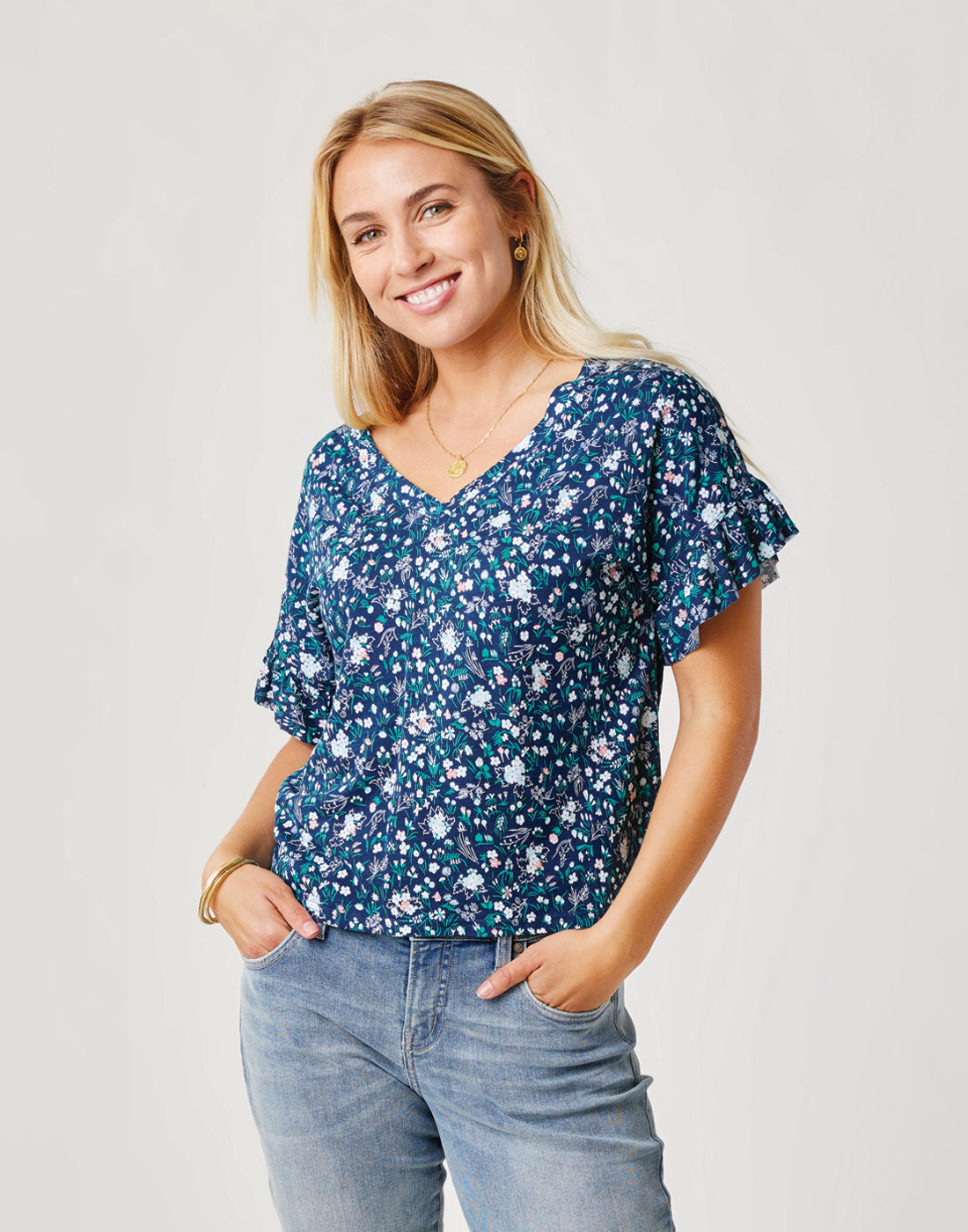
Floral fashion brings flower and botanical prints to clothing and swimwear, from tiny scattered blossoms to sweeping, painterly petals. Its appeal lies in that range: a floral pattern can feel quiet and understated, bright and playful, or graphic enough to hold its own against a favorite pair of jeans. Small, closely spaced flowers often create a delicate, almost textured effect, while larger blooms give individual shapes and colors room to stand out. The background matters just as much as the flowers themselves. A dark ground can make pale petals look crisp and defined; a low-contrast palette lets the pattern blend more softly into the fabric. Neither approach belongs to one age, body type, or personal style. The best match is a print that feels good to wear and fits naturally into the rest of a wardrobe. Floral clothing spans dresses, skirts, tops, and easy layers, with each silhouette giving the same botanical idea a different personality. A fluid shape lets a pattern ripple with movement, while a more structured cut keeps the lines clean and the flowers clearly defined. For everyday outfits, a solid companion picked from one color in the print can make the combination feel connected without looking overly coordinated. Denim, simple shoes, and understated jewelry leave plenty of space for the pattern, although florals can also sit comfortably alongside stripes when the colors share a common thread. There is no need for every accessory to join the garden party. That balance makes flower prints useful for everything from a casual lunch to a relaxed celebration, with the fabric and cut doing much of the work of setting the mood. More than a decorative detail, a floral print offers an easy way to bring individuality to familiar shapes. It can be the focal point of an outfit or a subtle accent, depending on its scale, color, and placement.
Fabric gives floral fashion much of its character, shaping how a print looks and how a garment feels after hours of wear. Cotton often has a soft, breathable feel and a matte surface that suits casual clothing, while linen can bring visible texture and a relaxed drape. Fabrics containing viscose or similar fluid fibers may fall more closely around the body, giving flower patterns a sense of movement rather than a crisp outline. Fiber content is only part of the picture, though: weave, weight, lining, and construction all influence opacity, softness, and shape. A lightweight fabric can feel wonderfully easy but may need a lining in places where coverage matters; a denser fabric can offer more structure without necessarily feeling stiff. Where organic cotton or recycled fibers are identified in a fabric description, those details offer a more useful basis for a considered choice than the botanical print alone. Flowers on fabric do not, by themselves, say anything about how it was made. Fit deserves the same attention as color. Shoulder placement, room through the bust and hips, sleeve shape, and overall length affect whether floral clothing feels effortless while sitting, reaching, or walking. A waist seam that lands comfortably and an arm opening that does not pull can matter far more than the size printed on a label. Print placement may also vary between garments, especially with larger motifs, so an overall pattern can look slightly different from one piece to another. Durability comes from the relationship between fabric, construction, fit, and care, rather than any single fiber. Even stitching, secure seams, and enough ease for everyday movement help clothing keep up with repeat wear. Following the care label, separating colors where directed, and avoiding unnecessary heat can help preserve both the fabric and the clarity of the print. Some fabrics benefit from reshaping while damp or gentle steaming, while others require a different approach. Those small habits help favorite florals stay part of the regular rotation rather than becoming pieces saved for someday.
Floral swimwear carries that same personality into pool laps, paddle outings, and unhurried time by the water, but its construction has a different job to do. Stretch, recovery, lining, and secure coverage become central to comfort when fabric gets wet and the body is moving. Swim fabrics commonly blend nylon or polyester with elastane, combining a smooth feel with flexibility; the exact blend and construction influence how supportive or lightweight a suit feels. A flower print adds visual interest, but it does not indicate support, chlorine resistance, or sun protection. Those qualities depend on the particular fabric and design and should be confirmed in the relevant details. For anyone drawn to separates,
floral bikinis offer room to explore different proportions and pair a patterned top or bottom with a complementary solid. Choosing separate sizes can also accommodate different fit needs through the bust and hips. Comfortable straps, a stable underband, and coverage that stays in place make a meaningful difference for swimming or paddling, while adjustable details can help fine-tune the fit. More coverage and less coverage are personal preferences, not rules about who gets to wear a floral pattern. A useful fit check includes reaching overhead, bending, and sitting, with attention to any digging, slipping, or gaping. Care after use helps support longevity: a fresh-water rinse removes residue, and washing according to the label helps protect stretch fibers and color. When the label allows, drying away from direct heat and avoiding rough surfaces can reduce unnecessary wear. Floral clothing and swimwear can also make thoughtful gifts for someone whose favorite colors, preferred coverage, and sizing are already familiar. For a frequent swimmer, a traveler, or someone who simply loves a botanical print, the most personal choice reflects how that person actually dresses and moves. The lasting appeal of floral fashion is that combination of expression and practicality: distinctive enough to feel special, comfortable enough to reach for again.