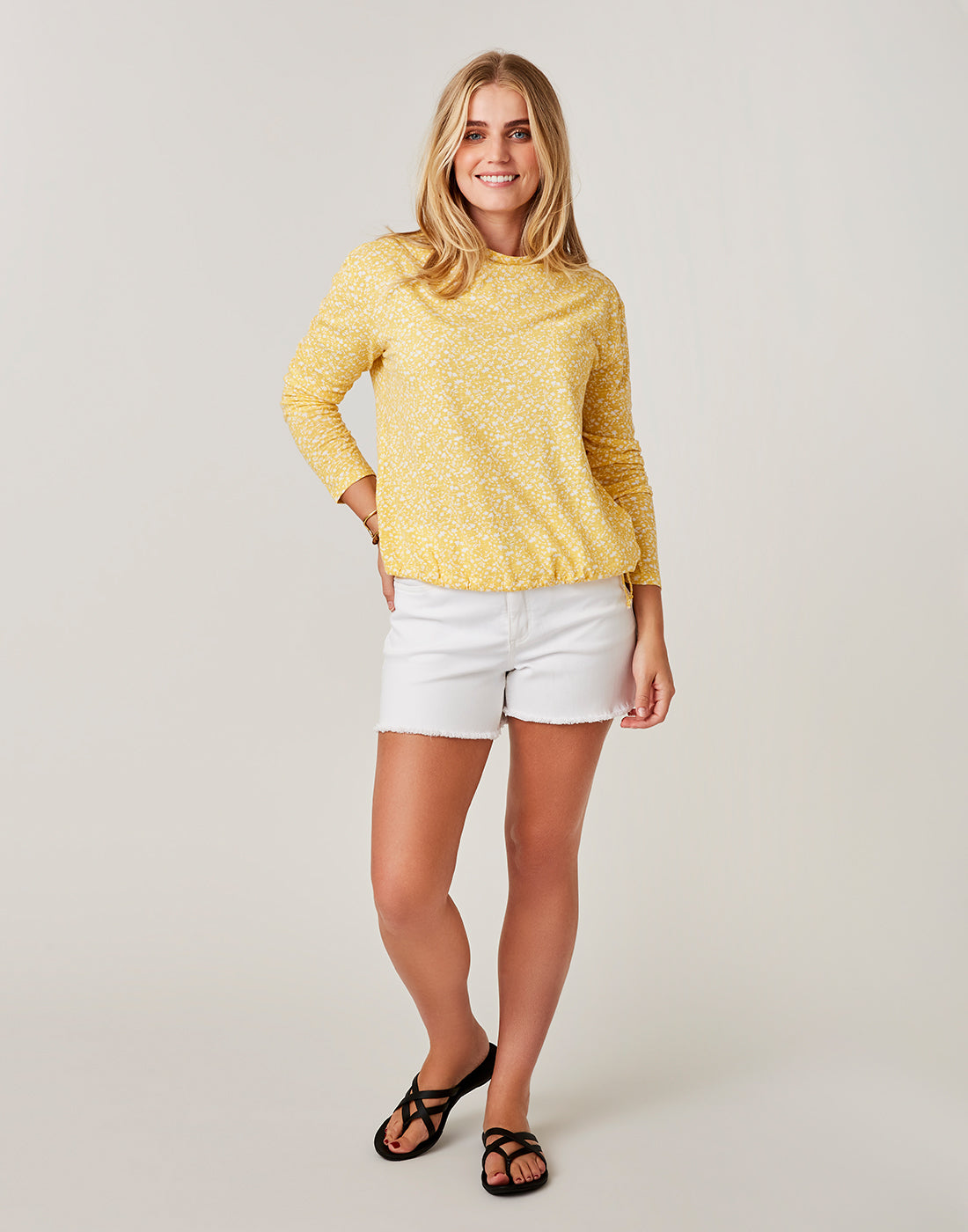
Frayed hem shorts bring an easygoing finish to an everyday staple, with exposed threads along the leg openings instead of a neatly folded, stitched hem. That small detail gives them their lived-in character: a little beach-town ease, a little favorite-pair familiarity, and enough texture to make a simple tank or soft sweater feel considered. The effect can range from a lightly brushed edge to longer, more noticeable fringe, while the body of the shorts can stay clean and tailored or lean into a relaxed, broken-in look. Fraying is different from distressing, so a raw hem does not necessarily mean rips, holes, or fading elsewhere in the fabric. Denim is a familiar choice because its woven construction creates a recognizable fringe as threads loosen at the cut edge. Cotton twill and other woven fabrics can offer a similar finish with a different feel, from smooth and structured to soft and drapey. Fabric weight matters as much as color: substantial denim typically holds its shape more firmly, while lighter cloth feels less bulky in a travel bag and more breezy on a warm afternoon. Pale washes lend a sun-faded feel, darker washes create a stronger contrast with the fringe, and neutral shades slip easily into an existing closet. For a closely related take on this textured detail,
Fringe Denim Shorts share the same relaxed spirit, with the denim weave giving the edge its distinctive character. Neither a raw edge nor a faded wash tells the whole story about softness, though; fiber content, finishing, and construction all contribute to how the fabric feels against the skin. The appeal is in that balance of texture and simplicity. With a striped shirt on a coastal walk, a roomy sweatshirt after a swim, or a fine-knit top for a casual patio lunch, frayed shorts add personality without asking the rest of the outfit to work overtime.
Fit gives frayed hem shorts much of their versatility, and the most comfortable silhouette depends on where the waistband sits, how the fabric moves, and how much room there is through the seat and thighs. A higher rise can pair naturally with a tucked-in tee or a shorter sweater, while a mid-rise shape leaves a different amount of space between the waistband and rib cage. Rise alone does not determine comfort; waistband construction and the proportions of the entire cut matter, especially when sitting through a long lunch or settling into a car for a weekend drive. Rigid cotton denim has a more structured feel and may soften and relax with wear, but it does not offer the same give as a fabric containing stretch fibers. A small amount of elastane can make bending, sitting, and stepping up onto a boardwalk feel easier, although stretch and recovery vary by fabric. A relaxed leg opening gives the fringe room to fall rather than pulling tightly across the thigh. Inseam length also changes both coverage and the overall shape, with shorter cuts feeling distinctly beach-ready and longer cuts offering more fabric through the leg. Because fringe may extend beyond the solid fabric, the edge of the intact cloth is a useful reference for coverage rather than the longest hanging thread. Size charts and fabric descriptions help clarify those differences more reliably than a size label alone. On a comfortable pair, pockets lie reasonably flat, the waistband stays put without digging, and the shorts allow a natural stride. Those details matter whether the day involves browsing a neighborhood market, walking the dog, or carrying a tote down to the sand. For gifting, a familiar rise, preferred inseam, and known size are more useful starting points than guessing from appearance. A favorite pair already in the recipient’s closet can offer a practical reference for the proportions they enjoy wearing.
The unfinished look of a frayed hem still benefits from thoughtful construction and care. A raw edge can continue to shed threads with wear and washing, while stitching placed above the fringe may help limit how far the unraveling travels. Secure pocket corners, evenly sewn seams, and a well-attached closure contribute to durability just as they do on shorts with a finished hem. Longer fringe is more likely to catch on rough surfaces or snag during washing, so a little attention helps preserve its shape. The care label remains the best starting point, since denim, twill, stretch blends, and different dyes do not all respond to washing in the same way. When the label allows, turning shorts inside out, washing with similar colors in cool water, and choosing a gentle cycle can reduce abrasion and help protect the finish. A mesh laundry bag can offer another layer of protection for loose threads. Pulling on a dangling strand may unravel more of the edge; carefully trimming an unusually long thread with sharp scissors is generally a gentler way to keep the fringe looking intentional. Excessive heat can affect stretch fibers and may cause cotton fabrics to shrink, making the recommended drying method especially important for maintaining fit. Washing when needed rather than automatically after every brief wear can also reduce unnecessary friction on the fabric. Material preferences are worth considering alongside care habits: organic cotton or recycled fibers may be priorities, but those details should be confirmed in the fabric information rather than assumed from a natural-looking wash. Frayed shorts are at their best as casual clothing for dry-land adventures, easy afternoons, and travel days, rather than as a substitute for swimwear or technical hiking gear. During cooler months, they still have a place in warm-weather getaways and mild-climate closets, paired with a substantial cardigan, a lightweight jacket, or sneakers and soft socks. The contrast between a textured hem and a cozy layer feels relaxed without looking unfinished. With a comfortable cut and care suited to the fabric, the fringe becomes part of the shorts’ character, ready for another walk, another packed bag, and another afternoon that leaves room for a detour.