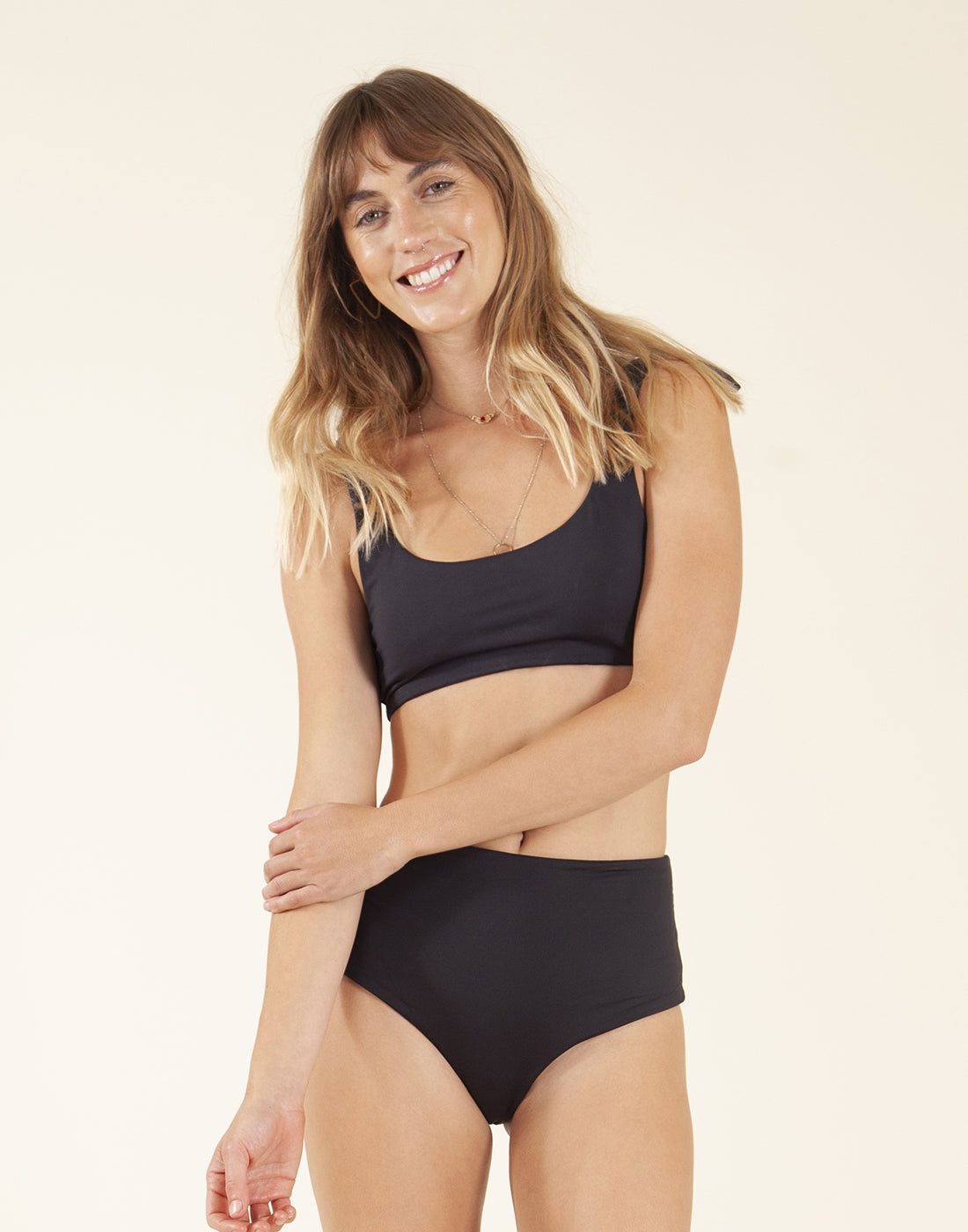
High rise cheeky bikini bottoms pair a waistband that sits around the natural waist with a back cut that reveals more of the seat than a full-coverage swim bottom. The appeal is in that balance: a little more fabric up top, a little less in back, and a silhouette that feels equally at home beside a pool or on the way to a favorite swimming spot. High rise describes the height of the waist, while cheeky describes rear coverage; neither term automatically means a high-cut leg. A higher leg opening can create a longer-looking leg line, while a lower opening offers a different frame through the hips. Those details matter more than a label alone, especially because rise and coverage can look different depending on torso length, hip shape, and seat proportions. On a shorter torso, a waistband may sit above the navel; on a longer torso, the same cut may land below it. The right fit follows the body without making every move feel like a negotiation. A waistband should feel comfortably secure rather than dig in, and the leg openings should lie close without pinching. Cheeky coverage is intentionally reduced, but it should still feel like a deliberate fit rather than fabric that needs constant rearranging. For anyone who likes the waist coverage of a high-waisted bikini bottom with a more open feel through the back, this shape brings both together without requiring a particular body type. It also leaves plenty of room for personal style. A clean-lined swim top keeps the silhouette simple, a textured top adds contrast, and a longer swim top changes how much skin shows between the two pieces. The result can feel playful, understated, or sporty depending on the pairing, with the same easy foundation underneath.
Fabric and construction help determine whether that silhouette feels as good on the tenth wear as it does at the first try-on. Nylon blended with elastane, also called spandex, is a common swimwear combination because it brings softness, stretch, and a close fit. Polyester blends are another option, with performance depending on the particular yarns, knit, and finish rather than the fiber name alone. Elastane allows fabric to stretch and recover, but a higher percentage does not automatically mean better support or greater durability. Fabric weight, lining, seam placement, and waistband construction all contribute to the feel. Smooth fabrics offer a clean surface, while ribbed or other textured knits add dimension and may feel different against the skin. A lining can improve opacity and comfort, although it does not guarantee that every fabric will look or behave the same when wet. A broad waistband may distribute pressure comfortably, while an elasticated edge can provide a more defined hold; either should stay flat without feeling restrictive. Ruched detailing adds gathers and changes how fabric drapes across the front, but ruching alone is not the same as compression or shaping construction. Similarly, a high waist provides coverage without necessarily providing tummy control. These distinctions make it easier to choose based on the feel desired rather than promises attached to a silhouette. Recycled nylon or recycled polyester can incorporate recovered material into swim fabric, though recycled content by itself does not establish how long a bottom will last or how it will perform. Fiber percentages and care details provide more useful information than broad sustainability claims. For fit, waist and hip measurements are a sensible starting point, followed by the size chart and any available coverage descriptions. Sizing down to create extra hold can make seams press into the skin and pull the back coverage out of place. Sitting, bending, and taking a few comfortable steps during a try-on can reveal whether the waistband rolls, the leg openings gap, or the back shifts more than feels comfortable. The goal is a fit that lets attention return to the water, not the waistband.
High-waisted cheeky swim bottoms suit everything from an easy dip to an afternoon spent moving between a beach towel and the shoreline, but the intended activity deserves a place in the decision. A cut that feels perfect for lounging may not offer the hold someone wants for lap swimming, paddling, or repeated entries into the water. For more active use, a secure waistband, reliable stretch recovery, and comfortable leg elastic matter more than rise alone; a higher waist is not a guarantee that a bottom will stay put in surf. Personal coverage preferences matter just as much. Some swimmers love a cheeky back for its less-covered feel, while others prefer additional fabric for certain activities. Neither choice needs an explanation. Color and print bring another layer of versatility, especially when bikini tops and bottoms are chosen separately for different sizing needs. For an easy-to-pair foundation,
black high waisted cheeky bikini bottoms work with tonal textures, bright solids, and patterned tops without making the combination feel overly coordinated. Thoughtful care helps preserve both the fit and the finish. Rinsing swimwear in fresh water after use helps remove salt, chlorine, and residue, while washing according to the care label keeps cleaning appropriate for the fabric. When hand washing is recommended, a gentle detergent and light handling are preferable to scrubbing or twisting. Pressing out excess water rather than wringing helps avoid unnecessary strain, and drying as directed, away from intense heat, protects stretch fibers. Rough pool edges, abrasive seating, and hook-and-loop fasteners can snag or wear swim fabric, so a towel underneath offers a simple buffer. Swim bottoms also benefit from drying fully before being packed away instead of spending hours bundled in a damp bag. With a considered fit and a little everyday care, this silhouette earns its place in a swimwear rotation through comfort, versatility, and the pleasure of wearing something that feels like a natural match.