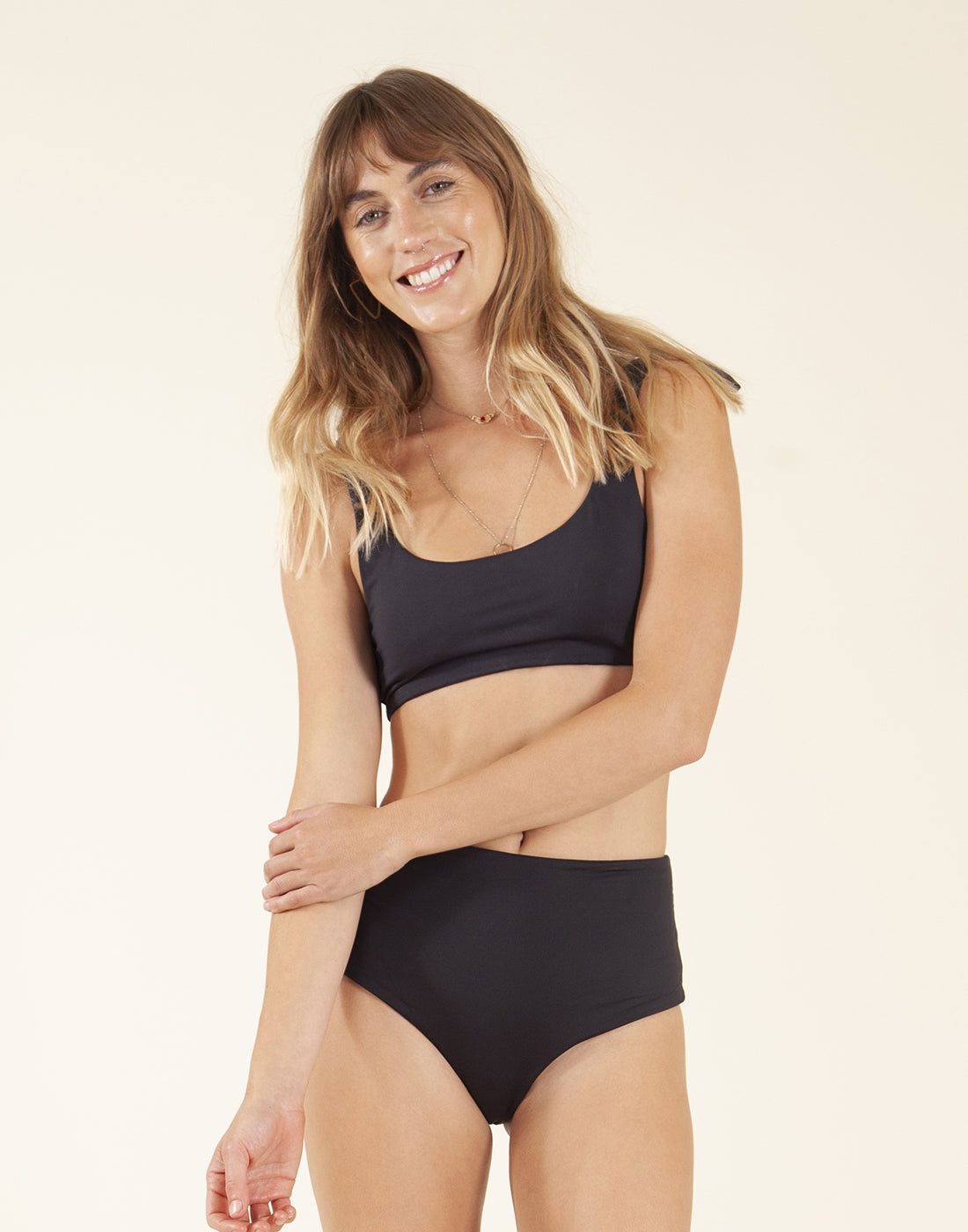
High waist black bikini bottoms pair a higher-sitting waistband with a versatile color that feels equally at home beside a quiet pool or out past the shore break. The rise typically reaches toward the natural waist, often near or above the navel, though the exact placement depends on the cut and torso length. That extra height creates a distinct silhouette without dictating how much coverage sits through the back: high-waisted swim bottoms can be cheeky, offer fuller coverage, or fall somewhere in between. Leg openings make a difference, too. A higher-cut leg reveals more of the hip, while a lower opening provides more coverage along the side. These details give the category its range, from retro-inspired shapes to clean, sporty cuts made for an easy afternoon by the water. Black keeps the pairing possibilities wide open. A matching swim top creates a coordinated look, while a floral print, sun-washed stripe, or bright solid brings a little personality without requiring a whole new swim wardrobe. Smooth fabrics offer a streamlined finish, and textured fabrics add subtle depth to the same dark shade. For women who like a little more fabric around the waist, this silhouette offers coverage that still feels unmistakably like a bikini. It can also suit anyone who prefers a waistband that sits above the hips rather than directly across them. Neither preference needs a special occasion or a particular body type. The appeal is in finding a shape that feels good during the actual day: sitting on a beach towel, reaching for a paddle, or wandering from a lounge chair to the water. During the cooler months, black high-waisted bikini bottoms remain an easy foundation for warm-weather getaways and indoor pool visits. Add a favorite swim top and a loose cover-up, and the poolside outfit comes together with very little debate—a welcome quality when packing space is already spoken for.
Fit gives high waist black bikini bottoms their everyday ease, and waistband height is only part of the picture. A comfortable pair should feel secure around the waist and seat without pinching at the sides, cutting into the leg openings, or needing a tug after every few steps. A wide waistband can spread pressure over a larger area, while a narrow band creates a different feel against the skin; either works best when its tension matches the wearer’s preferred fit. More fabric at the waist does not automatically mean compression or shaping, so those features are worth distinguishing from the rise itself. Some swim fabrics offer a firmer hold, while others feel softer and more flexible. The right choice leaves room to breathe, sit, and bend comfortably rather than treating snugness as the goal. Torso length also changes where the same cut lands. On a shorter torso, a high rise may sit well above the navel; on a longer torso, it may rest closer to it. Waist and hip measurements, considered alongside a style’s size chart, provide a more useful starting point than a size label alone. Trying a few ordinary motions can reveal details that standing still misses: sitting as if on a pool step, lifting a knee, or reaching overhead. The waistband should stay comfortable, and the back coverage should feel right through those shifts. For paddleboarding, recreational swimming, or playing along the shoreline, secure leg openings and a stable waistband are especially welcome. For reading under an umbrella, a softer feel may take priority. Anyone drawn to black swim separates but preferring a waistband closer to the hips can explore
Mid Rise Black Bikini Bottoms for a different silhouette. Both rises can mix easily with longline tops, triangle shapes, and sporty swim tops; the distinction is where the waistband sits and how much space remains between the two pieces. The most useful combination is one that stays comfortable beyond the first mirror check.
Materials and construction shape how bikini bottoms feel in the water and how well they hold up between trips. Swimwear commonly uses nylon or polyester blended with elastane for stretch, flexibility, and recovery. The balance of fibers, fabric weight, and knit construction all influence the result, so fiber names alone do not tell the whole story. A smooth knit may feel sleek beneath a cover-up, while a ribbed surface brings texture and can have a different degree of stretch. Lining adds another layer between the outer fabric and the skin, affecting coverage, support, and drying time. Black fabric is not automatically opaque when wet or stretched, making lining and fabric density useful details to check. Seams should lie comfortably against the body, and elastic should return to shape rather than remain stretched after wear. For frequent pool use, a fabric specifically described as chlorine-resistant may be helpful, though no swim fabric is unaffected by repeated exposure. Recycled fibers can also be a consideration when the material description identifies them; recycled content alone does not establish how a suit will fit or how long it will last. Thoughtful care supports durability regardless of the fabric blend. The sewn-in care label takes priority, with a cool fresh-water rinse after swimming generally helping remove salt, chlorine, and residue. When washing is needed, gentle handling and an appropriate mild detergent are usually kinder to stretch fabrics than vigorous scrubbing or wringing. Drying away from direct heat and strong sunlight helps protect elasticity and color, while letting bottoms dry fully before storage avoids leaving them damp inside a beach bag. Rough pool edges, textured lounge chairs, and abrasive sand can snag or wear the surface, so a towel offers a simple buffer. Sunscreen still belongs in the beach routine; allowing it to absorb before dressing can help reduce transfer onto fabric. With a comfortable cut and care that suits the material, black high-waisted swim bottoms can become a dependable part of a swim rotation, ready to pair with familiar favorites for everything from a few leisurely lengths to an afternoon with salt in the air.