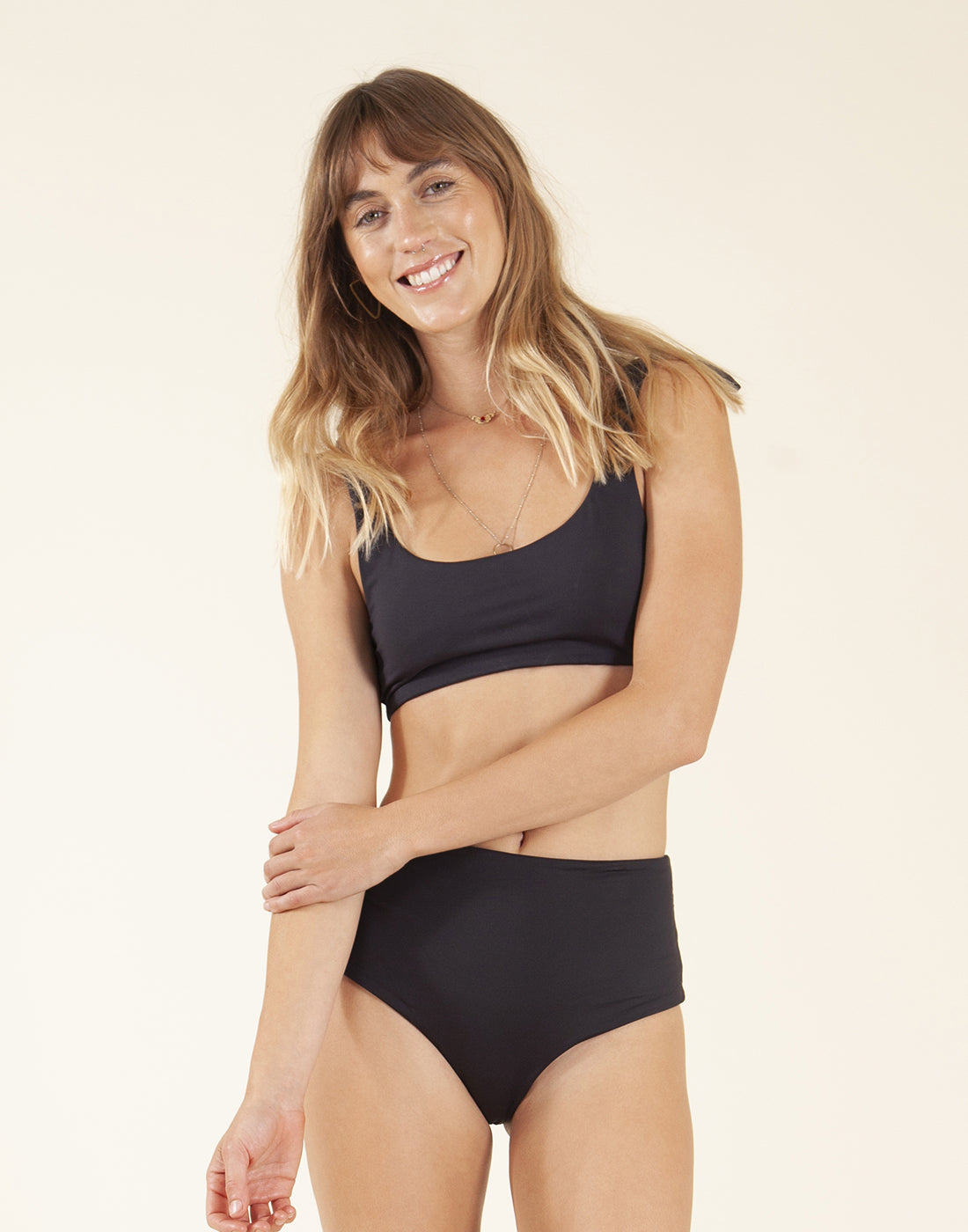
High-waisted bikinis for moms pair a higher-rise bottom with the flexibility of a two-piece, offering more coverage around the waist and lower belly than a low-rise cut. With a comfortable waistband and a well-matched top, they can feel secure through poolside play, beach walks, and the surprisingly athletic business of helping a child onto a float. The appeal is practical, but never just practical: a defined waist, a favorite color, and a silhouette that feels good can make getting dressed for the water a little easier. High rise describes where the waistband sits, not a single level of coverage or compression. Some cuts reach the natural waist, while others sit closer to the navel; the same bottom can land differently depending on torso length. Seat coverage and leg openings vary, too, so a higher waist does not automatically mean a fuller back. A comfortable fit lies smoothly against the body without digging, rolling, or leaving gaps when sitting down. The waistband should feel supportive rather than restrictive, with enough give for bending over a sandcastle or settling onto a towel. If tummy control is a preference, shaping panels or a more structured lining may provide gentle hold, but a high waist alone does not guarantee compression. For moms whose fit preferences have changed after pregnancy, softer waistbands and flexible fabrics may feel especially comfortable. No particular silhouette is required, and no body needs disguising. Fullness through the hips, a longer torso, or a preference for less pressure at the waist can all influence which cut feels most natural. Separately sized tops and bottoms also allow a more individual fit when the bust and hips call for different sizes. The best result is a bikini that stays comfortable through ordinary movement, without frequent adjusting or a running mental tally of what might shift next. That leaves more attention for the good stuff, including the tiny person proudly presenting a very important shell.
The top matters just as much as the rise of the bottom, especially when swimming shares the schedule with carrying children, reaching for towels, and leaning over the edge of the pool. Wider straps can distribute pressure more comfortably, while adjustable straps and secure back closures offer ways to fine-tune the fit. A supportive underband should sit level around the torso without creeping upward, and cups should contain the bust comfortably without spilling or gaping. Underwire, soft cups, removable pads, and unpadded designs each create a different feel; support depends on the whole construction rather than padding alone. For lap swimming or energetic water play, a close, stable fit generally feels more dependable than a loose top with delicate ties. For floating and relaxed pool time, a softer, less structured shape may be the preference. Mixing a higher-rise bottom with different top silhouettes also changes the look without changing the coverage at the waist. A simple scoop neckline feels clean and understated, while a longer top creates more overlap through the torso. Swim fabrics commonly blend nylon or polyester with elastane, bringing together a smooth feel, stretch, and the ability to recover after movement. Fabric weight, lining, and seam construction influence how substantial a bikini feels against the skin. A lined bottom may offer a smoother finish and more opacity, although color, stretch, and wet conditions can affect coverage. Stretch recovery matters over time: fabric that returns to its shape helps the waistband and leg openings maintain their fit. Flat, neatly finished seams can also reduce rubbing during longer stretches in the water. Recycled fibers may be part of a fabric blend, but fiber content and care details should come from the garment label rather than assumptions about appearance or texture. Thoughtful construction and a comfortable fit make a stronger starting point for lasting wear than looks alone.
High-waisted bikinis fit easily into family beach days, swimming lessons, resort trips, and quiet laps taken entirely for personal enjoyment. Their two-piece design can also make bathroom breaks simpler than managing a one-piece, a small detail with real value when a child has announced an immediate need to go. For time spent paddling or playing beyond the pool steps, a snug fit through the seat and waist helps keep fabric from shifting, though swimwear is not a substitute for appropriate water-safety equipment. A rash guard or swim shirt can add coverage for longer outings, while labeled sun-protective clothing and sunscreen address protection beyond what an ordinary bikini can promise. The broader
Swimwear For Mom category offers another way to explore silhouettes around personal preferences for coverage, support, and ease of movement. Once a bikini becomes part of the regular rotation, gentle care helps preserve its feel and fit. A fresh-water rinse after swimming removes salt, chlorine, and grit before they spend more time against the fibers. Washing according to the care label, often with cool water and a mild detergent, helps protect stretch fabrics and linings. Twisting or wringing can strain elastic, so gently pressing out excess water is kinder to the construction. Drying away from direct heat and avoiding prolonged storage while damp can also help maintain the fabric. Rough pool edges and textured seating can snag or abrade swim material; a towel underneath provides a simple buffer. Sunscreen deserves a moment to absorb before dressing, and any residue is best handled according to the care instructions. As a gift for a mom, swimwear feels more personal when her preferred size, rise, and support needs are already known. Whether chosen for a family getaway or everyday swims, the lasting appeal is the same: comfortable coverage, room to move, and a fit that feels like her own.