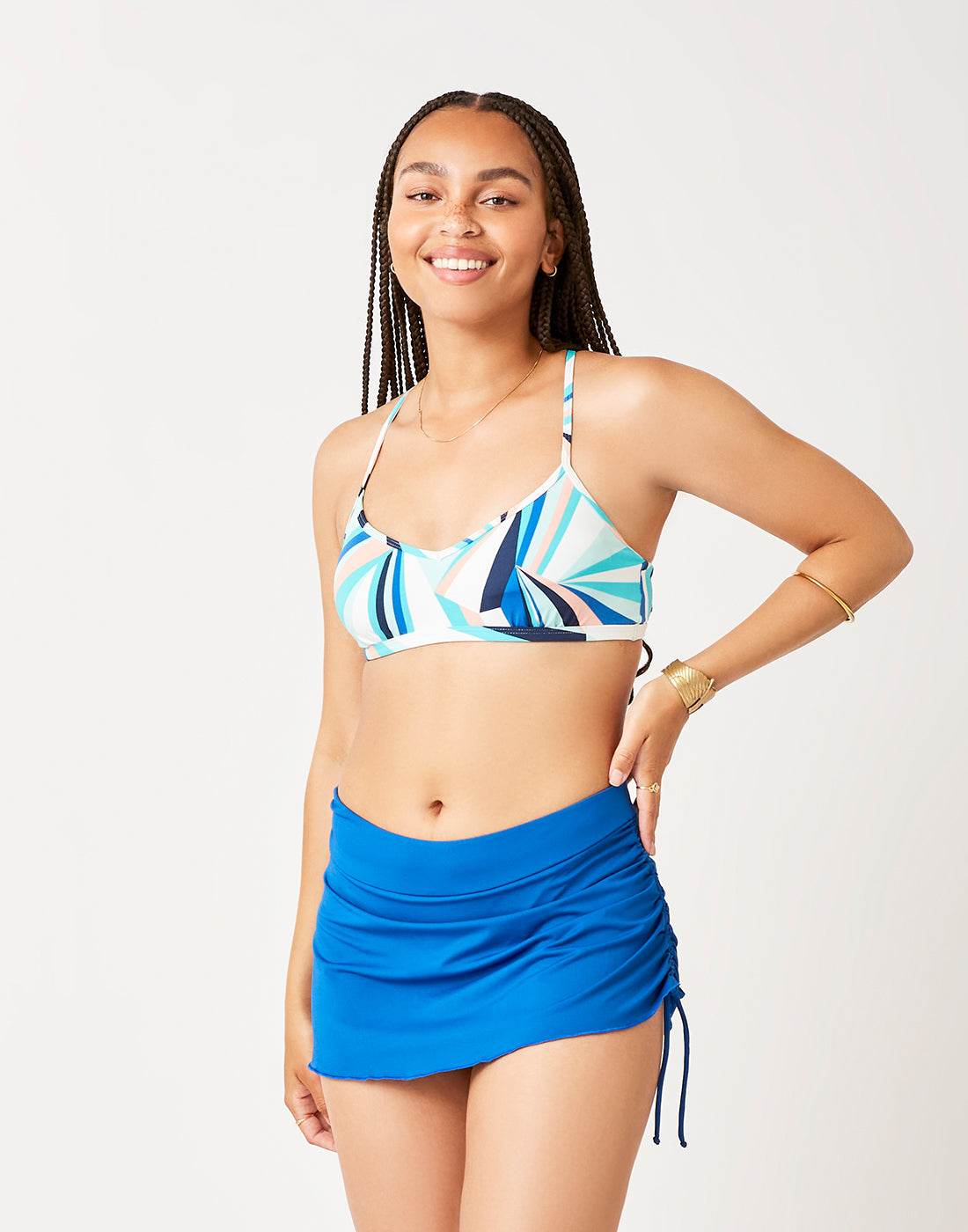
High-waisted full coverage swim bottoms combine a waistband that typically sits at or near the natural waist with a fuller cut across the seat. The result is a swim silhouette with a little retro character and plenty of room for personal style. A higher rise provides more coverage through the lower abdomen, while the fuller back offers an alternative to cheekier cuts without requiring shorts or a skirt. Those two features work independently: a high waist does not always mean full rear coverage, and full coverage does not always mean a high waist. Together, they create a comfortable option for anyone who prefers a bit more fabric between the waist and upper thigh, whether the plan includes swimming, stretching out on a beach towel, or joining a spirited pool game. Coverage is a preference, not a rule about which bodies belong in which swimsuits. This shape can feel just as at home on a first beach trip after having a baby as it does on a well-practiced lap around the pool, provided the fit feels right for the person wearing it. Higher waistbands can offer a gently held-in sensation, though a high rise alone does not guarantee compression or shaping support. Those qualities depend on the fabric, lining, and construction. Visually, the longer line through the waist pairs easily with a cropped swim top, a classic bikini top, or a tankini. A solid bottom can give a patterned top room to shine, while a print brings personality to an otherwise simple pairing. Matching colors create a continuous look; mixed textures and prints make the combination feel more individual. High-waisted full coverage bikini bottoms bring these styling possibilities to a two-piece suit while keeping the coverage concentrated where it matters to the wearer. There is nothing complicated about the appeal: a familiar, easygoing shape that leaves more attention for the water and less for adjusting a swimsuit.
The most useful details in a pair of full coverage swim bottoms are often the ones that are easiest to overlook on a hanger. Stretch fabric, commonly made with nylon or polyester blended with elastane, allows the suit to move with the body and recover its shape afterward. The balance matters more than stretch alone: fabric should give enough for sitting, swimming, and climbing a pool ladder without feeling loose once wet. A smooth knit can slide comfortably under a cover-up, while ribbed or other textured fabric adds dimension to a simple silhouette. Lining can contribute to opacity and a more substantial feel, but the degree of coverage and support varies by construction. Recycled fibers may be part of a swim fabric blend; the fiber content and care label are the best places to confirm material details rather than assuming that every suit shares the same qualities. Fit deserves the same attention. A comfortable waistband lies against the body without digging in, rolling repeatedly, or leaving a gap at the back. Leg openings should follow the crease between the hip and thigh without pinching or shifting with each step. Fuller rear coverage works best when the fabric sits smoothly across the seat, rather than gathering underneath or pulling tightly from side to side. Torso length influences where a high-rise waistband lands, so the same cut may sit closer to the navel on one person and higher on another. Waist and hip measurements, considered alongside the relevant size chart, offer a more reliable starting point than a familiar pants size alone. Sitting down, taking a few steps, and gently bending while trying on swimwear can reveal pressure points that standing still misses. For a lower waistband with a similarly covered seat,
Mid Rise Full Coverage Bikini Bottoms offer another way to balance rise and coverage. Neither height is inherently better; the right choice is the one that feels comfortable through ordinary movement.
Intended use also helps distinguish a good-looking swim bottom from one that earns repeat trips in the beach bag. For leisurely swimming and lounging, a soft waistband and comfortable leg openings may be the details that matter most. For water aerobics, paddleboarding, or playing in the surf, a secure fit and dependable fabric recovery become especially useful. Fuller coverage does not make a swimsuit shift-proof, and a smaller size is not a shortcut to better support; an overly tight fit can pull at seams and make the waistband less comfortable. A well-fitting pair should stay comfortably in place without demanding constant attention. Frequent pool swimmers may also value fabrics specifically described as chlorine-resistant, since regular exposure to treated water can affect color and elasticity over time. Durability comes from both construction and care. Even stitching, neatly finished seams, and elastic that returns to shape are useful signs of thoughtful construction, while rough pool edges and textured decking can abrade even a sturdy swim fabric. A towel offers a simple buffer when sitting on those surfaces. After a swim, rinsing in fresh, cool water helps remove salt, chlorine, and residue before they linger in the fibers. Washing according to the care label, using a gentle cleanser when appropriate, and avoiding forceful wringing can help preserve stretch and shape. Drying away from direct heat and allowing the suit to dry fully before packing it away also support a longer useful life. Sunscreen and body oils can leave residue, so attentive rinsing matters even after a day spent mostly beside the water. For travel, separating damp swimwear from the rest of a bag is practical for the trip back, but leaving it bundled there for days is less kind to the fabric. These small habits keep a favorite silhouette ready for the next pool visit, beach outing, or lakeside afternoon. With considered materials, a comfortable rise, and rear coverage that suits individual preferences, high-waisted swim bottoms make an easy foundation for a two-piece suit built around real life in and around the water.