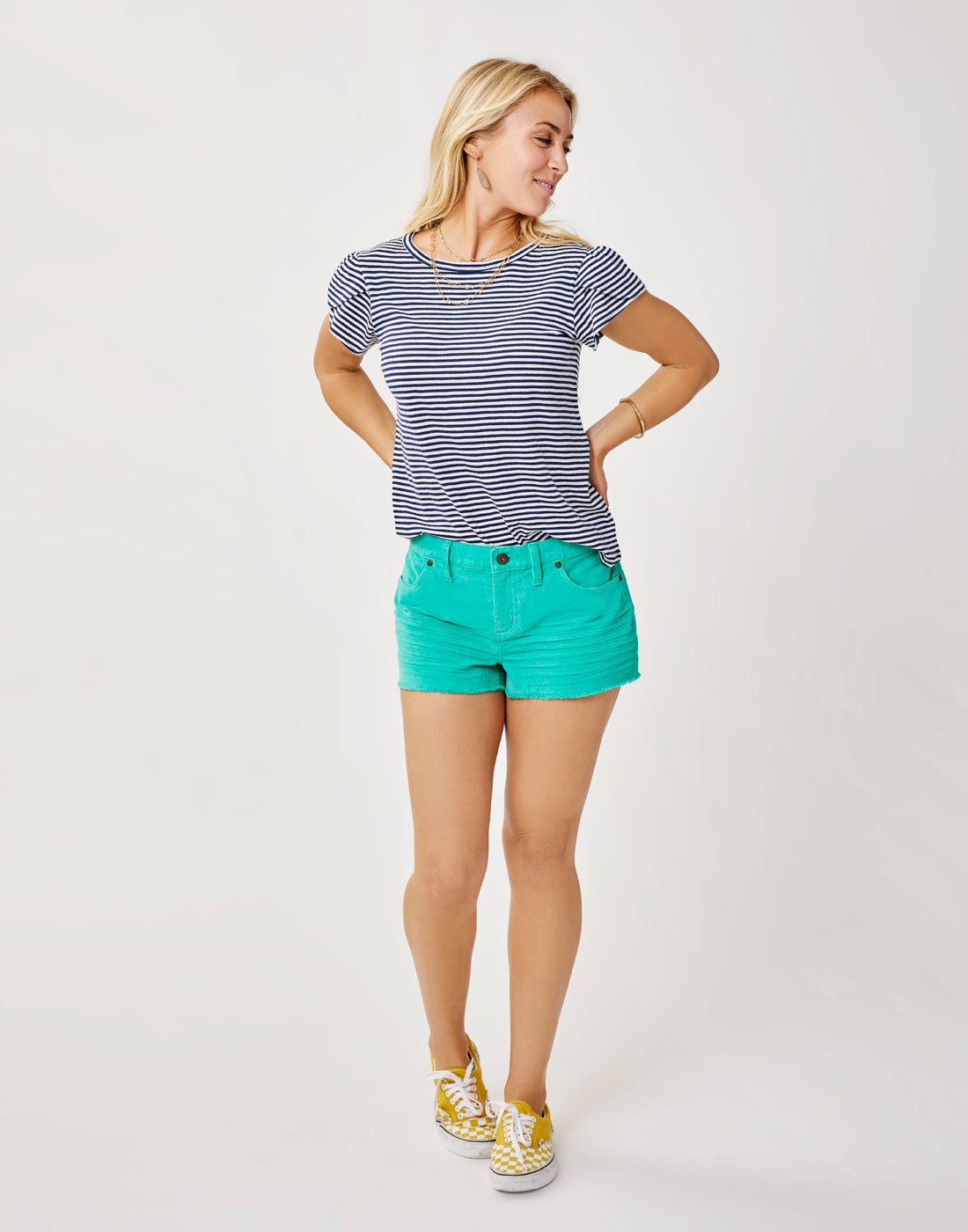
Jean pocket shorts are denim shorts with functional pockets, most often arranged in a classic five-pocket design: two front pockets, a small coin pocket, and two back pockets. That familiar layout gives everyday denim its easygoing character while keeping a few essentials close. Other designs feature patch pockets stitched onto the outside of the fabric, utility-inspired pockets with more visible structure, or pocket bags that peek below a cutoff hem. Each detail changes both the look and the way the shorts feel in use. Flat back pockets create a clean outline, while larger patch pockets lend a relaxed, practical feel. Exposed pocket linings add a deliberately undone touch, especially alongside a raw edge. Denim itself brings plenty of personality, from an even, dark wash to faded blue with subtle variations around seams and pocket openings. The fabric is typically woven from cotton, sometimes blended with a small amount of stretch fiber for flexibility. All-cotton denim tends to feel more structured at first and gradually relax with wear; stretch denim offers more give when sitting, bending, or climbing into the passenger seat for a road trip. Fabric weight matters, too. A substantial weave can hold the shape of a pocket and give the shorts a more defined silhouette, while lighter denim usually drapes more softly. Neither is automatically the better choice; the difference is in the feel. Organically grown cotton and recycled fibers may also be part of a denim blend, with the fabric label providing the clearest picture of its composition. Beyond the fiber content, useful construction details include secure pocket stitching, reinforced corners, neatly finished seams, and a waistband that keeps its shape. Those quiet details help denim shorts handle repeat wear, turning a familiar casual staple into something that feels ready for the ordinary adventures that fill a day.
The right fit gives jean pocket shorts room to do more than look good standing still. Rise describes the distance from the crotch seam to the top of the waistband, influencing where the shorts sit on the body. A higher rise generally rests closer to the natural waist, a mid-rise sits below it, and a lower rise settles farther toward the hips. The most comfortable placement depends on torso length, personal preference, and how the waistband feels through a full day of movement. A waistband should feel secure without digging in when seated, and the front pockets should lie reasonably flat rather than pulling open under tension. Through the hips and seat, a little breathing room helps preserve the shape of the pockets and makes everyday motion easier. Fitted shorts can offer a close, streamlined silhouette, while relaxed cuts leave more space through the thigh. Neither fit needs to follow a particular body type; comfort and the desired outline are better starting points. Inseam length changes coverage, but the leg opening matters just as much. A shorter inseam with a roomy opening can feel very different from a longer, narrow cut, especially while walking or sitting cross-legged on a picnic blanket. Cuffed hems create a defined edge and can add a little weight at the leg, while raw hems have a more casual finish and may continue to fray. Pocket placement deserves the same attention as length. Front pockets positioned at a comfortable angle make access easier, and back pockets influence the overall proportions of the shorts. Depth determines whether a pocket is useful for a key or capable of holding something larger, though even a deep pocket can pull on the fabric when filled with a heavy phone. For shoppers drawn to storage along the sides rather than the traditional denim layout,
Side Pocket Shorts offers a related direction to explore. Practical pockets are a welcome detail, but a small bag still earns its place when the day calls for carrying more than the basics.
Denim pocket shorts fit naturally into the parts of life that call for comfortable clothes with a little character: a neighborhood walk, a casual lunch, a beach-town getaway, or a slow afternoon browsing a bookstore. A simple knit top lets the wash and pocket details stand out, while a loose button-front shirt brings a softer contrast to denim’s structure. A tucked or partially tucked top can define the waistband without hiding the front pockets; an untucked silhouette keeps the overall look easy. Clean hems and understated stitching tend to feel more polished, while faded fabric, visible pocket bags, and gently distressed edges lean casual. Shoes change the mood without requiring an entirely different outfit: sneakers keep things practical, flat sandals feel unfussy, and a simple slip-on works for a day with several stops. Although denim is durable, these are casual shorts rather than technical swimwear or specialized athletic clothing; cotton absorbs water and can take time to dry. Thoughtful care helps preserve the fit and finish that make a pair feel familiar. The care label takes priority, particularly for stretch blends, special dyes, and decorative details. In general, turning denim inside out, washing with similar colors in cold water, and avoiding unnecessary heat can help limit fading and stress on the fibers. Emptying pockets before washing also prevents forgotten tissues, receipts, or keys from creating an unwelcome surprise. Raw hems may develop loose threads with wear, and trimming a stray thread is gentler on the edge than pulling it. Between washes, allowing the fabric to air out can keep a lightly worn pair feeling fresh without extra laundering. For gifting, familiar details matter more than guessing at a new silhouette: a recipient’s preferred rise, usual inseam, and comfort with structured or stretchy denim make useful reference points. Whether chosen for everyday errands or an easy escape from the usual routine, jean pocket shorts bring together recognizable denim texture, personal fit, and the small satisfaction of having somewhere to tuck a key.