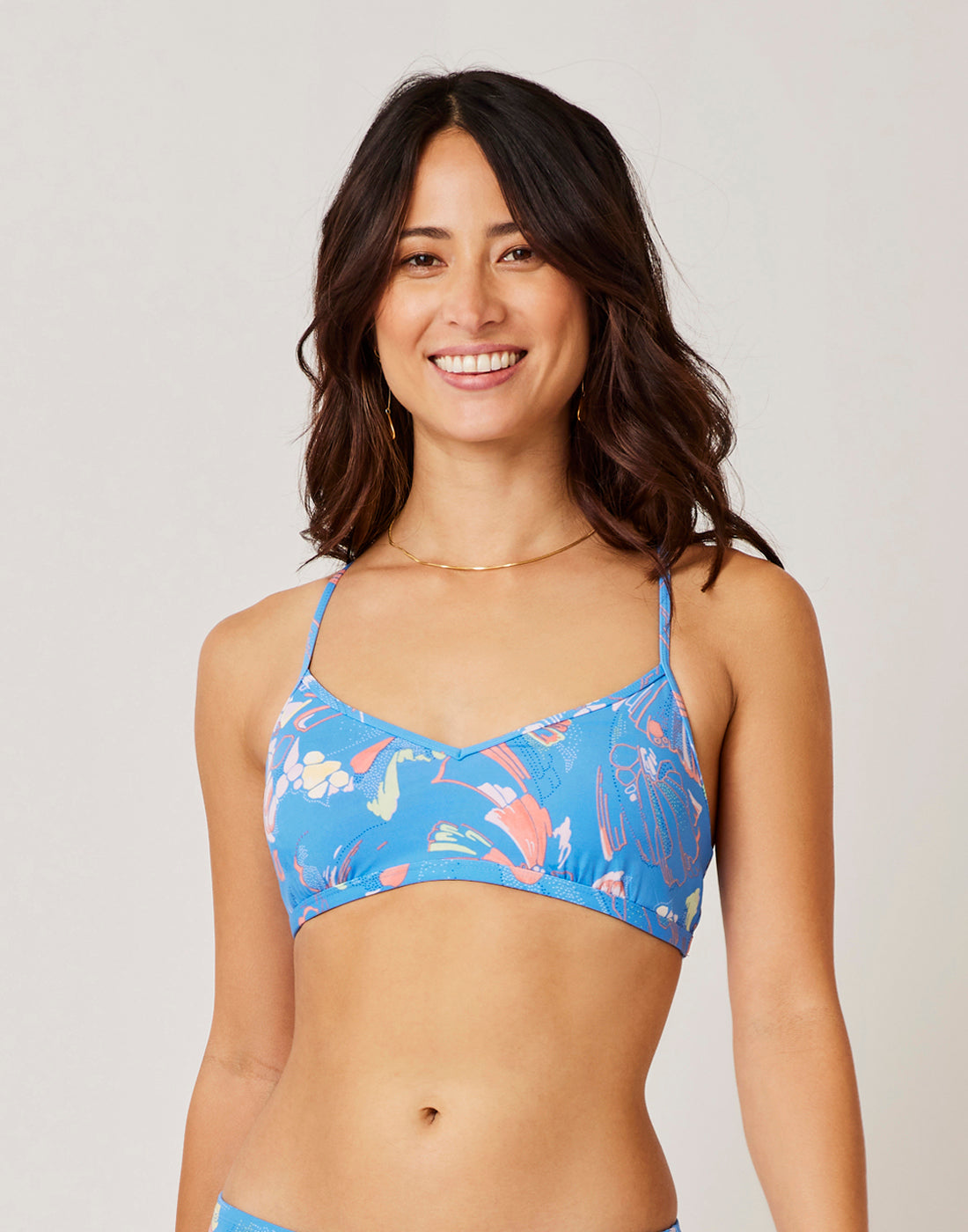
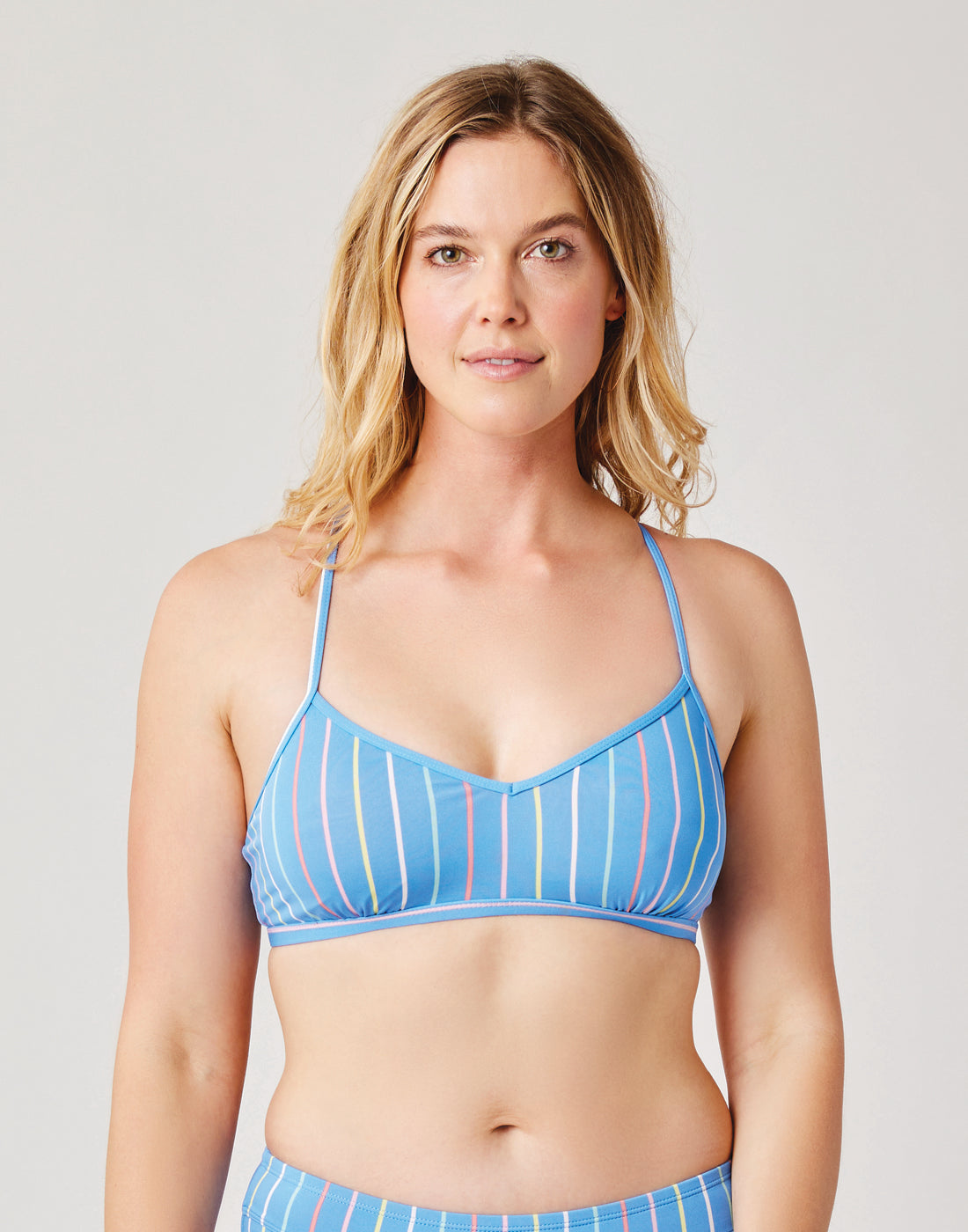
Labor Day bikini tops belong in the company of lake swims, beach picnics, and that pleasantly unstructured stretch between a morning paddle and lunch on the deck. The right top feels comfortable through all of it, with a fit that suits both the day’s plans and the person wearing it. Triangle shapes offer a classic, adjustable silhouette, while scoop necks and bralette styles often create a more continuous band of coverage across the chest. A higher neckline can feel reassuring for swimming or leaning over a paddleboard; a bandeau creates a different look for relaxed poolside time, though its staying power depends on the band, construction, and fit. None of these shapes belongs to just one body type. Coverage, lift, and freedom to move are personal preferences, not rules attached to a size. A supportive fit starts with an underband that sits securely without digging in or riding up across the back. Cups should hold the bust comfortably without cutting across it, leaving gaps, or requiring a constant tug back into place. Adjustable shoulder straps and back closures can help fine-tune that balance, especially when the bust and rib cage call for different proportions. Wider straps may spread pressure more comfortably across the shoulders, while a halter directs more of that pressure toward the neck. Underwire can provide definition and separation when it follows the bust comfortably; wire-free construction relies on the band, fabric, and internal structure for its support. Removable pads can change the feel and shape of a top, but padding alone does not determine how securely it fits. A few ordinary motions tell a useful story: reaching overhead, bending to pick up a towel, and turning from side to side should feel easy rather than carefully choreographed. The goal is a bikini top that stays comfortably in place, so attention can return to the water, the conversation, or the very important matter of keeping sand out of lunch.
Fabric and construction make a difference long after the first try-on. Bikini tops commonly combine nylon or polyester with elastane, also called spandex, for stretch and recovery. Nylon blends often feel smooth and supple, while polyester blends can offer good color retention; actual performance depends on the fabric, finish, and care, not simply the fiber name. Elastane helps a top stretch with the body and return toward its original shape, but a higher percentage does not automatically mean better support. Fabric weight, lining, seam placement, and the design of the underband all contribute to the finished feel. A fully lined top can provide a more substantial layer between skin and outer fabric, and soft seam finishes matter wherever straps or edges meet the body. Textured fabrics bring visual depth, while smooth surfaces create a clean silhouette that layers easily under a shirt. Neither texture nor thickness guarantees coverage when wet, so lining and fit deserve attention alongside appearance. Fiber details can also identify recycled nylon or polyester when those materials are part of the blend. For durability, thoughtful care is as useful as thoughtful construction. Salt, chlorine, sunscreen, body oils, and heat can all take a toll on stretch fabrics over time. A cool freshwater rinse after swimming helps remove residue before it settles into the fibers. When washing is needed, the care label takes priority; gentle hand washing with a mild detergent is often suitable, while bleach and fabric softener are generally best avoided unless the label says otherwise. Squeezing out excess water gently, rather than twisting the top, helps protect its shape. Drying in shade with good airflow is kinder to elastic than a hot dryer, and a wet bikini top is better spread out than left bundled inside a beach bag. Rough pool edges and abrasive seating can also snag or wear the surface, making a towel a useful buffer. Small habits like these help preserve the comfortable stretch, smooth finish, and dependable fit that make a bikini top worth reaching for again.
The appeal of swim separates is the freedom to build a pairing around real preferences rather than a matching-set rulebook. A bikini top and bottom do not have to share the same size, print, or level of coverage to work beautifully together. A solid top can settle a lively print, while a patterned top can bring personality to a simple bottom. Colors that echo one another create an easy connection without looking overly coordinated. Different fabrics may reflect light differently or dry at different rates, so coordinating color is only part of the picture. Proportion matters just as much: a longer-line top paired with a higher-rise bottom creates a different amount of exposed skin than a small triangle silhouette with a lower rise. Either can feel relaxed and confident when the fit is right. For those drawn to a longer swim silhouette,
Labor Day tankini swim tops provide another way to enjoy the flexibility of separates with more coverage through the torso. Intended use helps bring those preferences into focus. Lap swimming, playing in the surf, and climbing onto a floating dock call for a top that remains secure through repeated motion; reading beneath an umbrella may put a softer feel and fewer straps higher on the list. A pull-on shape can feel uncomplicated, while a clasp closure may be easier for someone who prefers not to pull a close-fitting top overhead. Swimwear coverage should not be treated as complete sun protection, and any ultraviolet protection rating needs to be stated for the particular fabric or style rather than assumed. Beyond a Labor Day getaway, a comfortable bikini top can earn its place on a pool visit, a lakeside afternoon, or a future beach trip. Paired with a loose shirt and easy shorts between swims, it becomes part of an unfussy day by the water, with comfort doing most of the styling.