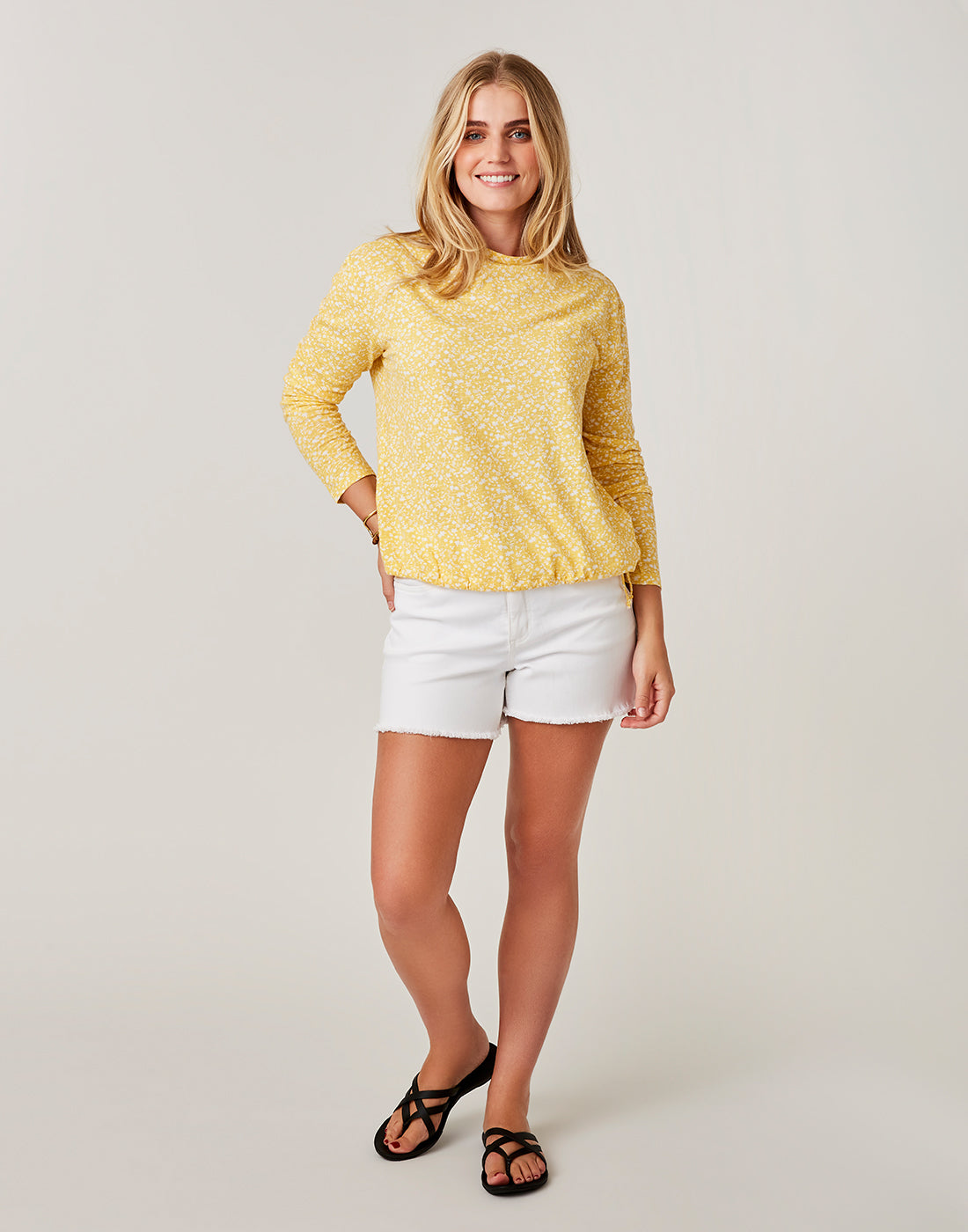
Lightweight denim shorts bring the familiar texture of jeans to a softer, less bulky silhouette that feels at home on a coastal getaway, a neighborhood walk, or an afternoon spent wandering a favorite bookstore. Their defining feature is fabric weight, not color: lightweight denim uses less fabric mass per square yard than heavier denim, while a light wash describes the shade and finish. A pale blue pair can still feel substantial, and a darker wash can have an easy, fluid drape. That distinction matters when the goal is comfortable movement without giving up denim’s characteristic weave and everyday versatility. Cotton is a common foundation, offering a breathable feel and a texture that develops character with wear. Some fabrics include a small amount of elastane for stretch; others blend cotton with fibers such as lyocell for a softer hand and more fluid movement. The fiber label helps explain those differences, though weave, finishing, and construction also influence how the shorts feel against the skin. Denim made entirely from cotton often has a more structured shape at first and may relax through the seat and waist with wear. Stretch denim offers more give when sitting, bending, or stepping onto a bike, with recovery depending on the blend and fabric quality. Lightweight does not automatically mean thin, sheer, or delicate. A well-balanced fabric can feel supple while retaining enough body to support pockets, seams, and a flattering shape. For women who enjoy the look of denim but prefer less stiffness, that balance is much of the appeal. Softness at the waistband, flexibility through the hip, and a hem that moves rather than grips can make the difference between shorts that look good standing still and shorts that earn their place in everyday life. The best impression is effortless: recognizable denim character, with a little less weight to carry through the day.
Fit gives lightweight jean shorts their personality, whether the silhouette is close to the body, gently flared, or relaxed through the leg. A high rise generally sits near or above the natural waist, creating a defined shape with a tucked tee or a shorter top. A mid rise sits lower on the torso and can feel less restrictive for anyone who prefers a waistband away from the natural waist. Those labels are useful starting points rather than universal measurements, since the same rise can land differently depending on torso length and body proportions. Inseam length is equally personal. A shorter inseam leaves more of the leg uncovered, while a longer inseam provides additional coverage for sitting on a picnic blanket, walking through town, or settling into a travel day. Leg opening matters just as much as length: an A-line cut gives the thigh more room, a straight shape keeps the outline clean, and a loose fit creates a casual drape without needing to cling. Comfortable shorts leave enough space across the front hip and seat to sit naturally, without the waistband digging in or the pockets pulling open. Stretch can add flexibility, but it does not replace a cut that suits the body. Pocket placement, a curved waistband, and the shape of the back yoke can all influence how smoothly denim follows the waist and hips. Finishing details change the mood, too. A clean hem feels polished with a woven shirt and simple sandals, while a raw edge adds texture beside a soft tank or an easy pullover. Cuffed hems offer a more defined edge, though the fold can add bulk at the thigh. Washes range from faded blue to deeper indigo and other denim shades, making it easy to build different outfits around the same familiar silhouette. For anyone drawn to that lighter feel with full-length coverage,
Lightweight Summer Denim Jeans offer a related direction. Both silhouettes work with everyday favorites without requiring a whole new wardrobe.
The lasting appeal of lightweight denim shorts comes from how naturally they fit into real routines. They can pull on over a swimsuit for the walk from the beach to lunch, pair with sneakers for a day of sightseeing, or sit neatly beneath an untucked button-front shirt for a casual dinner. Denim is not a replacement for swimwear or quick-drying performance fabric, however; cotton-rich shorts can hold moisture and take time to dry after getting wet. For travel, a comfortable waistband and a fabric that folds without excessive bulk are practical advantages, while usable pockets make room for small essentials. Durability depends on more than fabric weight. Secure stitching, reinforced pocket corners, a smoothly working zipper, and firmly attached buttons help shorts stand up to repeated wear. A lighter fabric may show abrasion sooner at high-friction areas, especially if the fit pulls tightly across the seat or thighs, so room to move serves both comfort and longevity. Care should follow the garment label, since fiber blends, dyes, and decorative finishes can require different treatment. When machine washing is permitted, turning denim inside out and using a gentle cycle with similar colors can help limit surface wear and dye transfer. High dryer heat can contribute to shrinkage and put stress on stretch fibers; air drying or a label-approved low-heat setting is often a gentler choice. Raw hems may continue to fray, giving cutoffs their lived-in character, while finished hems tend to maintain a more consistent edge. Between washes, airing shorts and addressing small spots when appropriate can reduce unnecessary laundering. Fabric composition also offers context for thoughtful choices: organic cotton describes how the cotton was grown, while recycled fiber content identifies material recovered for another use. Neither alone determines softness, fit, or how long a garment will last. For a gift, familiar sizing, a preferred rise, and an inseam the recipient already enjoys are more helpful than guessing from appearance. Ultimately, denim shorts feel most personal when the details support the wearer’s own rhythm, leaving plenty of room for movement, repeat outfits, and plans that take the scenic route.