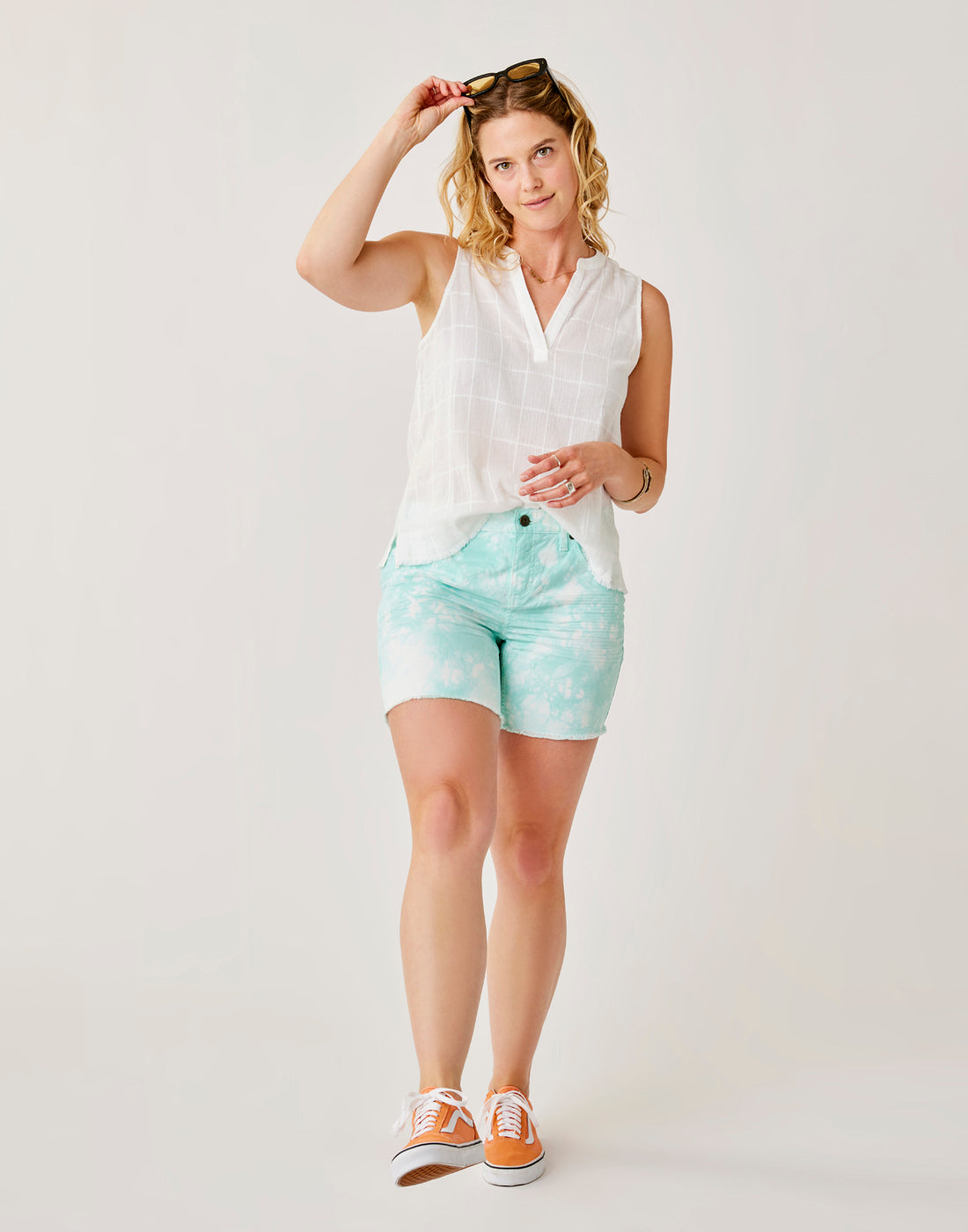
Lightweight shorts are defined by fabrics and construction that reduce bulk while keeping comfort, coverage, and freedom of movement in balance. The category spans soft casual shorts, easy pull-on silhouettes, and more active styles, with the best match depending on how you like to spend your day. A pair that feels right for a long drive might have a smooth waistband and a forgiving drape; a pair for a walk followed by lunch might offer a little more structure and pockets that hold their shape. Fabric makes much of that difference. Cotton generally feels soft and breathable against the skin, while linen brings an airy texture and a naturally relaxed finish. Blends can combine the feel of natural fibers with qualities such as added stretch or improved shape retention, depending on their composition. Lightweight synthetic fabrics may be useful for active outings, particularly when the fabric is specifically designed to wick moisture or dry quickly. Those features are not automatic just because a fabric is thin, and casual shorts should not be assumed to perform like swimwear. Fabric weight also tells only part of the story: weave, texture, lining, and cut all influence how shorts feel once you are moving. A fine woven fabric can look polished without feeling stiff, while a soft knit can bring the comfort of lounge clothes to a day spent close to home. Coverage matters just as much as softness. An open weave or very fine fabric may offer less opacity, especially when stretched, so lining and fabric density deserve attention alongside weight. For women who prefer clothing that feels easy without looking like an afterthought, lightweight shorts can make a useful foundation for everyday dressing. They leave room for personal style, whether that means a simple tank and sandals, a button-front shirt with the sleeves casually rolled, or a favorite tee that has already earned its place in the travel bag.
Fit gives lightweight shorts their personality, from neatly shaped silhouettes to loose, fluid cuts that move easily through the day. The waist, rise, inseam, and leg opening work together, so no single measurement tells the whole story. A higher rise may feel secure and pair comfortably with a shorter top, while a lower rise rests elsewhere on the torso and changes both the look and feel. Elastic waistbands offer flexibility, drawstrings allow small adjustments, and fixed waistbands create a more defined shape. None is universally better; comfort depends on where the waistband sits and how it behaves when you sit down, bend, or reach. A waistband that feels comfortable standing in front of a mirror should still feel comfortable halfway through a road trip. Through the hips and thighs, enough room to move helps keep lightweight fabric from pulling across the body or bunching at the upper leg. Stretch can support movement, but it does not replace a cut that fits well. Inseam length affects coverage, while the width and shape of the hem determine how freely the shorts move around the thigh. Shorter lengths can feel uncomplicated for lounging or slipping on over swimwear, while longer lengths may suit anyone who prefers additional coverage for walking or sitting. For a roomier silhouette,
Lightweight Relaxed Shorts offer another way to explore an easygoing fit without relying on sizing up. Useful details are often the quiet ones: a flat interior seam, a waistband that stays smooth beneath a shirt, or pockets placed where they do not interrupt the drape. Pocket depth matters when carrying keys or a phone, although even a well-made pocket can pull on a very light fabric when overloaded. Fit preferences are personal, and the most wearable shorts make space for both your shape and your routine. There is no need to dress for a particular body type when the better goal is clothing that lets you settle in and get on with the day.
Durability in lightweight shorts comes from thoughtful construction and suitable care, not simply from heavier fabric. Even stitching, neatly finished seams, and secure attachment at pocket openings and waistbands help a lighter garment stand up to repeated wear. Fabric should suit the activity, too: a delicate, loosely woven pair may be lovely for relaxed days but less practical for repeated contact with rough benches, trail brush, or abrasive surfaces. For travel, low bulk can make packing easier, though wrinkle resistance and drying time depend on the fiber blend and finish rather than weight alone. Linen’s gentle creases are part of its character, while other fabrics may need smoothing or careful folding to keep their intended appearance. Care labels provide the most reliable direction for washing, drying, and ironing. Where permitted, washing with similar colors, avoiding unnecessarily high heat, and handling drawstrings and fastenings carefully can help preserve fit and finish. Sunscreen, salt, and pool chemicals may need prompt attention after a beach or poolside outing, following the garment’s care instructions rather than treating everyday shorts as technical swim gear. Letting shorts dry fully before folding them away also helps keep them ready for the next outing. For anyone thinking about a more considered wardrobe, versatility and repeat wear are useful qualities alongside clearly stated material details, such as organic cotton or recycled fibers when identified on the garment. A pair that works for breakfast at home, a neighborhood walk, and a weekend away has more opportunity to become a familiar favorite. Lightweight shorts can also be a thoughtful gift for someone who enjoys beach trips, relaxed travel, or comfortable everyday dressing, especially when their preferred rise, length, and waistband style are already known. Softness is a good starting point, but a familiar fit is what makes a gift feel personal. The lasting appeal is straightforward: less bulk, comfortable movement, and enough versatility to follow the day wherever it wanders, without requiring a full outfit rethink along the way.