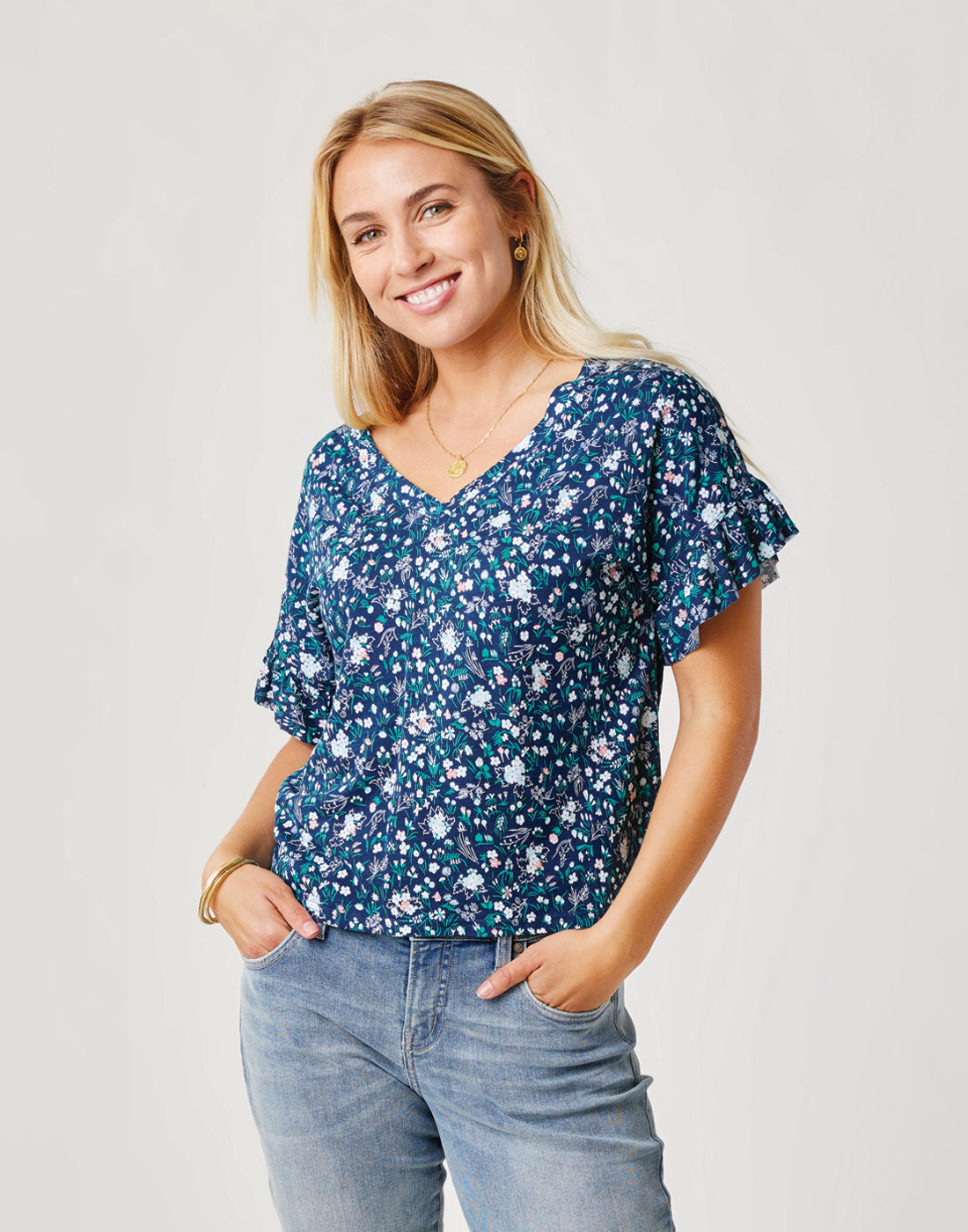
Lightweight t-shirts are everyday knit tops made with relatively low-weight fabrics that feel easy on the body and layer without much bulk. Many use fabric weighing less than about 5 ounces per square yard, though there is no universal cutoff, and fabric weight alone does not determine softness, breathability, or durability. Fiber, yarn thickness, and knit construction all contribute to how a tee feels when it joins the daily rotation. Fine cotton jersey has a familiar softness and a gently flexible structure, making it a natural match for coffee runs, casual lunches, and afternoons with a full to-do list. Long-staple cotton can offer a smoother surface because its longer fibers allow for yarns with fewer exposed ends. Organic cotton describes how the cotton is grown rather than a particular weight or finish; a tee crafted from organic cotton can be lightweight, substantial, fitted, or relaxed depending on its construction. Cotton blends bring other possibilities to the mix. Polyester can help a fabric dry faster than comparable all-cotton material, while rayon often adds fluid drape and a soft hand. A cotton, polyester, and rayon tri-blend combines those qualities in proportions that vary by fabric. Small amounts of elastane can add stretch and help a shirt recover its shape. For lightweight t-shirts worn during active outings, moisture management deserves a closer look: cotton absorbs moisture readily, while certain synthetic fabrics are designed to move it away from the skin and dry efficiently. Those capabilities depend on the actual fabric, not simply the word “lightweight.” A tee for a neighborhood stroll may prioritize a soft, barely-there feel; one for a longer hike may need documented moisture-wicking performance and seams that sit comfortably beneath backpack straps. The best match comes from the way a fabric supports the day, whether that means a little movement, plenty of lounging, or both.
Fit gives a lightweight tee its personality, from a clean, close-to-the-body silhouette to the loose drape of a favorite borrowed shirt. A fitted shape slips easily beneath a button-down or cardigan, while a relaxed cut leaves more room through the chest and waist for reaching, stretching, and settling into a seat on a long drive. Lightweight fabric tends to follow the contours beneath it, so a little extra ease can change both the look and the feel. Shoulder placement matters, too: a seam near the shoulder’s natural edge creates a more defined outline, while a dropped shoulder usually looks more laid-back. Sleeves should allow comfortable movement without pulling across the upper arm, and necklines should rest comfortably rather than feel restrictive or require constant adjusting. Crewnecks create a simple frame for a necklace; v-necks and scoop necks open up the neckline without adding extra detail. Length is another small decision with a noticeable payoff. A shorter hem can sit neatly above high-rise bottoms, a hip-length cut offers flexibility for tucking, and a longer silhouette provides extra coverage when bending or reaching. Side slits and curved hems can help a shirt fall smoothly rather than bunch at the hips. Fabric opacity is worth considering alongside fit, especially with pale colors or open knits. Lightweight does not always mean sheer, but color, knit density, and how tightly the fabric stretches across the body can affect coverage. A smooth underlayer close to the wearer’s skin tone can keep the overall look simple. Solid tees leave room for patterned bottoms and textured layers, while
Lightweight Graphic Tees bring artwork and a little personality to the same easy silhouette. Paired with denim, pull-on shorts, or a flowing skirt, a lightweight t-shirt can feel relaxed without looking like an afterthought. It is the kind of foundation that lets the rest of an outfit have a point of view, even when getting dressed takes five minutes.
Lasting comfort depends on construction and care as much as that first soft touch. A well-made lightweight t-shirt does not need to feel thick to earn a regular place in a wardrobe. Even stitching, smoothly finished seams, and a neckline that lies flat are useful signs of thoughtful construction. Reinforcement at the shoulders or back neck can help stabilize areas that experience repeated pulling, while a neatly finished hem should flex with the fabric rather than feel tight or puckered. Fine knits still benefit from a little consideration around rough bag straps, exposed hook-and-loop fasteners, and jewelry that can catch a loop of yarn. Friction can cause pilling, particularly in areas such as the underarms and sides, and the likelihood varies with fiber length, yarn structure, and fabric finish. Care labels offer the most reliable direction for keeping a particular fabric in good shape. When the label permits, washing with similar colors in cool water, choosing a gentle cycle, and avoiding excessive dryer heat can help reduce stress on the fibers. Turning tees inside out can limit surface abrasion and is especially helpful for protecting printed designs. Cotton may shrink, rayon blends may need careful reshaping, and stretch fibers can lose resilience with repeated high-heat drying. Following the recommended drying method and smoothing the shirt back into shape helps preserve its intended fit. Folding soft knits can also prevent the shoulder bumps that narrow hangers sometimes leave behind. That small amount of care supports the versatility that makes lightweight tees such useful travel companions: they take up little packing space, tuck into different outfits, and can serve as either a standalone top or an unobtrusive base layer. For gifting, a familiar neckline, preferred sleeve length, and a color the recipient already enjoys are more dependable choices than guessing at a dramatically different style. People who favor uncomplicated dressing, frequent travelers, and anyone who appreciates soft everyday layers can all find a place for this wardrobe staple. The appeal is straightforward: comfortable fabric, a fit that feels like itself all day, and enough versatility to keep getting worn.