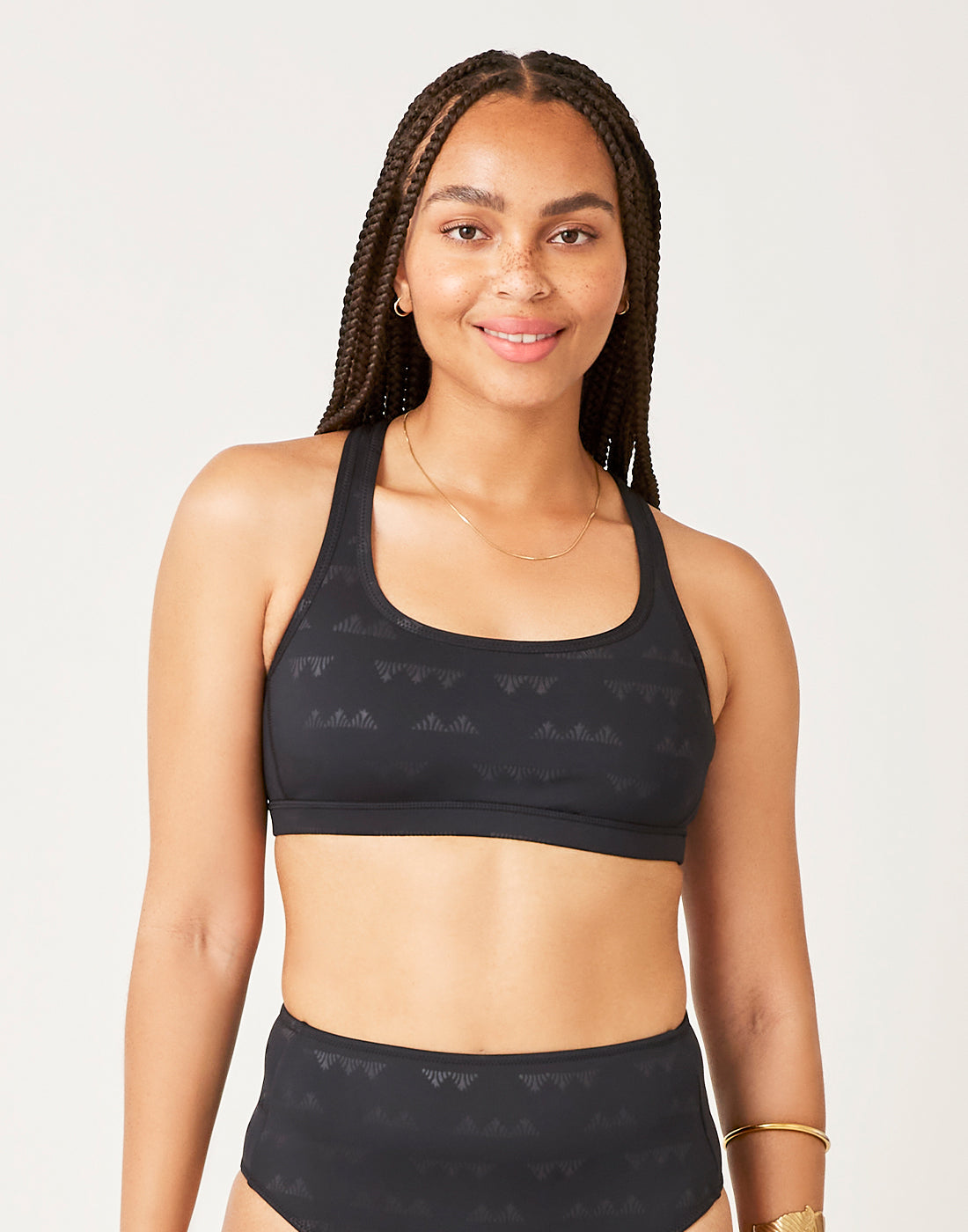
Lined bikini tops have an inner layer of fabric behind the outer swim fabric, creating a smoother feel against the skin and adding coverage without necessarily adding padding. That distinction matters: a lined top may have soft fabric layers alone, pockets for removable cups, or padding sewn into place. Lining can help improve opacity and give a top a more finished shape, while padding adds thickness and may provide extra contouring. Neither feature automatically means more lift; support comes from the full design, including the underband, straps, cup construction, and closures. For women who enjoy everything from relaxed pool time to an afternoon of paddling, those details can make a two-piece feel more comfortable and dependable. A soft-lined triangle top offers a flexible, minimal structure, while a bralette silhouette often pairs a broader underband with an easy, close-to-the-body fit. Underwire designs add structure beneath the bust, and longline shapes extend farther down the rib cage for a different balance of coverage and style. Bandeau shapes leave the shoulders open, though their security depends on a well-fitting band and any additional support features. Each silhouette brings its own personality, from clean and streamlined to softly gathered or playfully tied. The lining works quietly behind the scenes, helping the fabric sit comfortably while keeping the outside looking intentional. Coverage still varies by fabric, color, stretch, and construction, so “lined” should not be treated as a promise of complete opacity in every setting. A pale fabric stretched too tightly may behave differently from a denser, darker fabric with a closely matched lining. Product descriptions that distinguish between lining, removable cups, and fixed padding make it easier to understand how a top will feel, rather than relying on appearance alone. The best match is a shape that feels like an extension of personal style, with enough structure for the activities on the agenda and no unnecessary fuss.
Fabric and fit give lined bikini tops much of their everyday character. Swim fabrics commonly blend nylon or polyester with elastane, pairing a smooth surface with stretch that allows the top to move with the body. The inner lining may use a similar blend or a lighter fabric chosen for softness and flexibility. A well-balanced combination stretches comfortably without making the outer layer bunch or the lining pull across the cups. Recycled fibers can also be part of swim fabric construction; stated fiber percentages offer a clearer picture of material content than broad sustainability language. Fabric content alone does not establish durability, chlorine resistance, or drying speed, since those qualities also depend on how the textile is made and finished. Against the body, a comfortable lining should feel smooth, with seams and edges that do not scratch or create pressure points. The underband should sit level and feel secure without restricting a full breath, while cups should contain the bust without spilling at the neckline or leaving excess fabric that folds and shifts. Adjustable shoulder straps help fine-tune the fit, but tightening them cannot make up for an underband that is too loose. Broader straps and a supportive band can distribute pressure more comfortably, particularly for fuller busts or longer stretches of wear. Bra-sized designs may offer a closer match when band and cup proportions differ from standard size groupings. Removable inserts allow flexibility in shaping, although they can shift or fold and may need smoothing after washing. Fixed padding keeps its placement more consistent, while unpadded lining offers a softer feel with less bulk. A little movement tells a fuller story than standing still: reaching for a towel, leaning over a beach bag, or lifting both arms should not require constant readjustment. Comfort has a practical side, and a top that stays settled leaves more attention for the good part of being by the water.
Intended use helps bring those fabric and fit details together. For swimming laps, playing in the surf, or climbing back onto a paddleboard, a secure closure, stable straps, and a neckline that stays close to the body are often more useful than decorative details alone. For floating, lounging, or an easy dip, a softer silhouette may offer all the structure needed. Lining itself does not make a bikini top suitable for high-impact activity, and extra fabric does not replace a fit designed for movement. It does, however, give many swim shapes a comfortable inner finish that makes them pleasant to wear beyond a quick swim. Color and pattern add another layer of choice without changing those fundamentals. Solid shades create a clean pairing with printed bottoms, while a patterned top can bring a little energy to a simple swim look. For a softer palette or a brighter pop of color,
pink bikini tops offer another way to express personal style, with lining and support details still worth considering separately from the shade. Thoughtful care helps preserve both the look and the feel of a lined top. A fresh-water rinse after swimming removes much of the salt, chlorine, and other residue that can linger in the fabric. The care label should guide washing, but gentle handling, mild detergent, and avoiding forceful wringing generally help protect stretch fibers and cup shape. Removable inserts may need separate attention according to their care instructions, and smoothing them before drying can prevent creases. Letting every layer dry completely before storage helps avoid trapped moisture; the inside can remain damp after the outer fabric feels dry. Rough pool edges, abrasive surfaces, and repeated exposure to hot tubs can also shorten a swimsuit’s useful life. With a comfortable fit and careful upkeep, a lined bikini top can become a dependable part of a swim wardrobe: easy to pair, comfortable to move in, and ready for whichever version of a water day feels most like you.