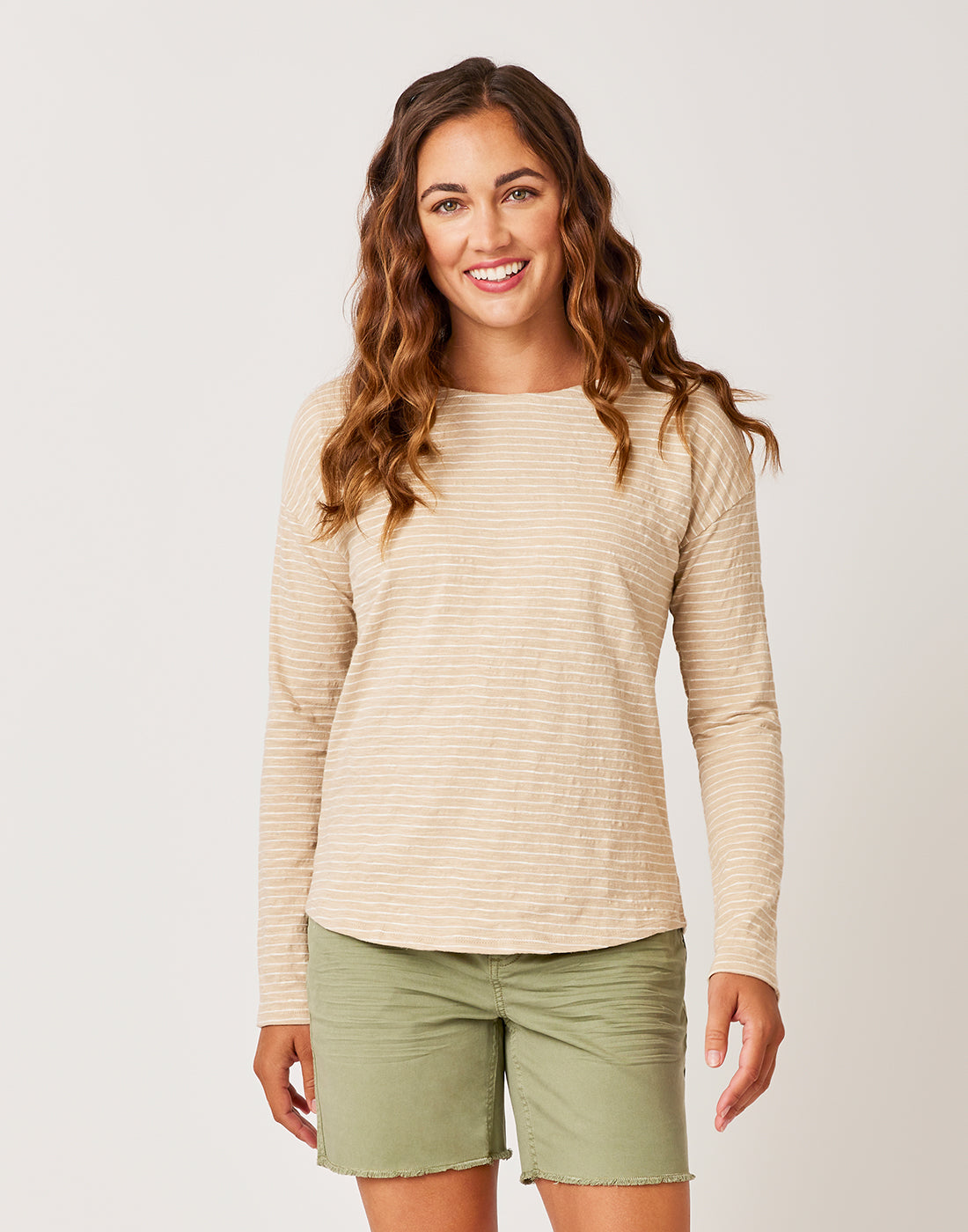
Long sleeve striped shirts bring a familiar pattern to an everyday shape, with enough variety to feel relaxed, polished, or somewhere comfortably in between. The category includes soft jersey tees, structured woven shirts, and textured knits, each with a different feel against the skin and a different way of falling on the body. Fine, closely spaced stripes can read almost like a solid from a distance, while broader bands make the pattern a more noticeable part of an outfit. Evenly spaced stripes have a classic nautical character; irregular spacing and contrasting widths offer a less traditional take. Horizontal stripes are a familiar choice for casual tees, while vertical stripes often appear on button-front styles. Neither direction comes with rules about who can wear it. The proportions, fabric, and fit matter more than old ideas about which bodies belong in which patterns. The appeal of
Stripe Shirts is their ability to add interest without making getting dressed feel like a project. A crew neckline creates a neat frame for the face, a boatneck opens the line across the shoulders, and a collared style adds structure without requiring a dressier outfit. Fit changes the effect just as much. A close-fitting shape sits smoothly beneath another layer, a straight cut leaves space through the torso, and a relaxed silhouette has an easy drape that works well with a partial tuck. Shoulder seams, sleeve width, and body length are useful details to compare with a favorite shirt already in the closet. A hem that reaches the hip offers a different proportion from one that ends at the waist, particularly with high-rise denim or wide-leg pants. Sleeves should allow a comfortable reach without pulling across the back, and cuffs should feel comfortable whether left at the wrist or pushed toward the forearm. The goal is a shirt that feels natural while reaching for a bag, sitting at a desk, or settling into a long conversation over lunch.
Fabric determines whether a striped long-sleeve shirt feels fluid, substantial, crisp, or softly broken in. Cotton jersey is a familiar choice for an everyday tee because its knitted construction allows some give and generally feels soft against the skin. A lighter jersey tends to drape closer to the body, while a heavier knit can hold a straighter shape and feel more substantial. Cotton poplin has a smoother, more structured surface, making it well suited to a striped button-front shirt with a defined collar and cuffs. Ribbed knits offer visible texture and stretch, although the amount of recovery depends on the fiber blend and construction. Linen blends can introduce an airy texture and a gently rumpled finish; blends containing fibers such as modal or lyocell often have a more fluid drape. A small amount of elastane can help a fitted shirt stretch and recover, but stretch alone does not guarantee a comfortable fit. Fabric weight, cut, and seam placement still matter. Organic cotton is worth looking for when a preference for organically grown fibers is part of the decision, with the fabric description providing the clearest information about composition. Durability also comes down to everyday details: even stitching, secure hems, stable necklines, and fabric that returns to shape after gentle stretching. Stripe alignment at prominent seams can contribute to a tidy finish, though perfect matching is not always part of a style’s construction. Care should follow the sewn-in label rather than a single rule for every striped shirt. When permitted, washing with similar colors in cool water and turning the shirt inside out can help limit surface wear. Excessive dryer heat may encourage shrinkage or affect stretch fibers, so the recommended drying method deserves attention. Reshaping a knit before drying and folding it for storage can help protect its outline, while a woven shirt may benefit from a hanger and a light press. Treating a small stain promptly, without vigorous rubbing, can also spare the fabric unnecessary wear.
The most useful long sleeve striped shirts fit into the things a day already holds: a commute, a studio session, a museum visit, a casual office, or a weekend spent wandering between a bookstore and a favorite café. A soft knit with jeans is an easy pairing because the pattern supplies interest without needing much else. With tailored trousers, the same idea feels more composed, especially when the neckline and hem sit neatly. A woven striped shirt can be worn buttoned, partly tucked, or open over a simple tank, depending on the shape and the setting. Broad stripes can sit comfortably beside solid pants, while finer stripes offer a subtle backdrop for a textured skirt or a colorful bag. There is no need to repeat every color in the shirt elsewhere in the outfit; picking up one shade is usually enough to create a connection. For travel, comfort while seated and enough room through the shoulders can matter more than how a shirt looks standing still. A fabric that suits the wearer’s preferred care routine is another practical advantage, particularly when laundry space is limited. For anyone who likes fewer decisions when getting dressed, a consistent neckline or silhouette can provide a familiar foundation while stripe widths and colors add variety. Long sleeves also offer arm coverage for those who prefer it, without automatically making a shirt formal or fitted. As a gift, a striped shirt can suit someone who reaches for simple shapes but enjoys a little pattern. The most thoughtful choice follows the recipient’s habits: soft versus crisp fabric, close versus relaxed fit, and a neckline similar to one they already enjoy wearing. Checking a size chart against a well-loved shirt is more useful than guessing from a size label alone. Ultimately, the lasting appeal is straightforward: recognizable lines, comfortable proportions, and a shape that earns its place through regular wear. A striped shirt does not need an elaborate outfit or a special occasion to feel considered.