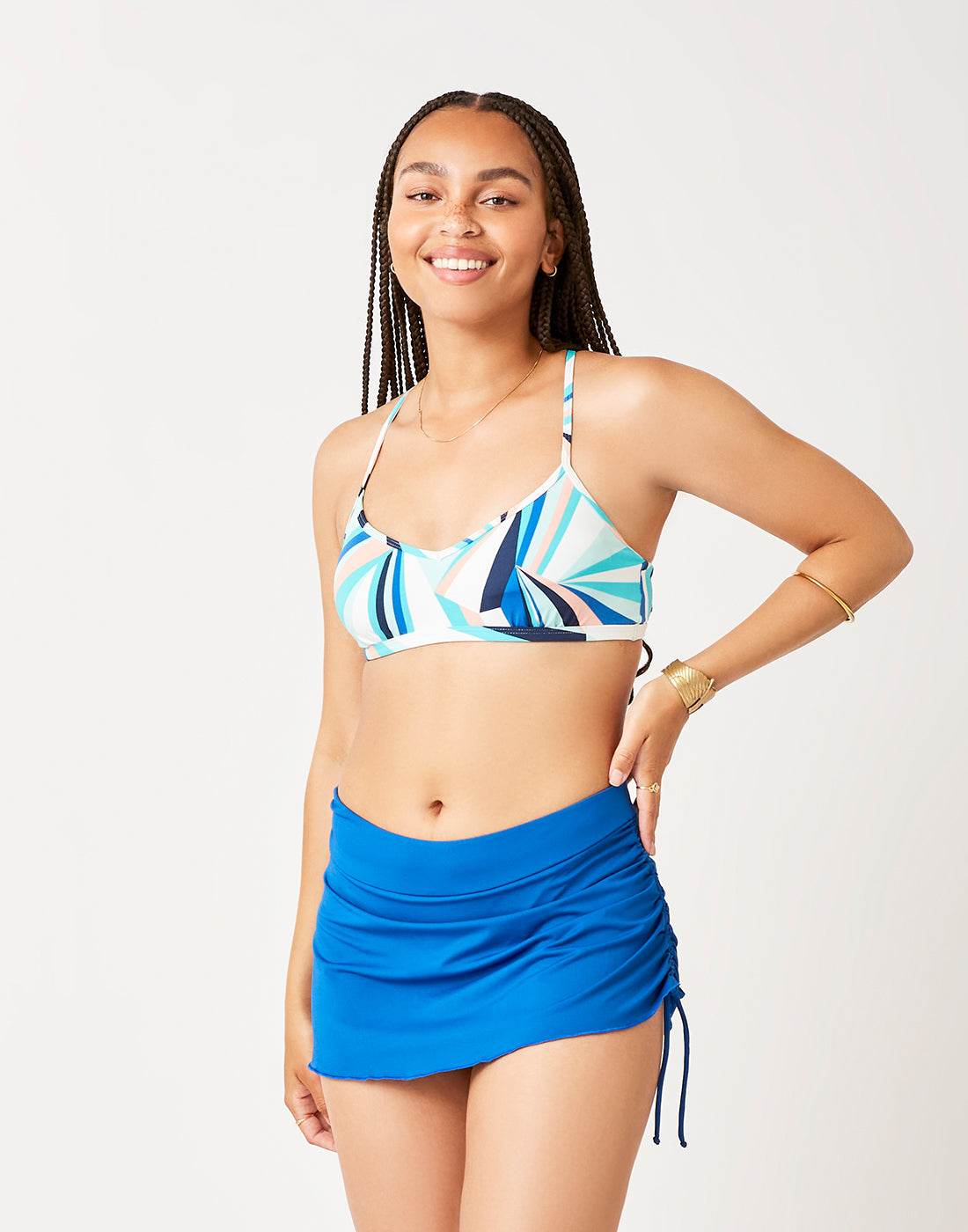
Mix and match bikini bottoms make a swim wardrobe feel personal, with separate pieces that work together without needing to look identical. A solid bottom can pick up a small detail in a printed top, while a patterned bottom can bring personality to a simple swim silhouette. Black, navy, and other versatile shades create an easy starting point for pairing; brighter colors offer a little more contrast. The most natural combinations often share one color, a similar texture, or a detail that feels connected, such as soft gathers or clean, uncomplicated edges. A botanical print with a blue accent, for example, pairs easily with a blue bottom without looking like a matching set. Pairing two prints can feel equally intentional when they share a color and differ in scale, giving each pattern a little breathing room. Bikini separates also make room for a practical reality: the best-fitting size on top may not be the best-fitting size on the bottom. Choosing each piece independently allows for a more comfortable fit across the bust, waist, and hips, rather than asking one size to do every job. That flexibility suits anyone building a swim wardrobe around their proportions, preferred coverage, and plans in the water. A favorite top can take on a different personality with a high-rise bottom, a low-rise silhouette, or a cut with adjustable sides. Coordinating
mix and match bikini tops can help carry a favorite color or detail through the full look, whether the pairing feels quietly coordinated or happily unexpected. Separates also make packing more flexible: a few compatible pieces can create different combinations without filling a bag with complete sets. The appeal goes beyond color coordination. It is about having swimwear that feels like an easy choice, whether the day includes a few laps, a paddle across the cove, or a long conversation at the pool’s edge.
Fit gives mix and match bikini bottoms their everyday ease, and several small details shape how a pair feels once it is on. Rise describes where the waistband sits on the body, while back coverage describes how much fabric covers the seat; a high-waisted bikini bottom does not automatically have fuller coverage. Leg openings matter, too. A higher-cut opening exposes more of the hip, while a lower-cut opening creates a different line across the upper thigh. Neither shape belongs to a particular body type. The useful distinction is how each feels while sitting, walking, swimming, and climbing out of the water. A waistband should sit securely without digging in, rolling, or leaving a gap, and leg openings should follow the body without pinching. Repeated tugging or shifting can point to a size or cut that is not quite right. Body measurements and the relevant size chart offer a more reliable starting point than choosing by a familiar clothing size alone, especially when trying a different rise or silhouette. Adjustable side ties can allow small changes at the hips, though the rise and back coverage still depend on the cut itself. Broader side panels create a different feel, spreading contact across more of the hip. For swimming and paddling, a secure waistband and coverage that stays comfortable through repeated motion can matter more than how a bottom looks while standing still. For a poolside afternoon, a preferred cut might simply be the one that feels comfortable on a lounge chair and during an occasional dip. Trying a seated position, a step up, and a gentle bend can reveal more about fit than a mirror alone. Mixing separate sizes and silhouettes leaves room for these preferences without making anyone dress around a rulebook. The best pairing is one that lets the wearer pay attention to the water, the company, and the next adventure rather than an edge that keeps needing attention.
Fabric and construction influence how bikini bottoms stretch, recover, dry, and hold their shape with repeated wear. Swim fabrics commonly combine nylon or polyester with elastane, which provides stretch; the balance of fibers, fabric weight, and construction all affect the finished feel. A smooth fabric can create a clean pairing with a printed top, while ribbed or textured fabric adds depth even in a single color. Different textures can work together, although two pieces with the same color name may not look identical when their surfaces reflect light differently. Recycled fibers can be part of a swim fabric blend, but fiber content is worth checking rather than assuming that every separate has the same composition. Lining adds another layer between the body and the outer fabric and can contribute to comfort and coverage. Opacity can vary with fabric, color, stretch, and lining, so a comfortable fit should not depend on stretching the material to its limit. Neatly finished seams and elastic that returns to shape after stretching are useful details to consider for swimwear that will see regular use. Pool chemicals, salt water, friction, and repeated laundering all put fabric and elastic through their paces. Sitting on a towel rather than a rough pool edge helps reduce snagging and pilling, while rinsing after a swim helps remove residue before it lingers in the fibers. The care label should lead the routine: cool water, gentle handling, and mild detergent are common care practices, but washing and drying instructions can vary. Avoiding wringing and high heat helps protect stretch, and letting pieces dry fully before packing them away keeps a swim bag from becoming an accidental storage experiment. With thoughtful care, compatible separates can stay part of a well-used rotation instead of being reserved for one particular pairing. For a gift, knowing the recipient’s preferred size, rise, and coverage makes a bikini bottom a more personal choice; a favorite color alone cannot account for fit. Ultimately, mix and match swimwear earns its place through versatility, comfort, and the freedom to put together something that feels unmistakably individual.