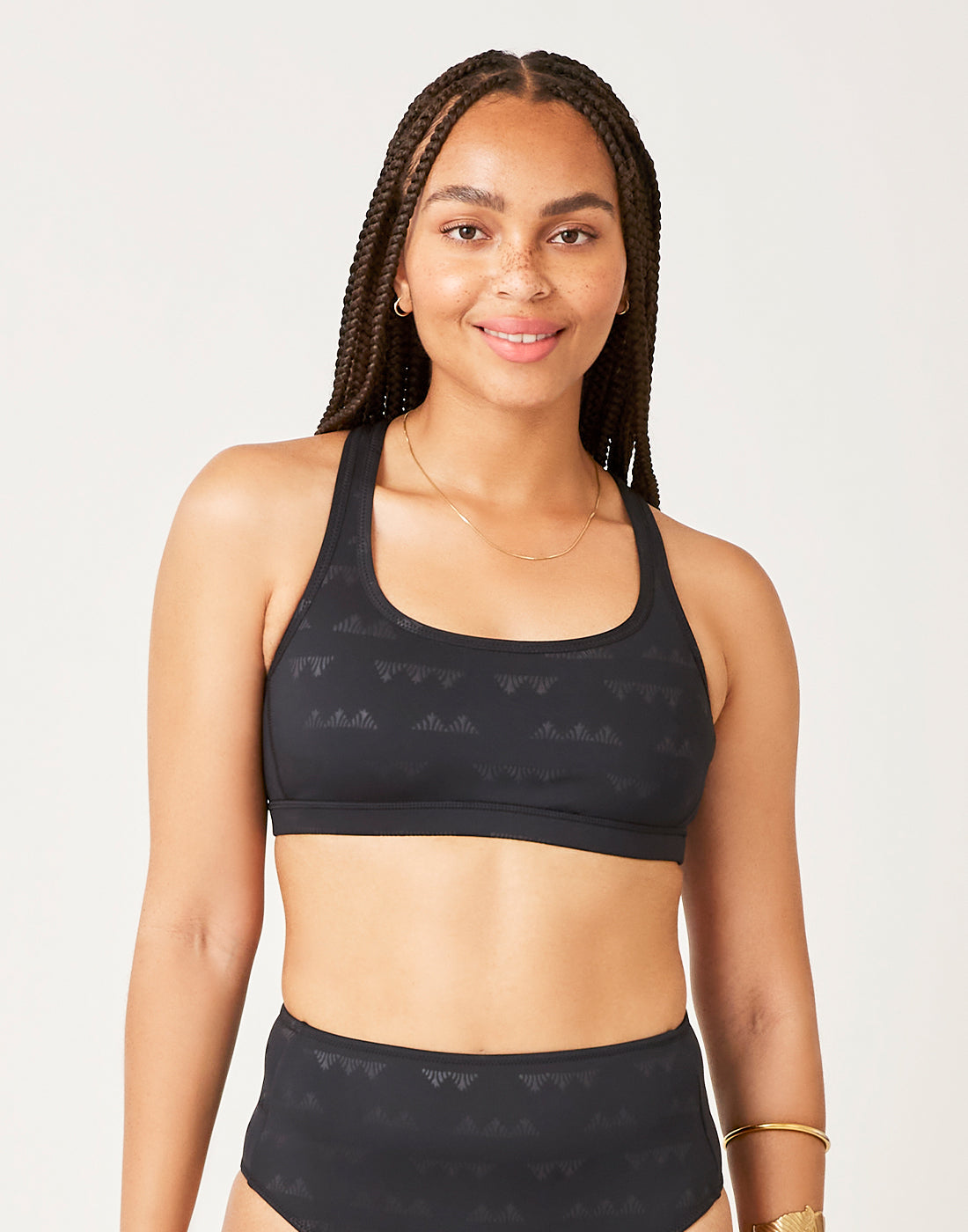
Paddle swimwear is swim clothing chosen for active time on a paddleboard, in a kayak, or in a canoe, with an emphasis on a secure fit, comfortable coverage, and freedom to reach and rotate. Unlike a suit selected mainly for lounging, swimwear for paddling needs to feel comfortable through repeated strokes, seated positions, kneeling, and the occasional unplanned dip. One-pieces, supportive bikini tops, tankinis, rash guards, and swim shorts offer different ways to find that balance. A one-piece can create a smooth, connected fit through the torso, while separates allow different sizes or coverage levels on top and bottom. Neither approach is automatically more secure; strap placement, fabric recovery, and the way a suit fits an individual body matter more than the silhouette alone. Wide straps can help distribute pressure, adjustable straps allow a more personal fit, and a secure underband can provide support without relying on a tight neckline. Higher necklines may feel reassuring during forward reaches, while an open shoulder shape can leave room for a comfortable paddle stroke. Coverage is a preference rather than a measure of experience: a first-time paddler and someone who spends hours exploring a shoreline may feel best in entirely different cuts. The useful constant is a suit that stays comfortably in place without frequent adjustment. A waistband should feel secure when sitting as well as standing, and leg openings should allow a deep bend without pinching. For women who enjoy moving between paddling and swimming, that combination makes the transition feel natural. A good fit leaves attention free for the rhythm of the paddle, the curve of a quiet inlet, and the satisfaction of finding a steady pace—not a strap that needs rescuing every few strokes.
Fabric and construction do much of the behind-the-scenes work in paddle swimwear. Nylon and polyester are common foundations, often blended with elastane for stretch and shape recovery. Nylon blends can have a smooth, soft feel, while polyester blends are often chosen for durability and color retention; actual performance depends on the full fabric blend and construction, not just the fiber name. Stretch is especially useful across the upper back, shoulders, and hips, where paddling asks a suit to move in several directions. Just as important is recovery: fabric should return toward its original shape rather than staying stretched after a reach or a swim. A close fit does not need to feel restrictive, and a lining can add coverage and comfort without making a suit unnecessarily bulky. Smooth seams and thoughtfully placed edges can help reduce rubbing, particularly where the arms pass the sides of the torso or where a waistband meets a seated body. Even a comfortable suit can rub if a seam sits directly beneath a personal flotation device, so the fit of both layers deserves attention. Swimwear does not replace that safety equipment. For longer stretches on exposed water, rash guards, long-sleeve swim tops, and swim leggings can add covered surface area without requiring a heavier suit underneath. Only clothing with a stated ultraviolet protection factor rating should be relied on for its specified level of fabric sun protection. A rating of 50+ indicates that the tested fabric allows no more than about one-fiftieth of ultraviolet radiation to pass through under test conditions; it does not protect skin left uncovered. Broad-spectrum sunscreen on exposed skin remains important. Recycled fibers can also be worth considering when clearly identified in a fabric description, though recycled content alone does not establish how long a suit will last. Durable construction, a comfortable fit, and care that supports repeated wear all contribute to a more thoughtful swim wardrobe.
Finding a comfortable combination often comes down to the small details of a typical outing. A seated kayaker may appreciate a waistband that lies smoothly beneath a flotation vest, while a paddleboarder moving between kneeling and standing may prefer stretch through the hips and coverage that stays consistent through each transition. Swim shorts can add coverage at the seat and upper thighs, although loose fabric may bunch beneath another layer. A tankini offers the flexibility of separates with more torso coverage, and the
Paddle Tankinis collection provides a focused place to explore that silhouette. Top length matters here: enough overlap at the waist can feel comfortable during a reach, while excess fabric may gather when seated. Removable cups, fixed support, adjustable closures, and lining preferences are personal choices rather than universal necessities. The most useful fit check mirrors actual paddling: reaching both arms forward, rotating through the torso, sitting down, and bending the knees. Straps should remain comfortable, the neckline should feel secure, and seams should not dig in. Between outings, careful washing helps protect the stretch and finish that make active swimwear comfortable. Following the care label comes first; a fresh-water rinse after exposure to salt, chlorine, or sand is generally a useful habit. When hand washing is appropriate, a small amount of gentle detergent and a thorough rinse can remove residue without harsh treatment. Avoiding wringing, rough surfaces, and high heat helps limit unnecessary stress on fibers and elastic. Letting swimwear dry fully before storing it also keeps damp fabric from lingering in a closed bag. For a paddling partner or a friend discovering a new favorite water activity, swimwear can be a thoughtful gift when size, preferred support, and coverage are already familiar. Ultimately, the appeal of paddle swimwear is practical and personal: comfortable pieces that make room for movement, suit the way someone likes to spend time on the water, and feel good enough to reach for again.