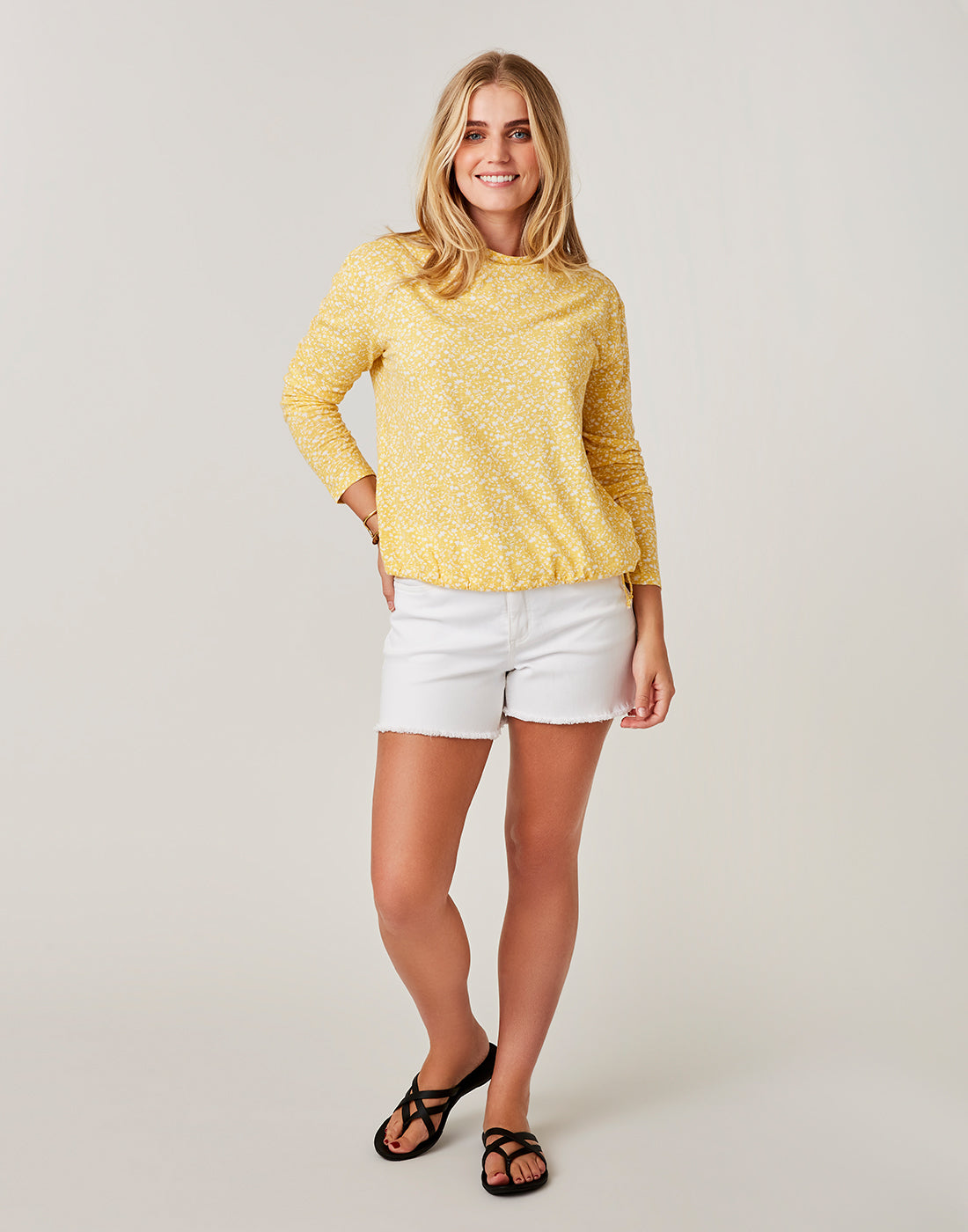
Short denim shorts bring the familiar feel of favorite jeans to an abbreviated silhouette, with a shorter inseam that leaves plenty of leg visible and makes everyday outfits feel easy. There is no single inseam that defines the category, though lengths around 2.5 to 3 inches typically create a distinctly short cut, while 4 to 5 inches offer additional coverage. The effect also depends on rise, leg shape, and individual proportions: the same inseam can look and feel different on two people. For women who enjoy an unfussy wardrobe, these shorts fit naturally into coffee runs, sightseeing, backyard gatherings, and laid-back afternoons with friends. A tucked-in tee and canvas sneakers keep things simple; a drapey blouse and flat sandals give the same denim a little polish without making it feel dressed up for the wrong party. High-rise denim shorts generally sit at or above the natural waist, creating a defined waistband that works especially well with shorter tops or an easy front tuck. Mid-rise shapes sit below the natural waist, while low-rise cuts rest farther down toward the hips. Rise and leg fit are separate details, so a higher waist does not necessarily mean a close-fitting leg, and a lower waist does not automatically create a relaxed silhouette. Wash adds another layer of personality. Pale blues have an easygoing, worn-in character, medium blues feel familiar and versatile, and deeper indigo can give even a casual cut a cleaner finish. For a closer look at that color family,
Blue Denim Shorts brings the focus to a classic denim palette. Fading, whiskering, and subtle variations in color can add dimension, while a more uniform wash lets the silhouette take center stage. Raw edges lean casual, turned cuffs give the hem a little weight, and stitched hems create a tidy outline. Each detail changes the mood without changing the basic appeal: dependable denim, less length, and plenty of room for personal style.
Fabric and construction play as much of a role in comfort as the cut itself. Denim is traditionally a cotton twill, recognizable by its diagonal weave, but fiber blends and fabric weights vary. All-cotton denim often has a more structured feel at first and can soften with wear, developing creases and character over time. Denim blended with a small amount of elastane offers stretch, which can make sitting, bending, and stepping up onto a curb feel easier. Stretch percentage alone does not tell the whole story; the weave, fabric weight, and ability to return to shape also influence how shorts feel after several hours. Organic cotton, when identified in the fabric details, describes how the cotton was grown rather than guaranteeing a particular softness or fit. A lighter denim can feel more flexible, while a heavier fabric tends to hold a defined shape. Neither replaces a good fit through the waist, seat, and upper thigh. A waistband should feel secure without digging in when seated, and the leg openings should allow comfortable movement rather than catch tightly around the thighs. Relaxed short denim shorts can offer that ease without requiring an oversized waist, particularly when their shape leaves extra space through the hip and leg. For a closer silhouette, a little stretch may be welcome, but persistent pulling across the front or a hem that repeatedly rides up can signal that a different size or cut would feel better. Inseam measurements are useful, though the outseam, front rise, and back rise also affect coverage. A curved or angled hem may reveal more leg at the sides than a straight hem with the same listed inseam. Practical details deserve attention, too: pocket depth determines whether essentials sit securely, a smooth zipper should operate without catching, and sturdy stitching at pocket corners helps reinforce areas that receive frequent stress. Those small construction choices matter on days that involve more than standing still.
The lasting appeal of short jean shorts comes from how readily they settle into a real routine. They can anchor a small travel wardrobe, balance the volume of an oversized button-down, or make a simple tank and woven bag feel like a complete outfit. For beach-bound plans, denim works well for the journey, a boardwalk stroll, or lunch afterward, but it is not a substitute for swimwear: wet cotton becomes heavier and generally dries more slowly than fabrics designed for swimming. The same distinction matters for exercise. An easy walk or casual bike ride may suit a flexible pair, while longer rides or demanding activity often call for purpose-built clothing with different seams and moisture management. Everyday durability depends partly on choosing denim that suits its intended use and partly on treating it thoughtfully. Raw hems and distressed sections have character, but exposed threads can continue to loosen, and heavily worn areas may need more care than intact fabric. Following the sewn-in care label is the best starting point for washing. When permitted, turning denim inside out, using cold water, and washing with similar colors can help limit abrasion and color transfer. Deep indigo may release dye, especially early on, so care around light upholstery and pale accessories is sensible. Excessive dryer heat can contribute to shrinkage and affect stretch fibers; air-drying or using the label’s recommended low-heat setting helps protect the fit. Washing when needed rather than automatically after every brief wear can also reduce unnecessary friction on the fabric. Between wears, letting shorts air out and treating small marks promptly can keep care straightforward. As a gift, denim shorts are most thoughtful when the recipient’s preferred rise, inseam, and size are known, since personal fit matters more than a size label alone. Whether chosen for someone else or for an everyday rotation, the strongest match is a pair that feels comfortable seated, standing, and on the move, with a length and finish that feel entirely like the person wearing them.