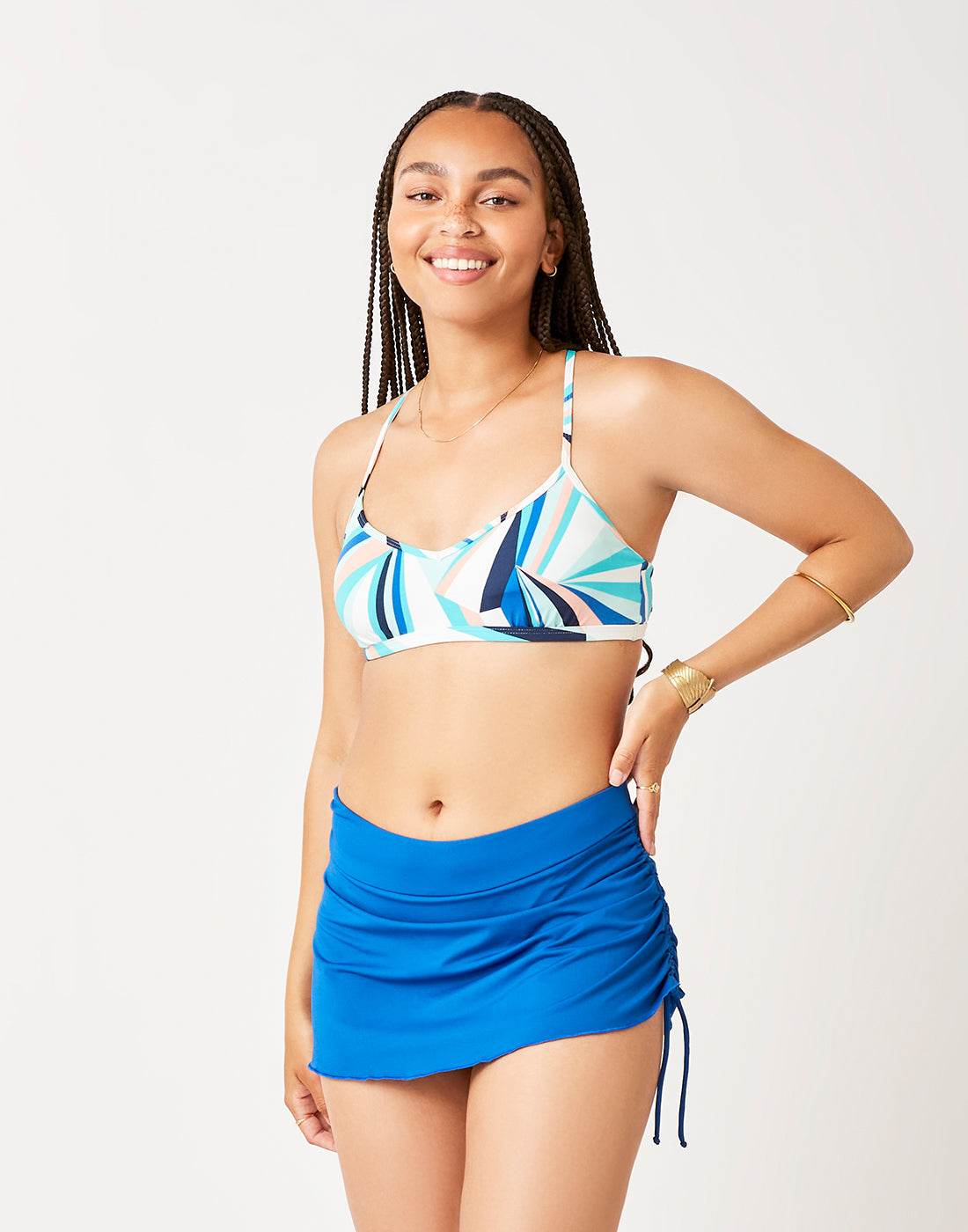
Side tie swim bottoms are bikini bottoms with adjustable fabric ties at the hips, allowing the waistband to feel a little closer or a little more relaxed without changing the size of the entire suit. That simple detail brings both personality and practicality: a pair of neatly tied bows adds texture, while independently adjustable sides help fine-tune how the bottoms sit against the body. Across this swimwear category, silhouettes range from low-rise cuts that rest near the hips to mid-rise and higher-rise shapes, with cheeky, moderate, or fuller rear coverage. Rise and coverage are separate features, so a higher waist does not necessarily mean more coverage through the seat. The ties adjust the tension at the hips; the fabric panels determine most of the coverage in front and back. That distinction matters when choosing a shape for floating in a pool, taking an easy shoreline walk, or stretching out on a beach towel with a book that deserves another chapter. Narrow string ties create a delicate profile, while wider fabric ties bring a more substantial look and can distribute pressure over a broader area. Neither is automatically the better fit—the difference comes down to the construction and what feels comfortable on the wearer. Some designs feature gathering or ruching for extra texture, although those details do not always mean the coverage itself is adjustable. The appeal of side-tie bikini bottoms is their combination of a defined silhouette and a flexible waistband, especially for anyone who prefers to adjust each hip separately rather than rely on a fixed band. They can also accommodate small fluctuations in how a suit feels from one wear to the next. A good fit rests comfortably against the skin, with enough fabric through the front and seat to provide the intended coverage before the ties are tightened. The result should feel easy and secure, not like a tug-of-war between the bows and the waistband.
Fabric and construction have just as much influence on comfort as the cut. Side tie swim bottoms commonly use nylon or polyester blended with elastane, also called spandex, to balance stretch with shape retention. Nylon blends often have a smooth, supple hand, while polyester blends can offer good color retention and resistance to repeated pool exposure; actual performance depends on the fabric and its finish. Elastane helps the material move with the body and return toward its original shape, though a higher percentage alone does not guarantee better support or durability. Recycled fibers may be part of a swim fabric’s composition, giving shoppers a way to consider material sourcing alongside feel and function. Fiber content is worth checking rather than assuming that every stretchy swimsuit has the same composition or environmental attributes. Lining also plays an important role, adding another layer between the outer fabric and skin and helping support coverage. A suit’s color, fabric density, lining, and degree of stretch can all affect how opaque it looks when wet. Smooth seams, securely attached ties, and fabric that recovers after a gentle stretch are useful construction details to notice. For a different kind of versatility,
reversible side-tie bikini bottoms offer two wearable faces in one silhouette, making it easier to change a swim pairing without packing another bottom. Depending on the design, a reversible style may combine two colors, two prints, or a print and a solid. Coordinating with a bikini top does not have to mean an exact match: a shared color can connect different patterns, and a simple solid can give a lively print room to shine. Side bows add their own visual detail, so the finished pairing can feel considered without needing much else. A relaxed shirt, an easy cover-up, and sandals make a natural transition between the water and a casual lunch, with the swimwear doing its part beneath the layers.
Comfort becomes clearest in motion. When trying on side tie swim bottoms, sitting down, bending at the hips, and taking a few steps can reveal more than standing still in front of a mirror. The waistband should stay comfortably placed, the leg openings should allow movement without digging, and the seat should provide the coverage expected from the cut. Pulling the ties tighter cannot compensate for panels that are too small, just as loose ties will not correct excess fabric that sags. A size chart and individual fit details provide a better starting point than the number on a familiar pair of jeans. For swimming, functional ties need secure knots or bows appropriate to their construction, rather than loose ends left unsecured for appearance. Adjustable sides can work well for relaxed swims and beach days, but frequent diving, vigorous laps, or surf sessions call for particular attention to hold and may be better suited to a more fixed, activity-focused waistband. Ties can also sit beneath a board or press against a chair, making their placement and bulk worth considering for the day ahead. After a swim, care helps preserve the fabric’s stretch, color, and feel. A prompt rinse in fresh water removes some salt, chlorine, and residue before they linger in the fibers. The care label should guide washing, with gentle handling and a suitable mild detergent helping limit unnecessary wear. Avoiding rough pool edges and abrasive surfaces can reduce snags and pilling, while skipping forceful wringing helps protect elastic fibers and tie attachments. Drying in shade with good airflow, when consistent with the care instructions, limits exposure to direct sunlight and heat. Swimwear should be completely dry before it is tucked into a drawer or travel bag rather than left bundled in a damp towel. With that everyday attention, a comfortable pair can remain a reliable part of a swim rotation. Side-tie bottoms can also make a thoughtful gift for someone who enjoys the water, provided their size, preferred rise, and coverage preferences are known. The most useful choice is the one that feels like their style—and leaves them free to enjoy the swim instead of adjusting their suit.