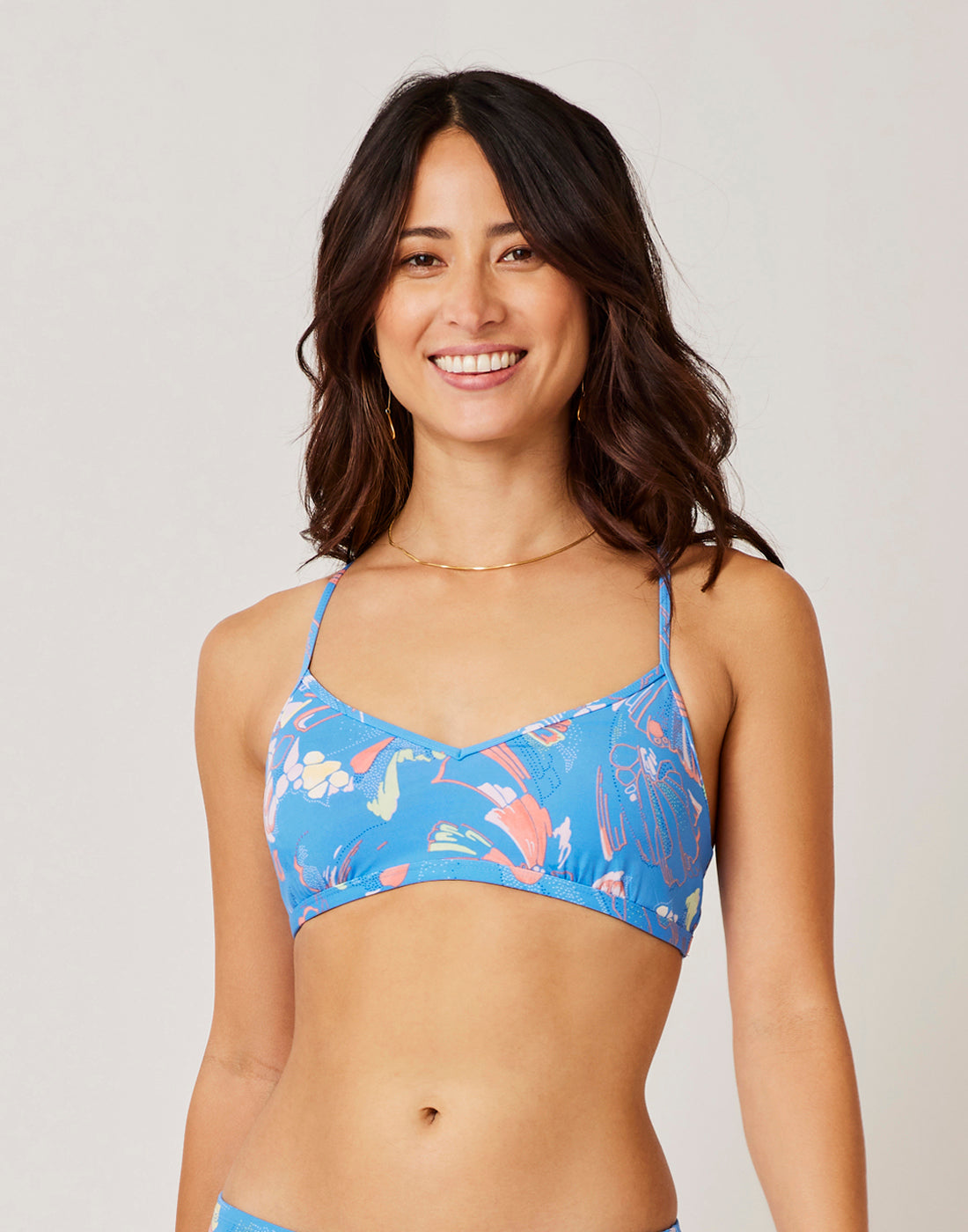
Sleeveless swimwear leaves the arms uncovered for easy movement, with silhouettes that range from streamlined one-piece swimsuits to bikini tops, tankinis, and swim dresses. That open-arm construction makes sense for everything from reaching through a swim stroke to paddling across a quiet cove or settling into a lounge chair after a dip. Without sleeves around the shoulders and upper arms, the fit depends on thoughtful shaping through the neckline, straps, bust, and torso. A higher neckline offers more fabric coverage across the chest, while scoop, square, and V-shaped necklines create different looks and levels of coverage. Open backs leave more skin exposed; racerback and cross-back shapes can help keep straps positioned during movement, depending on the design and fit. None of these details has to be about hiding anything. The right silhouette is simply the one that feels comfortable for the way the day unfolds. A sleeveless one-piece offers a continuous fit through the torso, while a two-piece allows different sizes or coverage preferences on top and bottom. Tankinis bring a longer top into the mix, and swim dresses add a skirted shape without covering the arms. For women who move between swimming, reading beside the pool, and chasing a wayward beach ball, versatility often matters as much as appearance. Clean lines can feel quietly polished, while color and print bring a little personality to an otherwise practical piece. A secure neckline may be especially welcome when leaning over a paddleboard, and comfortable leg openings make a difference when climbing a pool ladder or sitting on the sand. Sleeveless styling also slips easily beneath a loose shirt or cover-up for the walk between the water and the next stop. The appeal is straightforward: swimwear that leaves room to move, feels like a natural extension of personal style, and does not turn every activity into an occasion for readjusting. There is room for athletic plans and absolutely no plans at all.
Fabric and construction shape how sleeveless swimsuits feel both in and out of the water. Nylon blended with elastane, also called spandex, is common in swimwear because it combines a smooth feel with stretch; polyester blends are another option, including fabrics developed for frequent pool use. The fiber blend alone does not tell the whole story. Knit structure, lining, elastic quality, and the amount of stretch recovery all influence whether a suit feels supportive, flexible, or loose after repeated wear. Recovery is the fabric’s ability to return toward its original shape after stretching, a useful quality when a swimsuit needs to follow a long reach and then settle comfortably back into place. Recycled fibers can be part of a swim fabric’s composition, though any recycled-content claim belongs to the individual garment rather than the sleeveless category as a whole. For regular pool swimming, a stated chlorine-resistant construction is worth considering; it can improve resistance to pool-related wear, but it does not make fabric immune to fading or deterioration. Fit deserves the same attention as fiber content. A one-piece needs enough torso length to sit comfortably at the shoulders and leg openings without pulling, while a swim top should remain secure around the rib cage without making a deep breath feel like work. Raising the arms, reaching forward, and sitting down can reveal pressure points that are easy to miss while standing still. Wider straps may distribute pressure more comfortably, and adjustable straps allow some fine-tuning. Bust support can come from an underband, a shelf bra, molded cups, underwire, or shaped seams; removable pads may add coverage or shape but do not necessarily provide substantial support on their own. Smooth linings and neatly finished seams can help reduce friction, especially during repetitive movement. Fit preferences are personal, and support is not a single silhouette. A suit should accommodate the body wearing it, with enough ease for movement and enough hold for the intended activity.
The best match between sleeveless swimwear and everyday plans often comes down to the small details that become noticeable after an hour in the water. Lap swimming calls for a stable fit through the straps and neckline, while casual dips may leave more room for playful shapes and adjustable styling. Paddling involves repeated reaching and rotation, so comfortable arm openings and seams that do not rub deserve attention. Sleeveless cuts leave the shoulders and arms exposed, and a higher neckline only increases coverage where fabric actually sits. A fabric’s ultraviolet protection should be judged by its stated ultraviolet protection factor rating, not by its color, thickness, or appearance alone. For an alternative that covers part of the upper arms,
short sleeve swim shirts for women offer a different silhouette; any sun-protection claim still depends on the individual fabric and its rating. Exposed skin needs appropriate sun protection regardless of the swimsuit’s shape. After swimming, simple care habits help preserve the fit and finish that made a suit feel good in the first place. A prompt rinse with fresh water helps remove salt, chlorine, and residue, while washing according to the care label avoids unnecessary stress on stretch fibers and elastic. When hand washing is recommended, gentle handling and a suitable mild detergent are preferable to vigorous scrubbing. Twisting or wringing can strain the fabric, so gently pressing out excess water is a kinder approach. Unless the care instructions say otherwise, drying away from direct heat and strong sunlight helps limit avoidable wear. Rough pool edges, textured benches, and abrasive board surfaces can snag or pill swim fabric, making a towel a useful buffer when sitting down. Letting a suit dry fully before storing it also keeps a damp bundle from lingering in a beach bag. These practical details matter for a personal swimwear wardrobe and for a thoughtfully chosen gift, where knowing the recipient’s preferred size, support, and coverage is more useful than guessing from appearance. Comfortable movement, considered construction, and attentive care give sleeveless swimwear its lasting place beside the water.