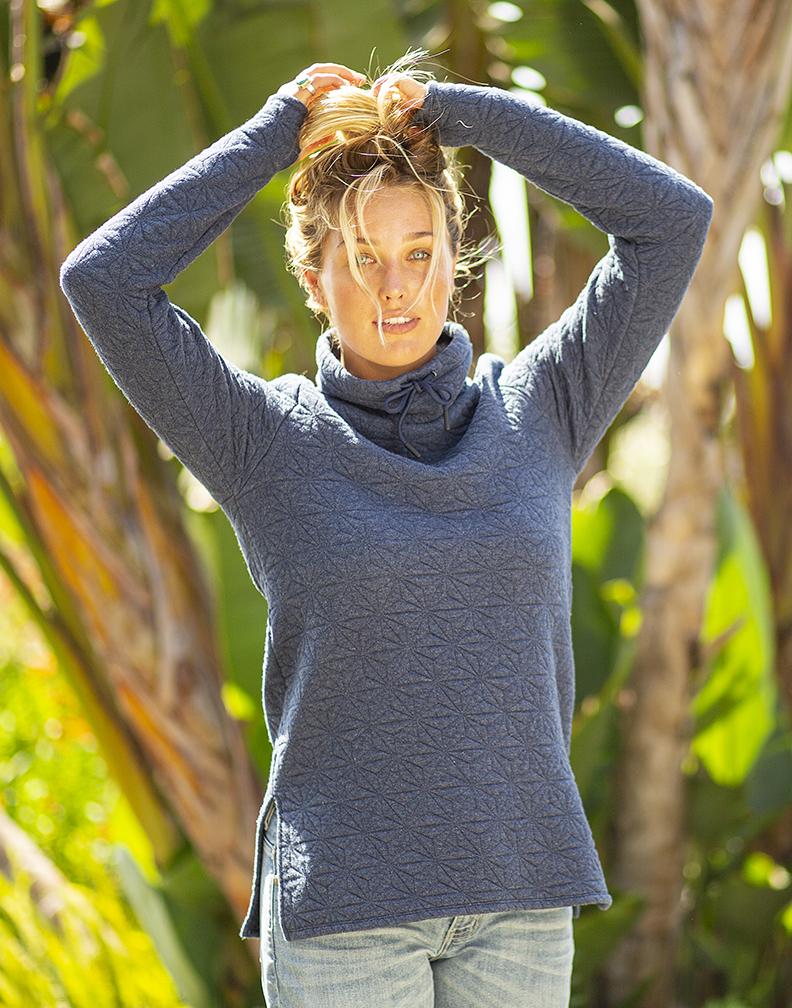
Soft pullovers bring easy warmth to the hours between getting out the door and finally putting your feet up. They are tops designed to slip over the head, with a feel that can range from smooth, fine-gauge knit to plush fleece or a softly brushed interior. That variety makes the category useful well beyond the couch: a lightweight pullover can take the chill off a breezy waterfront walk, while a thicker knit adds comfort to a slow breakfast or an afternoon spent outside. Softness comes from a combination of fiber, yarn, fabric construction, and finishing, not simply how fluffy a top looks. Cotton often feels breathable and familiar against the skin, making it a comfortable option for everyday wear and indoor spaces that run warm. Cotton blends may add stretch, quicker drying, or better shape retention, depending on the other fibers involved. Fleece traps warmth in its raised surface, while French terry typically has small loops on the inside and a smoother outer face, offering a different balance of coziness and breathability. Wool can provide warmth without excessive bulk, though its feel varies with fiber fineness and construction, and some skin types prefer a layer underneath. A loose, airy knit drapes differently from a dense one, even when both share the same fiber content. Fabric weight matters, too: thin does not always mean cool, and thick does not automatically mean softer. During the cooler months, these differences help a pullover find its place, whether that is tucked into a tote for a change in temperature or pulled on before a walk along the shore. The appeal is practical as much as tactile. An easy layer can look relaxed without looking like an afterthought, especially when its fabric has enough body to hang comfortably rather than cling. For anyone who likes clothes that move easily from quiet mornings to casual plans, a soft pullover earns its space through comfort, versatility, and the simple pleasure of feeling good in what is on.
Fit gives that softness room to work. A relaxed pullover usually leaves space through the chest and torso, while a closer silhouette sits more neatly under a jacket. Oversized shapes offer extra drape, but the most comfortable size still depends on shoulder placement, sleeve length, and how the hem falls. Dropped shoulders create a slouchier line; a shoulder seam closer to the natural shoulder often gives a tidier shape. Neither is inherently better, and both can feel easy when the proportions suit the person wearing them. There is a useful distinction between roomy and bulky: a fluid knit can have plenty of width without bunching beneath outerwear, while a dense fleece may need a little more space inside a coat. For days that involve driving, carrying a bag, or reaching for something on a high shelf, ease across the upper back and underarms matters as much as the view in the mirror. A hem that stays comfortable when seated is another small detail with a big daily payoff. Crew necks offer a familiar frame for a tee underneath, while mock necks and higher collars bring extra coverage around the neck when the breeze picks up. Ribbed cuffs can help sleeves stay put, though a cuff should feel secure rather than tight. Length changes the styling possibilities: a shorter pullover pairs naturally with higher-rise bottoms, while a longer shape offers more coverage with slim pants or leggings. Soft pullovers also work well with straight-leg denim, relaxed trousers, and casual skirts, shifting easily between a coffee stop and a low-key dinner. Texture adds interest without requiring much else, whether that means a subtle rib, a smooth knit, or a fleecy surface beside crisp cotton. A thin base layer can make temperature changes easier to handle without turning an outfit into a packing exercise. For another take on this everyday category,
Soft Touch Pullovers for Cozy Wear keeps the focus on the comfortable layers that suit unhurried mornings, travel days, and everything penciled in between.
Lasting softness depends partly on what happens after a pullover comes home. The care label is the best starting point because a cotton knit, a wool blend, and a brushed fleece can need different treatment. When machine washing is allowed, cool water and a gentle cycle can help limit friction and unnecessary wear. Turning a top inside out and keeping it away from exposed zippers or hook-and-loop closures can help protect the surface from abrasion and snags. More detergent is not a shortcut to a fresher feel; excess residue can leave fabric feeling less soft, so the right amount for the load matters. Fabric softener is not suitable for every fiber or finish, either. Drying deserves equal attention, since high heat can shrink some fabrics, affect stretch fibers, or change the feel of a brushed surface. If the label calls for drying flat, gently reshaping the pullover on a clean, dry surface helps preserve its proportions without the strain of hanging a wet knit from the shoulders. Folded storage is often a good match for heavier sweaters that could stretch on a hanger. Over time, small pills may appear where a bag strap rubs or sleeves brush against the body; pilling alone does not necessarily mean the whole piece is worn out. Careful removal with a tool suited to the fabric can tidy the surface, while avoiding rough handling helps protect the yarn beneath. Durability also shows up in details such as secure seams, resilient cuffs, and a neckline that keeps its shape through repeated wear. For gifting, a soft pullover can be a thoughtful choice for a friend who is always borrowing an extra layer, a partner who loves coastal walks, or a relative whose favorite plans involve a book and a sunny chair. Familiar colors, a known size, and care needs that fit the recipient’s routine make the choice more personal. The most useful pullover is not necessarily the thickest or fluffiest; it is the one whose warmth, feel, and fit make getting dressed a little easier, day after day.