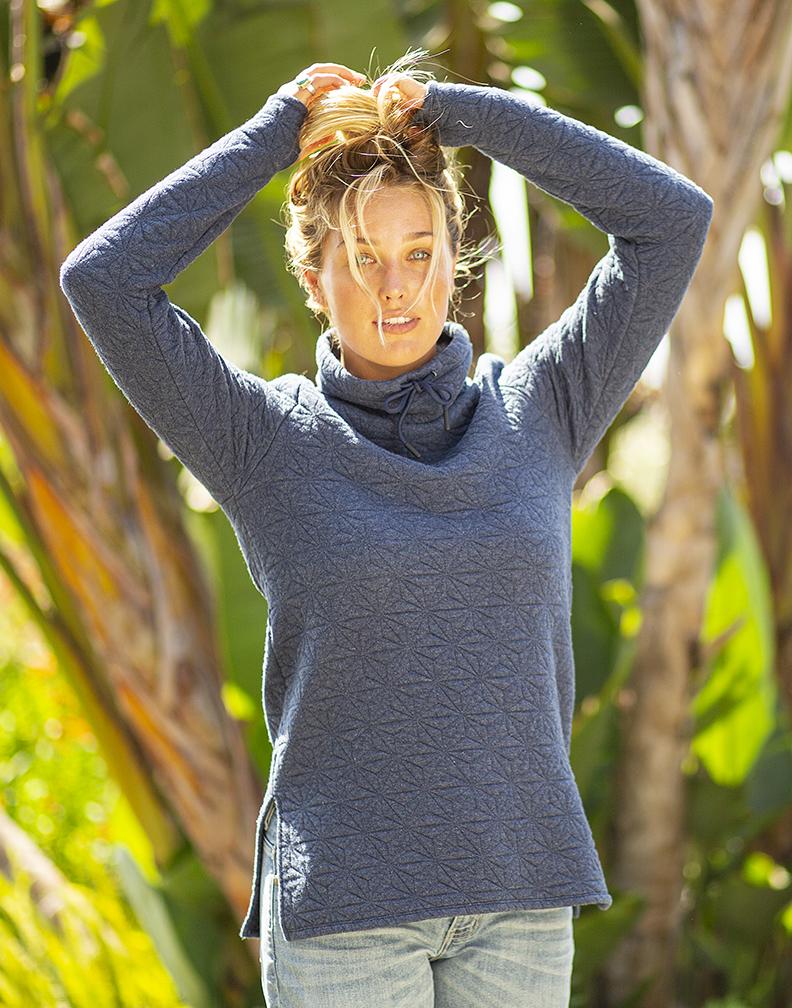
Soft tops for women bring an easy, comfortable feel to everyday dressing, with styles ranging from lightweight tees and ribbed tanks to relaxed long-sleeve tops and fluid blouses. What makes a top feel soft is a combination of its fibers, fabric construction, and finish—not simply how plush it feels at first touch. Cotton jersey often has a familiar, breathable feel with enough flexibility for everyday movement, while cotton slub adds subtle texture without relying on bold details. Modal and lyocell can lend a smooth surface and fluid drape; blends that include these fibers often fall closer to the body rather than holding a structured shape. A little elastane can add stretch and help a knit recover after wear, especially around necklines and elbows. Ribbed fabrics have their own appeal, offering texture and flexibility in silhouettes that can sit close without feeling restrictive. Fabric weight matters, too: a lightweight knit may tuck neatly into jeans, while a more substantial jersey can offer greater coverage and a cleaner line when worn loose. Softness does not necessarily mean thickness, and a substantial fabric is not automatically stiff. For anyone who notices every seam or scratchy label, the details against the skin deserve as much attention as the fiber label. Smooth seam finishes, comfortable neck bindings, and an unobtrusive tag can make the difference between a top that feels pleasant for five minutes and one that stays comfortable through a full day. Organic cotton, when identified in the fabric details, is another material to consider for those who prioritize how cotton is grown, though the finished feel still depends on the yarn and construction. The most useful soft everyday tops balance that inviting texture with a shape that suits the wearer’s routine, whether that means hours at a desk, a walk to a favorite coffee spot, or a long stretch of travel.
Fit gives soft fabric its personality. A relaxed tee can feel effortless with straight-leg denim, while a closer-fitting ribbed tank creates a smooth foundation beneath an open shirt or unstructured jacket. Neither silhouette needs to hide or reshape the body to work well; the goal is room where it feels good and definition where it feels intentional. Shoulder seams provide a useful starting point. A seam near the shoulder edge generally creates a more classic outline, while a dropped shoulder gives the upper body a looser, more casual shape. Across the chest and back, fabric should allow reaching, sitting, and carrying a bag without persistent pulling. Stretch helps with movement, but it is not a substitute for the right size. A knit pulled tighter than intended can become more transparent and may not drape as expected. Length changes how a top works with the rest of an outfit, too. A shorter hem can meet a high-rise waistband with little extra fabric, while a longer cut offers room for a partial tuck or an easy untucked finish. Side slits can give the hem more freedom over the hips, and a curved hem adds shape without needing much styling. Necklines bring another layer of choice: crew necks create a simple frame, scoop necks open up the neckline, and a V-neck adds a longer visual line. For desk-to-dinner plans, a softly draped blouse can feel polished without the rigidity of a crisp woven shirt. For lounging or travel, a relaxed knit with comfortable armholes and a neckline that stays in place can be especially welcome. Sleeves should move easily at the elbow, and cuffs should feel secure rather than tight. Those drawn to a different seasonal selection can also explore
Spring Tops For Women. Across these shapes, the best choice is one that feels natural in motion, not just one that looks appealing while standing perfectly still.
Lasting softness depends on both construction and care. Even a beautiful fabric needs seams that stay secure, a neckline that holds its shape, and enough resilience for repeated wear. Fine, loosely knitted fabrics can have lovely drape, but they may need a gentler touch around jewelry, rough bag straps, and other surfaces that catch or rub. Pilling can occur when friction brings short fibers to the surface; its likelihood varies with the yarn, blend, and construction, so a soft first impression alone cannot predict how a top will age. Checking the care label before washing is the simplest way to protect the intended fit and finish. Many everyday knits benefit from a gentle wash, similar colors, and avoiding excessive heat, but the garment’s instructions should take priority. Turning tops inside out can reduce surface abrasion, and closing zippers on other laundry helps limit snagging. Delicate fabrics may do better in a mesh wash bag, while heavier knits can stretch if hung when wet and may call for drying flat. More detergent is not a shortcut to a fresher feel; residue can leave fabric feeling less pleasant against the skin. Care also includes how a top fits into daily life. A machine-washable tee may be a better match for frequent travel or a busy household than a fabric requiring special handling, however lovely its drape. For gifting, soft tops can be a thoughtful choice when the recipient’s preferred neckline, sleeve length, and usual fit are familiar. A favorite color and a dependable silhouette often matter more than an unexpected detail. Women building a small, versatile wardrobe may appreciate tops that work equally well with denim, easy trousers, and a skirt, while those with active days may value stretch and freedom through the shoulders. There is room for both a tidy, close-fitting layer and a generous, sink-into-the-sofa shape. Comfort earns its place through repetition: the top that slips on easily, pairs with familiar favorites, and still feels good when the day takes a detour.