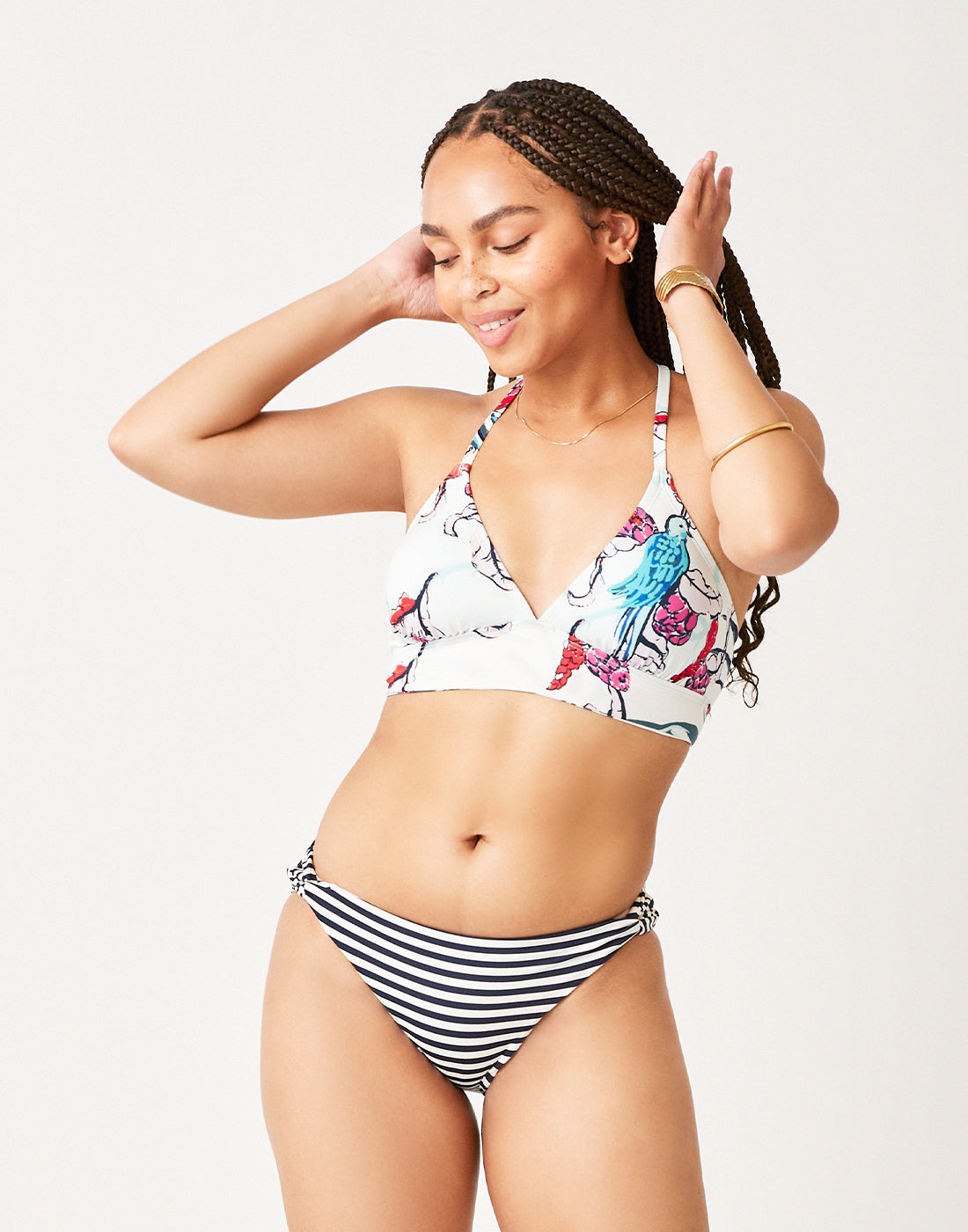
Stripe bikini bottoms bring a little rhythm to swimwear: crisp lines, playful color pairings, and a pattern that feels equally at home beside a lap pool or on a paddleboard. Their appeal is in the balance of personality and simplicity. A narrow stripe can read almost like a texture from a distance, while broader bands make color a bigger part of the look. Closely related shades feel subtle; stronger contrasts give a two-piece a more graphic edge. Horizontal, vertical, and angled stripes each create a different effect, especially where the pattern meets a waistband or follows the curve of a leg opening. None calls for a particular body type. The best choice is the one that feels like an extension of your personal style, whether that means quiet neutrals or a lively mix of colors. Stripe placement also gives familiar swim silhouettes their own character, from a clean-lined low rise to a higher waist with more coverage through the middle. A matching striped top creates an easy, coordinated pairing, but the pattern is just as comfortable doing its own thing. A solid top that picks up one color in the stripe keeps the combination connected without making every detail match. A contrasting top adds a more playful note, particularly when the shapes stay simple. For a swim wardrobe that mixes patterns with nature-inspired solids,
green bikini bottoms offer another direction for pairing with favorite tops. Stripes have a familiar, beach-inspired quality without needing anchors, rope details, or a full nautical costume. They can feel sporty, relaxed, or polished depending on their scale and the cut beneath them. That flexibility makes them appealing for women who want swimwear with personality that still leaves plenty of room for a favorite rash guard, an oversized shirt, or a towel tossed over one shoulder.
Fit gives stripe bikini bottoms their everyday ease, and the details matter more than the name of a silhouette. Rise describes where the waistband sits, while back coverage and leg height shape how the rest of the bottom feels; a higher waist does not automatically mean fuller coverage everywhere. Some swimmers prefer a lower rise with less fabric through the torso, while others enjoy the held-in feeling of a waistband that sits closer to the natural waist. Higher-cut leg openings leave more of the hip exposed, and lower openings provide a different balance of coverage and freedom. Neither is a rule about what a body should wear. A comfortable fit rests against the skin without digging in, gaping, or needing a reset every time you stand up. The same pair should feel at ease when you sit on a pool step, bend to pick up a beach bag, or climb a boat ladder. Adjustable side ties can offer flexibility at the hips, while fixed sides keep the outline simple and reduce loose ends. Wider waistbands may distribute pressure more evenly, though their comfort still depends on fabric, elastic, and sizing. Swim fabrics commonly blend nylon or polyester with elastane, combining a smooth feel with stretch that helps the bottom follow movement. The quality of that stretch includes recovery: fabric needs to return toward its original shape rather than simply stretch farther. Lining can add comfort and coverage, and smooth seams help reduce friction during active wear. Recycled fibers may be part of a fabric blend, but the fiber content and construction details are the place to confirm any material claims. For swimming, paddling, or an enthusiastic game of pool volleyball, secure edges and a dependable waistband are especially useful. For a slower float or a long conversation at the water’s edge, softness and a fit you can forget about may take priority. Swimwear earns its place when it suits what you actually enjoy doing.
Durability is a combination of thoughtful construction, appropriate use, and the small habits that keep stretch fabrics feeling good. Stripes make the fabric itself part of the visual appeal, so preserving color and shape helps maintain that crisp, easygoing look. Chlorinated water, salt, body oils, and sunscreen can leave residue on swimwear, and a fresh-water rinse after use helps clear it away. The care label should set the routine, since washing instructions vary by fabric and construction. When hand washing is recommended, a gentle detergent and light handling are usually kinder than vigorous scrubbing or twisting. Excess water can be pressed out gently, and drying away from direct heat helps protect elastic fibers. A damp suit bundled into a bag after a swim benefits from being unpacked promptly rather than becoming tomorrow’s small mystery. Rough pool edges, textured decking, and abrasive seating can catch or scuff fine swim fabric, so a towel underneath offers a simple layer of protection. These practical details are less glamorous than a great stripe, but they help favorite swimwear stay in regular rotation. Having more than one bottom can also make travel easier, giving a rinsed pair time to dry fully while another takes its turn. Stripe bikini bottoms are particularly useful in a compact swim wardrobe because one pattern can connect with several solid tops, creating different combinations without packing a separate complete set for every outing. They can be a thoughtful gift for a frequent swimmer, a friend planning a beach getaway, or someone who enjoys building a mix-and-match collection, provided their size and preferred coverage are already familiar. Swim fit is personal, and respecting those preferences matters more than choosing the boldest pattern. Whether the day involves steady laps, a paddle along the shoreline, or very little beyond finding a comfortable place to sit, a well-chosen striped bottom brings color, ease, and a bit of character without asking you to make a production of getting dressed.