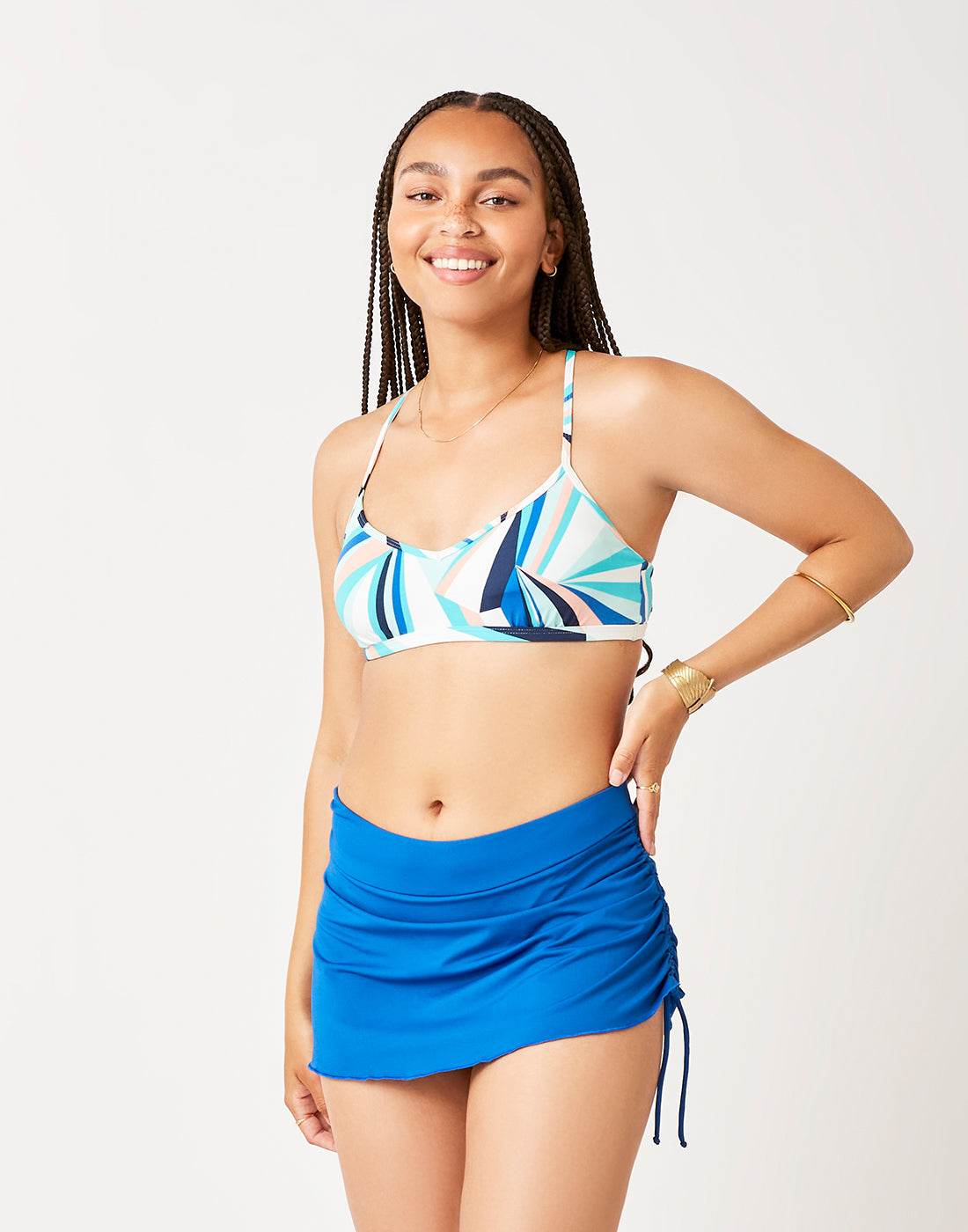
Summer camp swimwear brings together the easy spirit of a lakeside getaway and the practical details that make an active day in the water feel effortless. Think early laps before breakfast, a paddle across a quiet cove, and an afternoon that moves between the dock and a shaded picnic table. For women heading to an adult summer camp, joining a family retreat, or spending long days leading waterfront activities, a swimsuit needs to do more than look good on a beach towel. Secure straps, comfortable coverage, and fabric that holds its shape help keep the focus on the next adventure rather than the next adjustment. A one-piece offers a connected fit through the torso, while a two-piece allows separate sizing through the top and bottom—a useful option when those measurements fall into different size ranges. Higher necklines can offer extra coverage while leaning over a paddleboard, and racerback or cross-back shapes can help keep straps from slipping off shoulders during a swim. Adjustable details let the fit feel personal, although ties and closures should sit comfortably away from spots where a flotation vest or backpack might rub. Swim shorts can add coverage for climbing onto a dock or sitting in a canoe, while a swim top with appropriate support makes a difference during more energetic activities. The best summer camp swimwear balances a secure fit, durable stretch fabric, and freedom of motion for the activities ahead. That balance looks different for a relaxed float than it does for repeated laps or a morning of paddling. Color and pattern bring their own kind of personality, from quiet coastal shades to cheerful prints with a little camp nostalgia. Bright, contrasting colors may be easier to notice in some water conditions, but no swimsuit color guarantees visibility or replaces attentive supervision, designated swimming areas, or a properly fitted life jacket when the activity calls for one.
Fabric is where much of that everyday comfort begins. Swimwear commonly uses nylon or polyester blended with elastane, also called spandex, to combine a smooth feel with stretch and recovery. Nylon blends often feel soft and flexible, while polyester is frequently used in swim fabrics designed for repeated pool exposure. Fiber content alone does not establish chlorine resistance, though; the fabric construction and any stated performance features matter, especially for someone spending several days a week in treated water. Look for an explicit chlorine-resistance claim when pool time is a regular part of the plan rather than assuming every swimsuit performs the same way. Quick-drying fabric is helpful between dips, but drying time varies with fabric weight, lining, humidity, and how much water the suit retains. A fully lined swimsuit may provide a more substantial feel and coverage, while thicker layers can take longer to dry. Recycled fibers can be another consideration where the fabric description identifies them, offering an option that incorporates existing materials without making stretch, comfort, or care any less important. For long hours outdoors, a rash guard adds coverage across the shoulders and torso; a stated ultraviolet protection factor, or UPF, indicates tested protection through the fabric. A UPF 50 rating means the tested fabric allows about one-fiftieth of ultraviolet radiation to pass through. That protection applies only to the skin it covers and does not replace broad-spectrum sunscreen on exposed areas, shade breaks, or other sun precautions. Fit deserves the same attention as fabric. Straps should feel stable without digging, leg openings should stay comfortable when sitting, and a swim top’s band should remain level when the arms lift overhead. Torso length is especially important in a one-piece: pulling at the shoulders or riding up through the seat can signal a mismatch even when the size seems right elsewhere. A few dry-land motions—a reach, a squat, and a seated twist—can reveal whether a shape suits the way the day will actually unfold.
Durability comes from both thoughtful construction and the small habits that follow every swim. Even stitching, smoothly finished seams, and elastic that returns to shape after a gentle stretch are useful details to consider. The fabric should feel comfortable where the body bends, without rough edges under the arms or bulky seams beneath a life jacket. Camp settings can be surprisingly hard on swimwear: weathered dock boards, gritty pool edges, and rough rocks all invite snags or pilling. Sitting on a towel and avoiding dragging fabric across abrasive surfaces can help preserve the finish. After swimming, a cool fresh-water rinse helps remove chlorine, salt, sand, and other residue before the suit spends hours in a bag. Follow the care label for washing, use a gentle detergent when appropriate, and avoid fabric softeners or bleach unless the label specifically permits them. Gently press out excess water instead of wringing, then dry as directed, preferably away from strong heat and prolonged direct sunlight. A damp swimsuit tucked into a closed bag until the next outing is rarely a happy discovery; unpacking promptly is a small favor to both the fabric and tomorrow’s plans. When repeated swim sessions are on the schedule, rotating between suits gives each one time to dry fully and makes changing into dry clothing easier. Summer camp swimwear also earns its place beyond the traditional camp setting, from cabin weekends and warm-weather escapes to indoor pool sessions during the cooler months. A rash guard and swim shorts can suit an active shoreline afternoon, while a supportive swimsuit can move easily from gentle water exercise to an unhurried swim. For a gift, knowing the recipient’s size, preferred coverage, and favorite activities matters more than guessing from a print alone. Anyone drawn to expressive color and versatile waterside style can also explore
Cool Swimwear for another take on a swim wardrobe with personality. The lasting appeal is simple: swimwear that feels comfortable enough to forget about, leaving more room for fresh air, dockside laughter, and taking the scenic route back to shore.