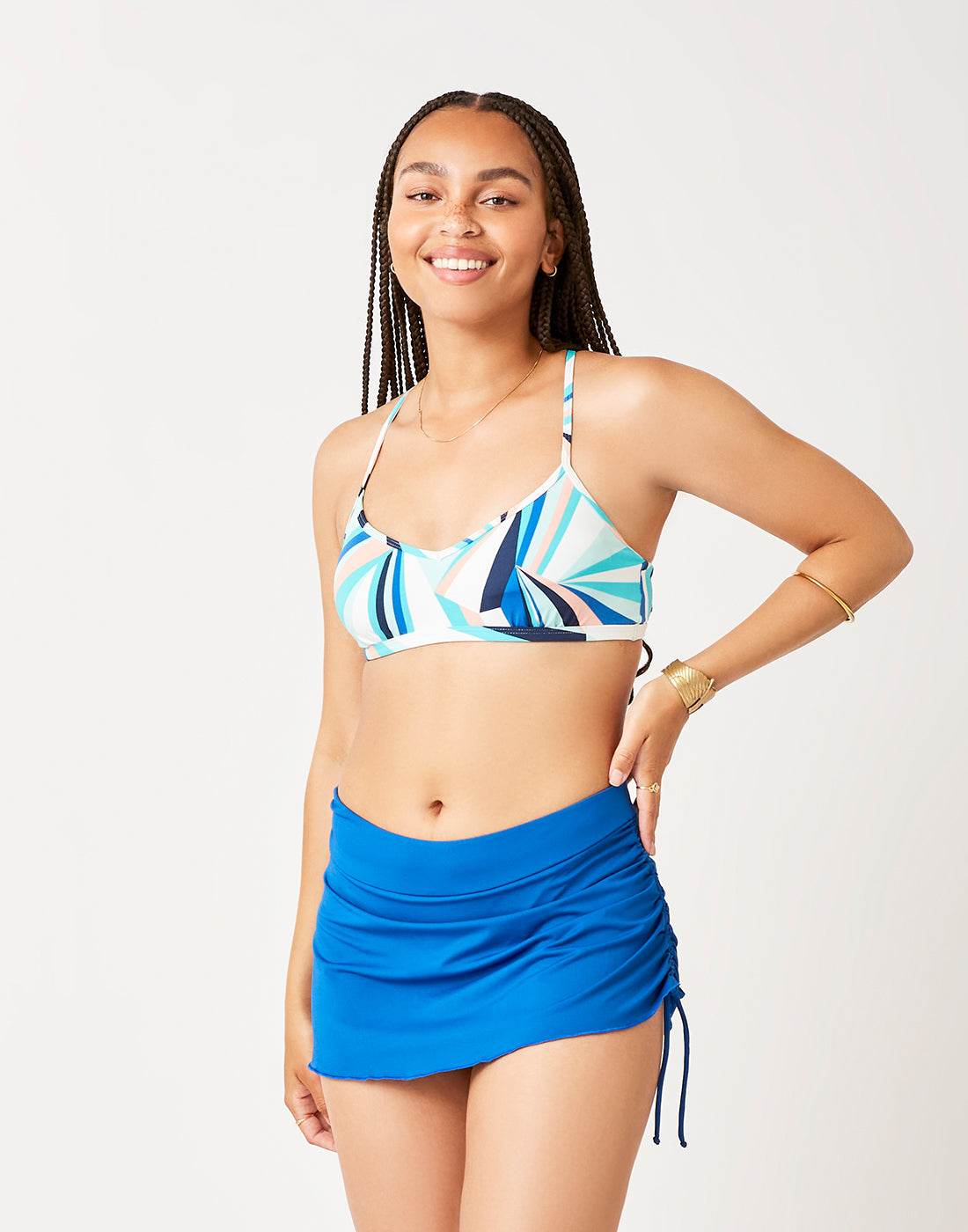
Summer outfits for swimming bring together one-piece swimsuits, bikinis, or tankinis with easy layers for time beside the water. The right combination feels comfortable in the pool, stays secure through a dip in the ocean, and makes the walk back to a shaded patio feel just as effortless. One-piece silhouettes offer a connected fit through the torso, while two-piece styles allow different sizes or coverage levels on top and bottom. Tankinis pair the flexibility of separates with more coverage through the middle. Each can be part of a swim outfit that suits leisurely floating, family pool days, or a beach afternoon with a little more wave chasing than lounging. Coverage is a personal preference rather than a rule: a higher neckline, longer top, or fuller seat can feel right for one swimmer, while an open back or narrower cut feels better for another. For active swimming, straps that stay put and a close, comfortable fit matter more than decorative details. For relaxing beside the pool, softness, ease, and a silhouette that feels good seated on a lounge chair may take priority. A lightweight cover-up, airy shorts, or a relaxed shirt adds comfort out of the water without making the outfit feel complicated. Those layers also create useful transitions between a swim, a snack break, and a stroll along the beach path. Color and pattern can tie everything together, whether that means a quiet solid with a textured layer or a lively print balanced by simple separates. The same approach works for warm-weather getaways during the cooler months, when swimwear earns its place in a suitcase alongside everyday layers. The appeal is practical as much as visual: fewer outfit changes, pieces that work together, and enough flexibility to follow a day that refuses to stick to the original plan.
Fabric and construction shape how swimwear feels after the first splash and through repeated wear. Swim fabrics commonly blend nylon or polyester with elastane, combining a smooth surface with stretch that allows reaching, kicking, and sitting comfortably. Nylon blends often feel soft and supple, while polyester is commonly used in swimwear designed with color retention and repeated pool use in mind; performance still depends on the fabric, construction, and care. Recycled fibers can be part of either blend, but fiber content alone does not establish how supportive, long-lasting, or quick-drying a suit will be. Lining can add opacity and a more substantial feel, while seams and elastic edges should lie comfortably without rubbing or pressing sharply into the skin. A secure swimsuit generally fits close to the body without restricting breathing or leaving straps to do all the work. Torso length is especially important in a one-piece: pulling at the shoulders or upward tension through the seat can signal that the proportions are not right, even when the size seems familiar. With separates, choosing the top and bottom independently can make room for different proportions without settling for an almost-right fit. Adjustable straps, underbands, and built-in support may help create a steadier feel, depending on their construction. Removable cups offer flexibility in shaping and coverage, though cups alone do not provide the same support as a well-fitting band. A few ordinary motions reveal plenty about comfort: reaching overhead, bending to pick up a towel, and sitting as if on the edge of a pool. Fabric should stay in place without frequent tugging, and edges should feel secure rather than tight. For lap sessions or energetic ocean swims, streamlined shapes and fewer loose ties can be practical. For gentle dips and relaxed afternoons, there is more room to choose by texture, shape, and the simple pleasure of wearing something that feels like a natural fit.
The layers around a swimsuit deserve the same attention as the suit itself. Breathable cotton and linen can feel pleasant on dry skin and work well for shade breaks, casual lunches, or the walk from a rental house to the beach. They absorb moisture, however, so a cotton shirt pulled over a wet swimsuit may stay damp longer than a lightweight synthetic layer. Looser cuts allow airflow and are easier to slip on without wrestling with wet straps. An opaque layer offers useful coverage away from the water, while a sheer weave keeps the look light but provides less concealment. Ordinary cover-ups should not be assumed to provide tested sun protection; labeled sun-protective clothing, sunscreen, and shade serve different roles in a day outdoors. For a gathering where swimming shares the afternoon with conversation and food,
Outfits For Pool Parties offers another way to approach the balance between water-ready comfort and easy social dressing. Flat sandals, a washable tote, and a separate pouch for damp swimwear keep the practical side of that outfit simple. Care afterward helps preserve the fit and feel that made the pieces appealing in the first place. Rinse swimwear in fresh water after exposure to salt or chlorine, follow the care label for washing, and avoid twisting the fabric to force out moisture. Gently pressing out excess water and drying away from direct heat can be kinder to stretch fibers. Rough pool edges, textured lounge chairs, and repeated friction can snag or abrade fabric, so a towel beneath the seat is a small habit with a useful payoff. Damp suits also fare better unpacked than forgotten in a zipped bag. For gifting, easy-fitting cover-ups can be a more forgiving choice than swimwear when exact sizing and support preferences are unknown. Whether packed for a sunny escape or worn for a familiar afternoon swim, a thoughtful combination of fit, fabric, and uncomplicated layers leaves more attention for the water and less for adjusting an outfit.