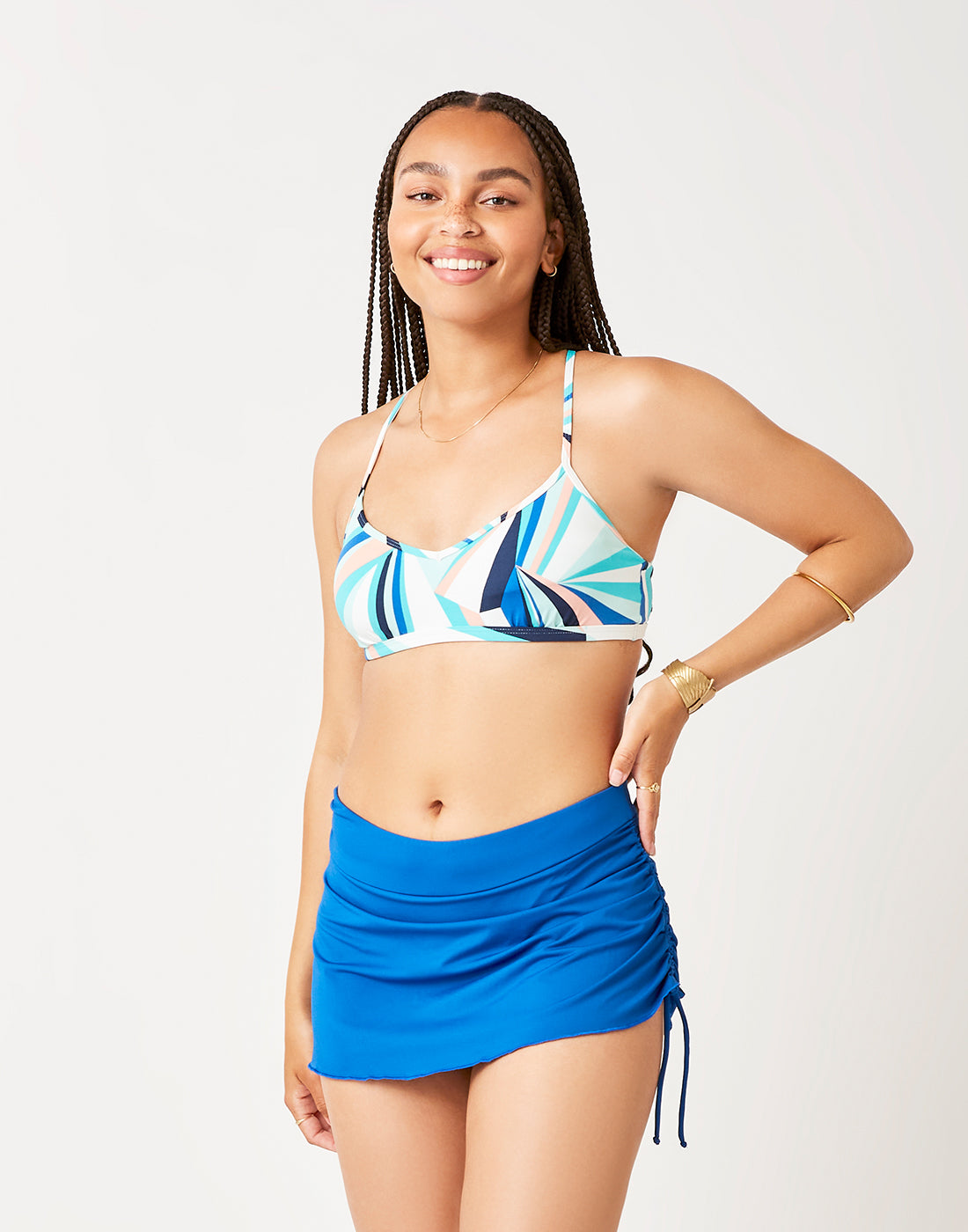
Swim skirts for women over 50 bring together the ease of a swim bottom and the soft silhouette of a skirt, with coverage that feels personal rather than prescribed. Age does not decide the right hemline, rise, or color; comfort, activity, and individual style do. For a morning at the pool, an afternoon beside the lake, or a beach escape during the cooler months, a well-fitting swim skirt leaves room to enjoy the water without constantly adjusting a waistband. Most designs pair an outer skirt with an attached brief or shorts underneath, although construction varies and is worth checking in the individual description. A brief lining keeps the shape relatively light, while built-in shorts add coverage along the upper thighs and may help reduce skin-to-skin rubbing. Neither should pinch at the leg openings or pull when sitting on a lounge chair. A gently flared silhouette gives the hips room to move, while a straighter cut creates a smoother outline with less loose fabric. Shorter lengths can feel less cumbersome for swimming; longer lengths offer more coverage for time spent walking along the shore or relaxing between dips. The outer layer may float or lift in water, so the fit and coverage of the attached bottom matter just as much as the hem. A higher rise can feel comfortably anchored at the waist, particularly when paired with a tankini, while a mid-rise shape may suit someone who prefers less fabric around the torso. The most useful choice is not necessarily the longest or most structured one. It is the one that feels good stepping down pool stairs, reaching for a towel, and settling into a beach chair with a paperback. Coverage can be practical, playful, or both, without turning swimwear into a list of things a body needs to hide.
Fabric and construction make a noticeable difference in how a swim skirt feels after the first splash. Common swimwear fabrics blend nylon or polyester with elastane, a stretch fiber also called spandex. Nylon blends often have a smooth, supple feel, while polyester is frequently used in fabrics designed to hold color and tolerate repeated pool use. Fiber content alone does not establish chlorine resistance, drying speed, or durability, however; the fabric construction, finishes, and care all play a part. For regular water aerobics or frequent swimming, look for a stated chlorine-resistance claim rather than assuming every stretchy fabric performs the same way. Salt water, pool chemicals, sunscreen, and rough surfaces can all take a toll over time. A fully lined bottom can add comfort and opacity, while bulky seams or tight elastic may become distracting during a longer swim. Fit should feel secure without making a deep breath feel like an achievement. A broad waistband can distribute pressure more evenly, and a contoured waist may help reduce gaps, depending on body shape. Shaping panels provide varying degrees of compression; they are an optional preference, not a requirement for a flattering fit. Check waist and hip measurements against the relevant size chart, especially when the skirt and attached bottom fit differently through the body. When trying on swimwear, sitting, bending, and taking a few generous steps can reveal rolling waistbands, restrictive hems, or liners that ride up. Fabric should stretch comfortably without becoming overly strained or sheer. Sun protection also deserves a clear distinction: extra fabric covers more skin, but a skirt should only be treated as sun-protective clothing when it carries an appropriate ultraviolet protection rating. Even then, exposed skin still needs sunscreen, and shade remains a welcome companion. These small details are what separate a skirt that simply looks appealing on a hanger from one that feels dependable through an active day near the water.
Swim skirts are versatile separates for women who like to choose their top and bottom independently, whether that means different sizes, contrasting colors, or a little extra coverage in one area. A streamlined bikini top keeps the pairing light for swimming and sun-filled afternoons, while a tankini creates a longer line through the torso. A rash guard can add coverage across the shoulders and arms for paddling or extended time outside; its sun-protection performance should be checked separately. Solid colors make easy partners for patterned tops, and a print can bring a little vacation spirit to an indoor pool routine. For a different silhouette,
one piece swimsuits for women over 50 offer an alternative to coordinating separate tops and bottoms. Intended use helps narrow the details that matter: a less voluminous skirt may feel more manageable for laps, built-in shorts may be appealing for beach walks, and a soft waistband can make leisurely afternoons more comfortable. A swim skirt can also be a thoughtful gift for a partner, friend, or family member who enjoys the water, provided their preferred size, rise, and coverage are known rather than guessed. Once a skirt becomes part of the rotation, gentle care helps it keep its shape. Follow its care label, rinse promptly in cool fresh water after swimming, and use a mild detergent when washing is needed. Avoid wringing or twisting the fabric; gently press out excess water and dry as directed, generally away from strong heat and direct sunlight. Leaving damp swimwear bundled in a tote can encourage odors, while sitting directly on textured pool edges can snag the surface. A towel underneath and time to dry fully between wears are simple habits that help preserve the finish and elasticity. With comfortable proportions and a little thoughtful care, a swim skirt can become an easy companion for warm-water getaways, familiar pool routines, and the satisfying freedom of a day spent outside.