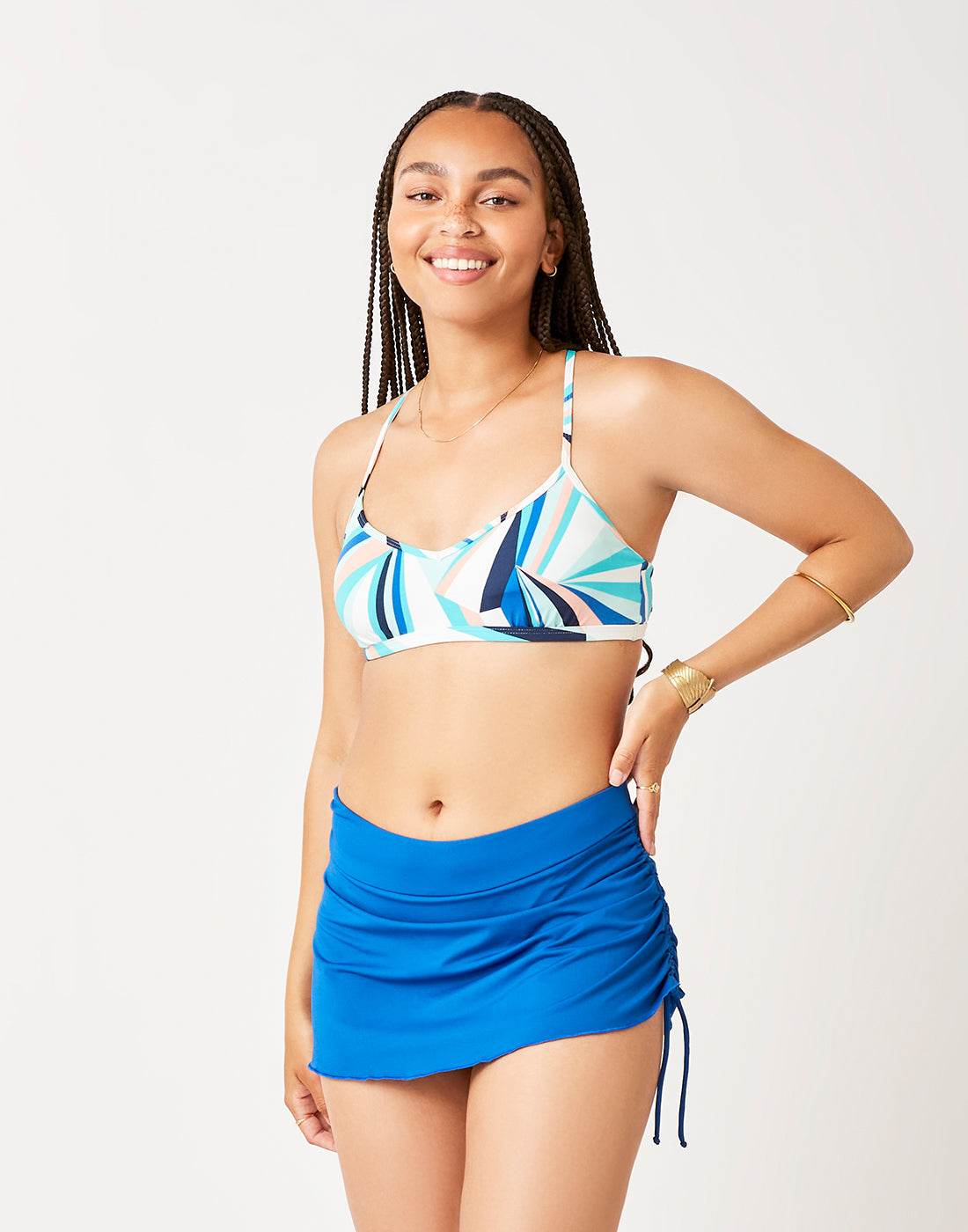
Swim skirts with built-in briefs combine the easy drape of a skirt with the coverage of an attached swimsuit bottom. The outer layer creates a skirted silhouette, while the brief underneath provides coverage for swimming, walking along the shore, or settling into a poolside chair. Unlike a separate cover-up, a skirted swim bottom is designed to stay on in the water, with both layers working as one piece. That makes it a practical choice for anyone who likes a little extra fabric over the hips without adding another garment to the beach bag. The brief is the foundation of the fit; the skirt adds shape, coverage, and a bit of swing. An A-line cut opens gently toward the hem, while a straighter silhouette sits closer to the body. Side slits or overlapping panels can allow extra room for a longer stride, though the skirt may still float or shift during a swim. The attached brief keeps coverage underneath independent of where the outer fabric lands. Length matters, too: a shorter hem leaves more of the upper leg free, while a longer cut extends coverage farther down the thigh. Neither shape needs to hide anything to earn its place in a swim drawer. The appeal is choosing how much coverage feels comfortable and how the fabric moves with the body. These bottoms can pair with a bikini top, tankini, or swim shirt, making it easy to build a combination around preferred support and coverage. A fitted top balances a flowing skirt, while a longer tankini can create a more continuous silhouette. For a broader look at skirted swim silhouettes,
Swimwear With Skirts brings that same relaxed approach to coverage into focus. Swim skirts with built-in briefs are especially useful for days that involve a little of everything: a dip, a stroll, a seat on the dock, and another dip because the first one was too good to be the last.
Comfort starts with the attached brief fitting well on its own, rather than relying on the outer skirt to make an awkward fit feel right. A waistband should feel secure without digging, and the leg openings should sit smoothly without pinching or leaving loose gaps. Sitting, bending, and stepping up onto a pool ledge all change how swimwear rests on the body, so a comfortable standing fit is only part of the picture. The brief should stay comfortably in place through those ordinary motions, while the skirt has enough ease to drape instead of catching across the hips. High-rise swim skirts generally place the waistband nearer the natural waist, offering more coverage through the middle; mid-rise shapes sit lower on the torso. The exact position depends on torso length and the cut, making body measurements and the size chart more useful than a rise label alone. A higher waist does not automatically mean compression. Some designs use a wider waistband, an additional lining layer, or a shaping panel for a firmer feel, while others keep the construction soft and flexible. Those details deserve attention if gentle hold is welcome—or if an easy, barely-there feel is the priority. Adjustable ties, when included, may change the skirt’s drape or hem height without changing the fit of the brief underneath. There is also a useful distinction between swim skirts with briefs and styles with inner shorts. A built-in brief has a bikini-bottom shape with open upper legs; an inner short extends down the thigh and offers a different feel during walking or activity. Names such as “swim skort” are not always used consistently, so the description of the inner layer tells the clearer story. For recreational swimming, water-side lounging, and casual paddle outings, a skirted bottom can be an easy match. For sustained lap swimming or vigorous activity, a closer-cut outer layer may feel less distracting than a fuller skirt that moves freely through the water.
Fabric and construction help determine how a swim skirt feels after the first splash and how well it holds its shape over time. Nylon or polyester blended with elastane is common in swimwear, combining a smooth surface with stretch that allows the brief and waistband to flex with the body. Elastane may also appear on a fabric label as spandex. The proportions, knit, lining, and finish all influence the result, so fiber content alone does not tell the whole story. A lightweight outer skirt can feel fluid and easy, while a more substantial fabric may hold a defined silhouette. Additional lining can improve coverage and create a steadier feel, though extra layers may take longer to dry. Smooth seams and neatly finished edges are worth noticing around the waist and leg openings, where rough stitching can become especially noticeable after time in the water. Recycled fibers are another possible material choice; the fabric details should identify recycled content rather than leaving that quality to assumption. Chlorine resistance and sun protection also need to be stated for the particular fabric or style. A skirt’s coverage is not a substitute for a verified ultraviolet protection rating, and exposed skin still needs appropriate sun protection. Everyday care can make a meaningful difference to durability. A rinse in fresh water after swimming helps remove salt, chlorine, and residue, while washing according to the care label protects the fabric’s stretch and finish. Gentle handling is usually kinder than wringing, and drying away from direct heat helps avoid unnecessary stress on elastic fibers. Rough pool edges and textured seats can snag or abrade the surface, making a towel a simple buffer between a favorite swim bottom and an unforgiving ledge. Letting both the skirt and brief dry fully before storing also keeps a packed swim bag from becoming an accidental long-term home for damp fabric. With a comfortable inner fit, an outer shape that suits the activity, and a little thoughtful care, a swim skirt with built-in briefs offers an uncomplicated balance of swim-ready function and easygoing style.