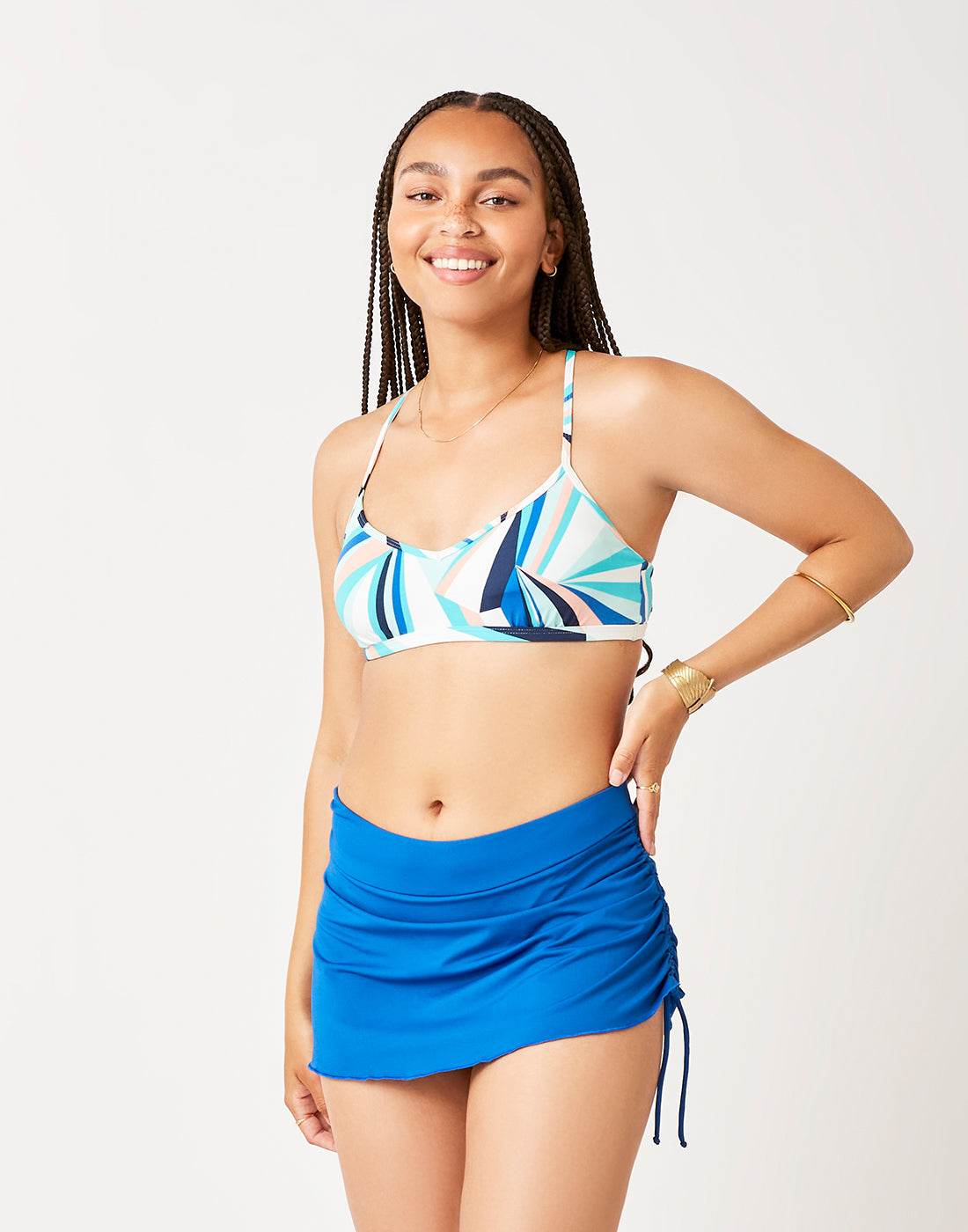
Swimming bottoms are the foundation of a swim outfit that feels good before the first dip and stays comfortable long after the towel comes out. Whether the day involves a few steady laps, a paddle along the shoreline, or an ambitious sandcastle with a small assistant, the right fit makes it easier to enjoy what is happening rather than keep adjusting a waistband. Different rises and cuts offer different ways to feel supported and at ease. A higher rise brings more coverage around the waist, while a lower rise leaves more of the midsection open; neither needs to mean sacrificing comfort or personality. Wider side panels can create a secure, anchored feel, and narrower sides offer a lighter silhouette. Adjustable ties allow some flexibility around the hips, though their placement matters when lying on a board or sitting against a pool edge. Leg openings are just as important as the waistband: a higher cut leaves more room around the upper thigh, while a lower cut offers additional coverage at the hip. Coverage across the back varies independently of rise, so a high waist does not necessarily mean a fuller seat. The most comfortable swimming bottoms follow the body without pinching, rolling, or leaving loose folds that shift in the water. A waistband should feel comfortably secure when sitting, bending, and reaching, not only when standing in front of a mirror. Fabric that digs at the leg openings or pulls tightly across the hips can signal that a different size or shape would feel better. Bodies do not always match a single size from top to bottom, which is part of the appeal of swim separates. Choosing each piece independently creates room for a more personal fit, especially for women whose preferred top and bottom sizes differ. The goal is simple: swimwear that feels like it belongs on the body, with enough freedom to climb a pool ladder, stretch across a paddleboard, or settle into a beach chair without a second thought.
Fabric and construction shape how swimming bottoms feel, perform, and hold up to repeated use. Nylon and polyester are common swimwear materials, often blended with elastane or spandex to provide stretch. Nylon blends can have a smooth, supple hand, while polyester blends are often chosen for color retention and resistance to repeated pool exposure. Performance still depends on the complete fabric blend, construction, and care, rather than the fiber name alone. Stretch helps fabric move with the body; recovery helps it return to its original shape instead of becoming loose after a swim. That balance matters around the waist and leg openings, where a secure fit needs to remain comfortable through repeated movement. A lining can add a smoother feel against the skin and provide additional opacity, although its coverage and placement vary by design. Well-finished seams and evenly applied elastic also make a difference, particularly on days that include plenty of walking, swimming, and sitting. Flat, thoughtfully positioned seams can reduce friction, while bulky edges may become more noticeable under a close-fitting rash guard or against a board. For pool routines, fabric intended to tolerate chlorine is worth considering, without assuming that any swimsuit is immune to wear. For ocean swims and paddling, a stable waistband and comfortable leg openings help keep attention on the water rather than on readjusting fabric. Swim bottoms are designed for water, but rough pool decks, textured rocks, and abrasive board surfaces can still catch or scuff them. Recycled nylon or polyester may be included in some swim fabrics, offering an option for those who value recycled materials alongside fit and function. Fiber content is only one part of that choice. Durable construction, a shape that gets worn often, and thoughtful care all contribute to keeping swimwear in use. A comfortable pair that earns repeat appearances in a swim bag has a purpose beyond looking good beside the water.
Color and pattern give swimming bottoms another layer of versatility, especially when swim tops are chosen separately. A solid bottom can anchor a lively print, while a patterned bottom brings character to a simple top without requiring a perfectly matched set. For an easy starting point,
black swim bikini bottoms pair naturally with everything from soft coastal shades to bold stripes and expressive florals. The result can feel pulled together without looking overly coordinated. Texture changes the look, too: a smooth fabric reads differently from a ribbed or subtly textured surface, even in the same color. Comfort remains the useful tie-breaker, particularly when a swim outfit needs to move between the water, a beach walk, and lunch with a cover-up layered over it. Packing swim separates can also make a travel wardrobe more flexible, since compatible colors allow different combinations without a separate outfit for every swim. Afterward, a little attention helps preserve the fabric’s shape and finish. A rinse in fresh water removes much of the salt, chlorine, and residue left after wear, while the care label provides the best direction for washing. Gentle handling is kinder to stretch fibers than twisting or wringing, and drying away from direct heat helps protect elasticity. Swimwear should be fully dry before being tucked into a drawer or travel bag; leaving it bundled inside a damp towel is rarely a favor to the fabric. Sunscreen and body oils can leave residue, so gentle cleaning matters even after a relaxed afternoon with only a brief dip. Swimming bottoms can also be a thoughtful gift for someone who spends plenty of time in the water, provided their size, preferred rise, and coverage preferences are already familiar. Those details are personal, and honoring them matters more than choosing a particular look. Whether chosen for regular pool visits, a coastal getaway, or unstructured hours by the water, the best fit leaves room for both activity and ease. Comfortable swimwear does not need to make a statement every time it is worn. Sometimes its greatest contribution is staying comfortably in place while the good part of the day unfolds.