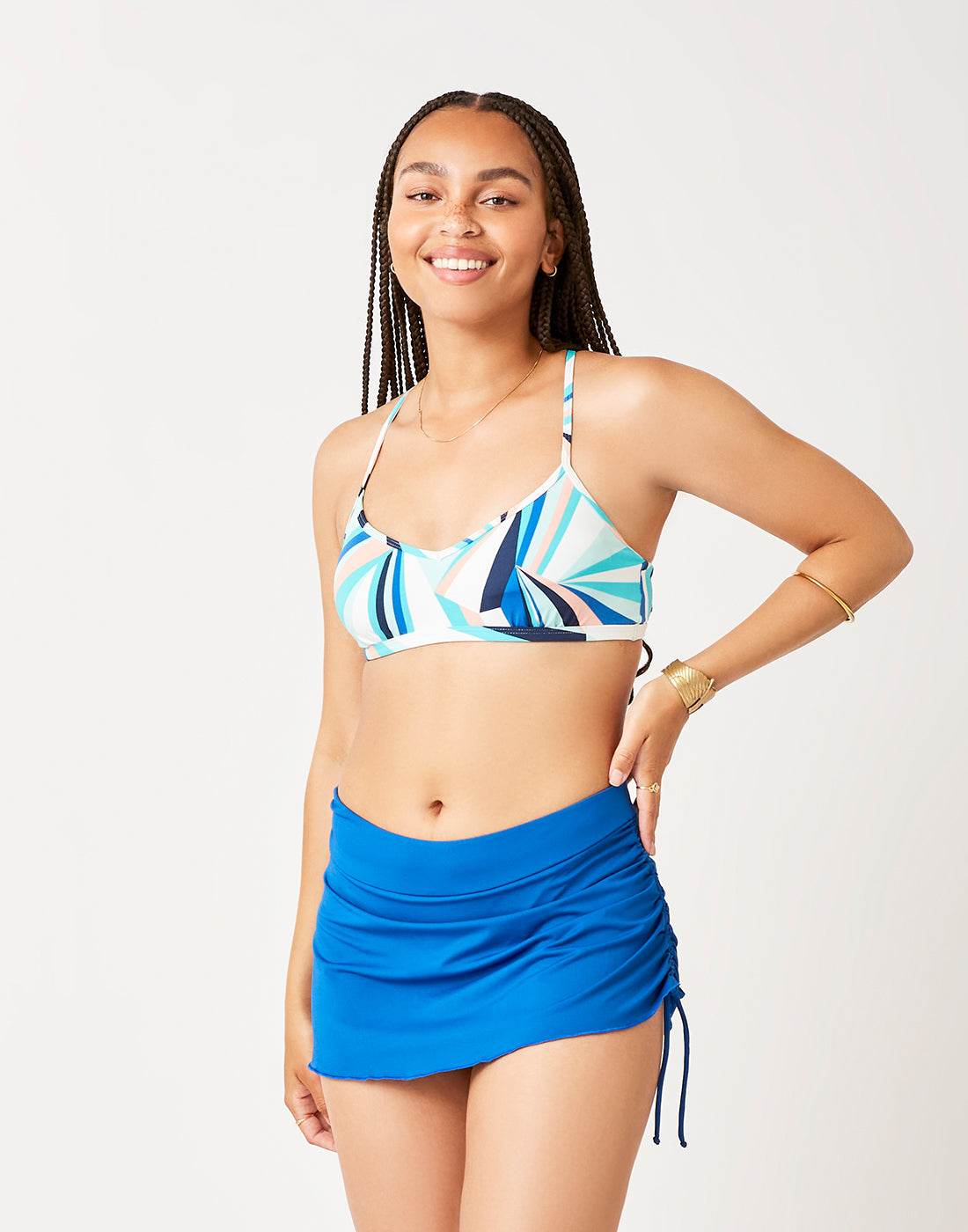
Swimwear for women over 40 brings together personal style, comfortable support, and a fit that feels good beyond the fitting room. There is no single silhouette that belongs to a particular age: a bikini, tankini, or one-piece can all feel equally at home on a beach walk, a poolside afternoon, or a swim out past the shallows. The most useful distinctions are how much coverage feels comfortable, where support is needed, and how the suit moves with the person wearing it. A supportive one-piece offers a connected fit through the torso, while a tankini pairs the coverage of a longer top with the flexibility of separate sizes. Bikinis make it easy to choose a top and bottom independently, especially when bust and hip proportions call for different fits. High-rise bottoms offer more coverage through the waist; mid-rise shapes sit lower and can feel less enclosing through the middle. Neither is an age requirement. Coverage is a preference, not a dress code, and a swimsuit should leave plenty of room for personality. A clean scoop neckline, a lively print, a simple stripe, or an open back can set a different mood without changing the practical job of the suit. For swimming and paddleboarding, secure straps and a neckline that stays close to the body often matter more than decorative details. For lounging and easy dips, a softer construction or an adjustable tie may be just the thing. Fuller seat coverage can feel reassuring when climbing a boat ladder or settling onto a beach blanket, while a higher-cut leg leaves more of the upper thigh uncovered. The best bathing suits for women over 40 balance these choices rather than treating extra coverage or shaping as essential. Style can be playful, streamlined, sporty, or a little of each, with comfort doing the quiet work behind the scenes.
Fit starts with proportions, not just the size on a label. Bust, underbust, waist, hip, and torso measurements help distinguish a suit that merely goes on from one that feels comfortable through a full day of movement. In a one-piece, torso length is particularly important: a suit that is too short can pull at the shoulders or ride up through the seat, while excess length may gather through the middle. Separate tops and bottoms offer another route to a balanced fit without asking every part of the body to follow the same size chart. For fuller busts, an appropriately fitted underband, well-shaped cups, and straps that can be adjusted are useful foundations. Underwire, molded cups, and shelf bras provide different kinds of structure, so their value depends on individual preference and the activity ahead. Removable pads can add coverage and shape, but they are not a substitute for a supportive fit. Wider straps may distribute pressure more comfortably, while a cross-back arrangement can help keep straps from slipping during movement. Around the waist, ruching changes how fabric drapes, and a lined front panel or power mesh can create a more held-in feel. Swimwear described as having tummy control generally uses firmer fabric or shaping panels; that sensation should still allow comfortable breathing, sitting, and bending. A softly fitted suit without compression is just as valid a choice. Leg openings should feel secure without digging, and the back should stay comfortably in place rather than needing attention after every few steps. A few everyday movements tell a useful story: reaching overhead, sitting on a low chair, and bending to pick up a towel reveal tension, gaping, or slipping that standing still can miss. Someone swimming laps may prefer a closer, more anchored fit than someone spending most of the day reading beside the pool. The goal is a suit that supports the plan and then lets the wearer forget about it.
Fabric and construction help determine whether that comfortable fit lasts. Many swimsuits use nylon or polyester blended with elastane, which adds stretch so the fabric can move and recover. Nylon blends often have a smooth, soft hand, while polyester is commonly used in swim fabrics designed for repeated pool exposure. Fiber content alone does not establish chlorine resistance, however; fabric engineering, elastane content, and care all affect performance. A lining can add coverage and structure, and neat seams, secure strap attachments, and smooth edges help reduce distractions during wear. Recycled fibers offer a way to incorporate existing materials into swim fabric, though recycled content by itself does not guarantee durability or a particular feel. Fabric weight also makes a difference: substantial material may feel more supportive, while lighter constructions can feel less restrictive. Neither replaces a good fit, and any stretch fabric should return toward its original shape rather than remain loose after gentle stretching. For frequent pool swimming, a stated chlorine-resistant construction is worth considering; for time on a paddleboard, freedom through the shoulders and secure coverage may take priority. Rash guards can add coverage for longer stretches on the water, but sun protection should be based on a stated ultraviolet protection rating rather than appearance alone, alongside other protective measures. Care is refreshingly straightforward when the garment label stays in charge. A fresh-water rinse after swimming helps remove salt, chlorine, and residue, and gentle washing with a suitable detergent helps protect stretch fibers. Avoiding rough pool edges, wringing, and high dryer heat can also help preserve the surface and shape. Allowing a suit to dry fully before storing it keeps the next outing from beginning with a damp surprise. These same considerations remain useful across ages, and
swimwear for women over 50 offers another way to explore personal fit and style preferences without treating a birthday as a wardrobe rule. Whether the destination is a neighborhood pool or a favorite stretch of coastline, thoughtfully chosen swimwear leaves more attention for the water, the company, and the pleasure of being there.