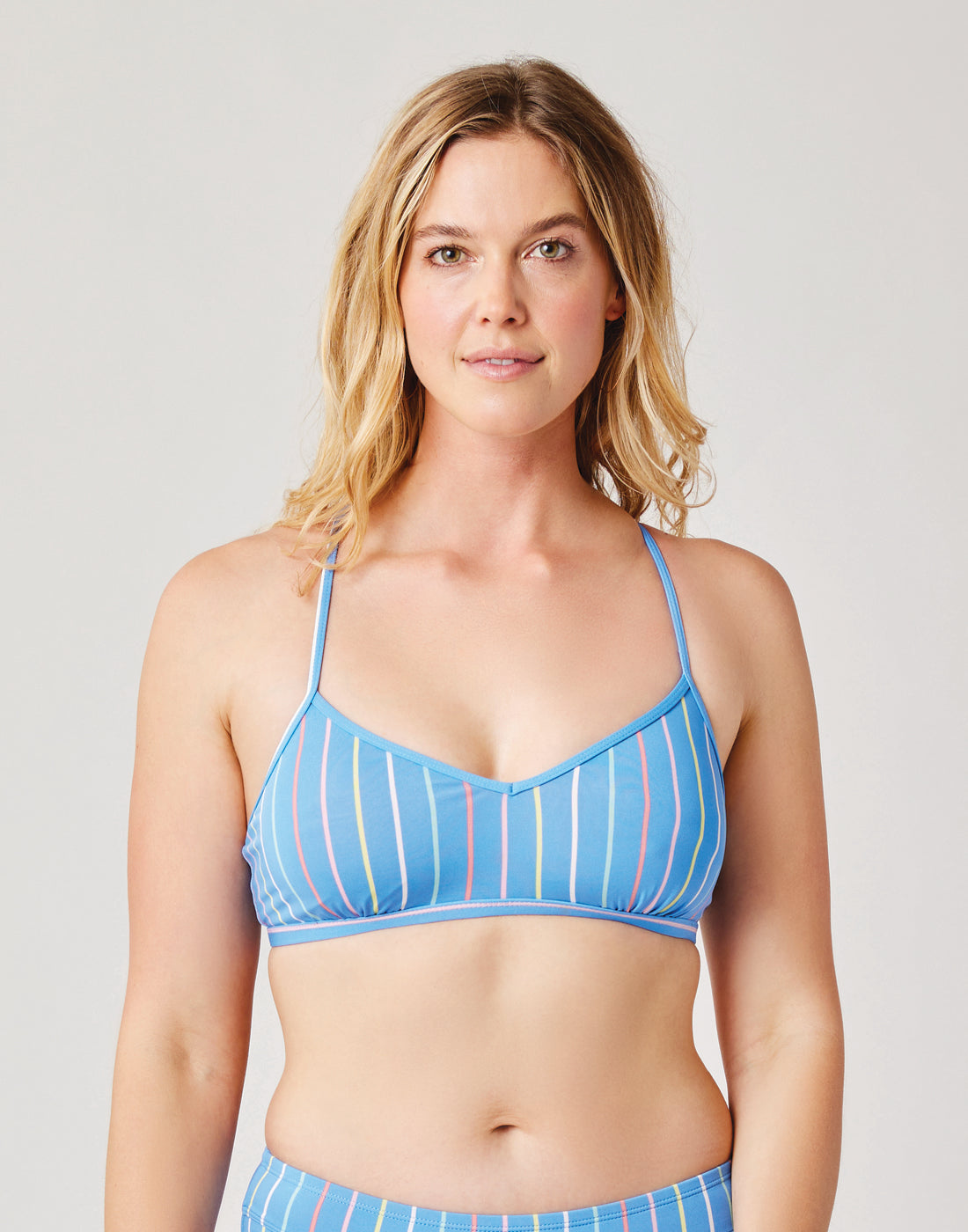
Tankini swim tops with support combine the torso coverage of a longer swim top with the flexibility of a two-piece, using features such as built-in shelf bras, shaped cups, underwire, and adjustable straps to help the bust feel secure. That support comes from the construction inside the suit, not simply from a higher neckline or a closer fit through the waist. A shelf bra typically uses an interior fabric layer and an elastic band beneath the bust to provide light support, while molded cups add shape and may help create a smoother silhouette. Underwire styles can offer more defined lift and separation when the wire and cups fit properly. Removable pads primarily affect coverage and shape; they do not necessarily provide substantial lift on their own. Each approach has a different feel, making supportive tankinis a versatile choice for everything from an easy afternoon by the pool to a swim between beach walks. Someone who prefers a flexible, less structured feel may enjoy wireless construction, while someone seeking more defined shaping may prefer separate cups and a firmer underbust band. Bust size is only part of that decision: sensitivity to pressure, torso length, and the amount of activity planned also matter. A fuller bust may benefit from cup-specific sizing and a stable band, but smaller busts can appreciate those features, too. The goal is comfortable stability, with room to breathe, reach, and settle into a lounge chair without thinking about the top at every turn. The longer silhouette also allows coverage through the middle without connecting the top to the bottoms, which can be especially useful when different sizes fit best above and below the waist. During cooler months, that same easy combination travels well to an indoor pool or a sunny getaway, bringing a little beach-day ease along for the ride.
A supportive tankini should feel anchored beneath the bust rather than suspended entirely from the shoulders. The underbust band sits comfortably against the body, cups contain the bust without pinching or leaving large gaps, and straps help keep everything in place without digging in. With underwire construction, the wire should follow the base of the breast and rest against the rib cage rather than press onto breast tissue. Bra-sized tankinis use band and cup sizing to offer a more specific fit, while letter-sized tops rely on the size chart and the flexibility of their construction. Neither system guarantees the right feel on its own; bust and underbust measurements, along with torso length, give a more useful picture than a usual clothing size alone. Strap placement makes a difference as well. Wider straps can spread pressure across a larger area, while adjustable straps allow small changes to the length and position of the top. For a closer look at that feature,
tankini tops with adjustable straps offer another way to explore a more personalized fit. Crossback configurations may feel secure during activity, though their comfort depends on where the straps sit across the shoulders and back. Through the torso, a close-fitting cut creates a streamlined feel in the water, while a gently draped shape offers more ease around the waist. Extra fabric can float upward during swimming, so a relaxed silhouette may feel different in the pool than it does while standing on dry land. Hem length matters, too: a longer top may overlap the waistband, while a shorter tankini leaves more separation between the two pieces. Reaching overhead, leaning forward, and rotating the shoulders during a try-on can reveal shifting that a mirror alone will miss. A comfortable top stays reasonably settled through those ordinary motions without requiring overly tight straps to do all the work.
Fabric and finishing help determine how that fit holds up beyond the first swim. Tankini swim tops commonly use nylon or polyester blended with elastane, sometimes labeled spandex, to balance stretch with recovery. Nylon blends often have a soft, smooth hand, while polyester blends are commonly used in swim fabrics designed to withstand repeated pool exposure. Actual chlorine resistance depends on the complete fabric construction and finish, so a stated chlorine-resistant feature is more useful than fiber content alone. Stretch recovery matters because a top needs to return toward its original shape after pulling over the shoulders, getting wet, and moving through the water. Lining can add coverage and help stabilize the outer fabric, though a double layer by itself does not guarantee stronger bust support. Smooth seams, securely attached straps, and neatly enclosed elastic are small details that become noticeable over a long afternoon. Recycled fibers can be part of a swim fabric blend, but softness, support, and durability still depend on how the material is made and cared for. A freshwater rinse after swimming helps remove salt and chlorine residue, and washing according to the care label protects elastic, cups, and finishes. Gentle washing, avoiding fabric softener, and drying away from direct heat are common care practices, but the label should take priority. Twisting or wringing can distort shaped cups and stress stretchy fibers; gently pressing out water is a kinder approach. Letting a suit dry fully before storing it also helps keep it ready for the next outing. Intended use brings all these details together. A top for easy floating and poolside reading may prioritize a soft lining and relaxed torso, while regular swimming or active play in the water calls for secure straps and a fit that resists shifting. Coverage preferences can change with the setting, and tankinis pair easily with different swim bottoms without requiring the same size in both pieces. For a gift, knowing the recipient’s preferred support style and fit is particularly helpful; swimwear is personal, and comfort is a better starting point than guessing a silhouette. Thoughtful construction leaves more attention for the good parts: a quiet stretch of water, a towel warmed by the sun, and an afternoon that asks very little beyond getting comfortable.