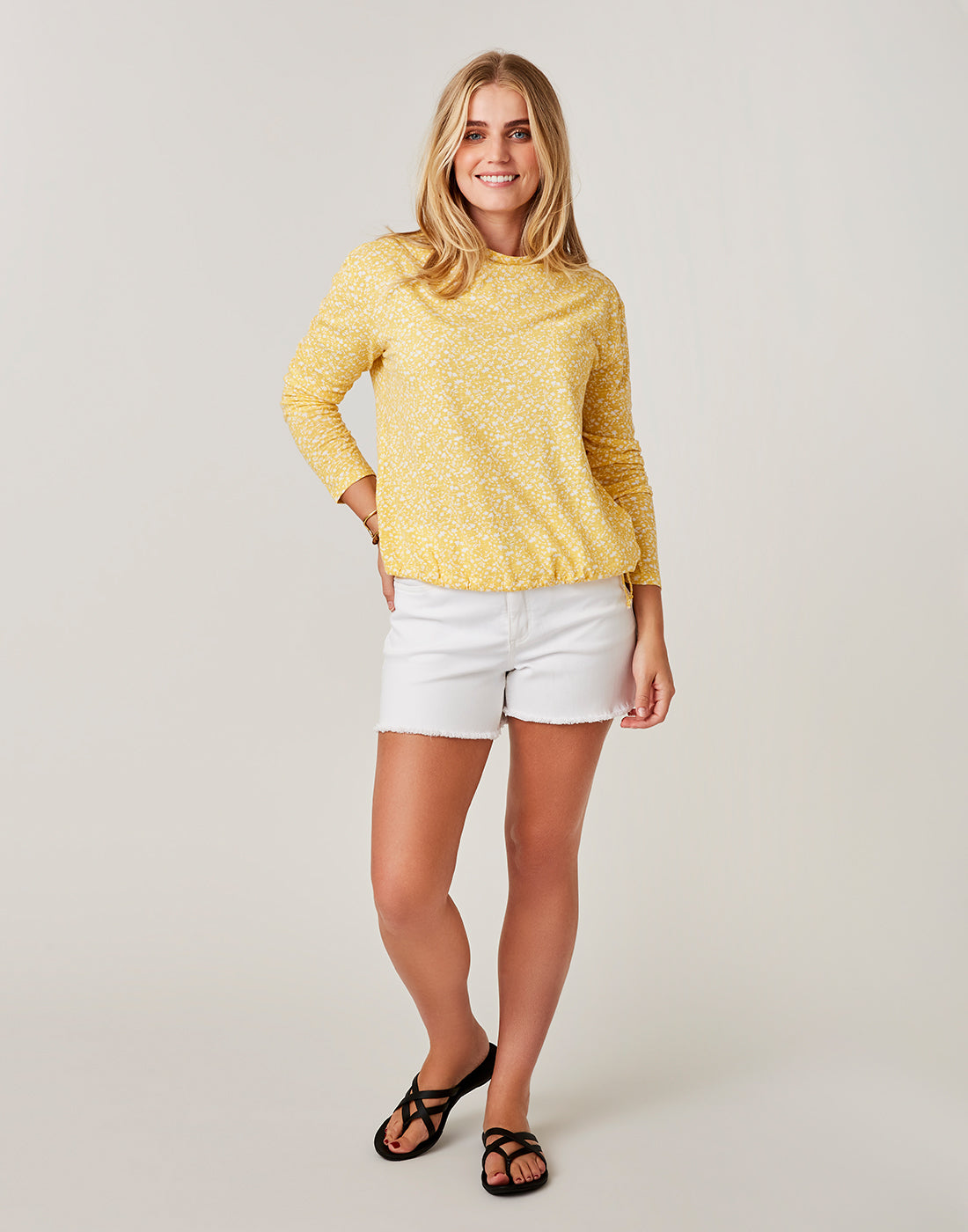
White denim shorts bring a fresh, easygoing feel to everyday dressing, with the familiar character of jeans and a lighter look that works far beyond a beach afternoon. Their appeal is simple: a clean white base makes room for faded tees, striped button-downs, textured sweaters, and the colors already hanging in the closet. Compared with lightweight woven shorts, denim generally offers more structure, helping pockets, waistbands, and hems hold their shape through regular wear. Within that familiar fabric, there is plenty of variety. High-rise white denim shorts sit higher on the torso and pair naturally with tucked shirts or shorter layers, while mid-rise cuts offer a waistband position closer to the hips. Lower rises create a different proportion, especially with longer tops. Shorter inseams leave more of the leg exposed, mid-length cuts strike an easy balance, and Bermuda-length shorts offer coverage farther down the thigh. None of those shapes belongs to just one body type; the right fit depends on where the waistband feels comfortable, how much room the legs need, and what feels good from breakfast through an afternoon out. A relaxed leg opening can lend a laid-back feel without requiring an oversized waist, while a straighter cut creates a more streamlined outline. Crisp hems look a little more finished with a linen shirt, and raw edges bring the familiar ease of well-loved cutoffs. Bright white feels graphic beside navy or black; softer, creamy shades create a gentler contrast with earthy tones. Those subtle differences can change the mood of an outfit without making it complicated. For coastal weekends, casual lunches, warm-weather getaways, or sunny stretches during the cooler months, white jean shorts offer a useful middle ground between beachwear and full-length denim. Add a cotton sweater and simple sneakers, and the look feels ready for a breezy walk along the waterfront, with enough polish to stop for lunch afterward.
Fabric and construction make a real difference in how white denim shorts feel, look, and wear over time. Cotton gives denim its recognizable texture, while a small amount of elastane can add flexibility for sitting, bending, and moving through the day. All-cotton denim usually feels more structured at first and may soften with wear, though the amount it relaxes depends on the weave and finish. Stretch denim can feel easier from the first try-on, but comfort still relies on a cut that leaves enough room through the seat and thighs. Organic cotton, when specified in the fabric details, identifies how the cotton was grown; it does not by itself determine softness, stretch, or durability. Fabric weight matters, too. A lighter denim can feel less substantial in warm weather, while a denser weave often provides more structure and opacity. With white fabric, opacity deserves particular attention: even a thicker cloth can reveal pocket bags or contrasting underlayers when pulled tightly across the body. Underwear close to the wearer’s skin tone generally creates less contrast than bright white, and a fit that skims rather than strains helps the fabric hang naturally. Useful fit details include a waistband that stays comfortable while seated, front pockets that lie reasonably flat, and leg openings that do not dig in during a long walk. If a waistband gaps while the hips feel snug, a cut with more room through the hip and seat may work better than simply sizing up. Inseam length is only part of the picture, since rise and leg shape also affect where the hem lands. Reinforced pocket corners, secure belt loops, and even stitching are worth noticing because these areas take repeated stress. For anyone wearing denim shorts on errands, road trips, or casual afternoons outside, those small construction details support dependable everyday use. Denim is not swimwear or specialized trail clothing, but it is well suited to the dry-land part of a beach day, from the drive there to a relaxed meal after a change.
The versatility of white denim shorts comes from how easily they shift with texture, layers, and footwear. A ribbed tank and flat sandals keep things simple in warm weather; a soft sweatshirt adds comfort when a breeze rolls in. As temperatures dip, a roomy knit or an open overshirt gives the outfit a little more warmth without losing its relaxed character. White denim can also balance a patterned blouse or a richly colored pullover, letting those pieces stand out without competing for attention. For a similarly versatile option with a darker finish,
black denim shorts offer a different foundation for many of the same casual layers. Keeping white denim looking fresh takes a little care, but it does not need to become a weekend project. The care label is the best starting point, especially for fabrics containing stretch fibers or decorative finishes. Separating whites from dark or strongly colored fabrics helps limit dye transfer, while treating spills promptly can prevent a small coffee splash from becoming a lasting souvenir. Blotting rather than rubbing is gentler on the surface, and any stain treatment should be suitable for the fabric and tested in an inconspicuous spot. Chlorine bleach is not appropriate for every white garment, so a white color alone is not a reason to reach for it. When the care instructions allow, washing in cool water and avoiding excessive dryer heat can help protect fit and fabric. Reshaping before air-drying may also reduce stubborn creases around pockets and hems. Raw edges can continue to fray with laundering, which is part of their character; loose threads are better trimmed carefully than pulled. For gifting, shorts are a thoughtful choice when the recipient’s preferred rise, inseam, and size are already familiar, particularly for someone planning a coastal escape or enjoying a mild climate. Ultimately, the lasting appeal of white denim shorts is their uncomplicated usefulness: enough structure to feel put together, enough styling freedom to feel personal, and an easy place in a wardrobe built around getting out and enjoying the day.