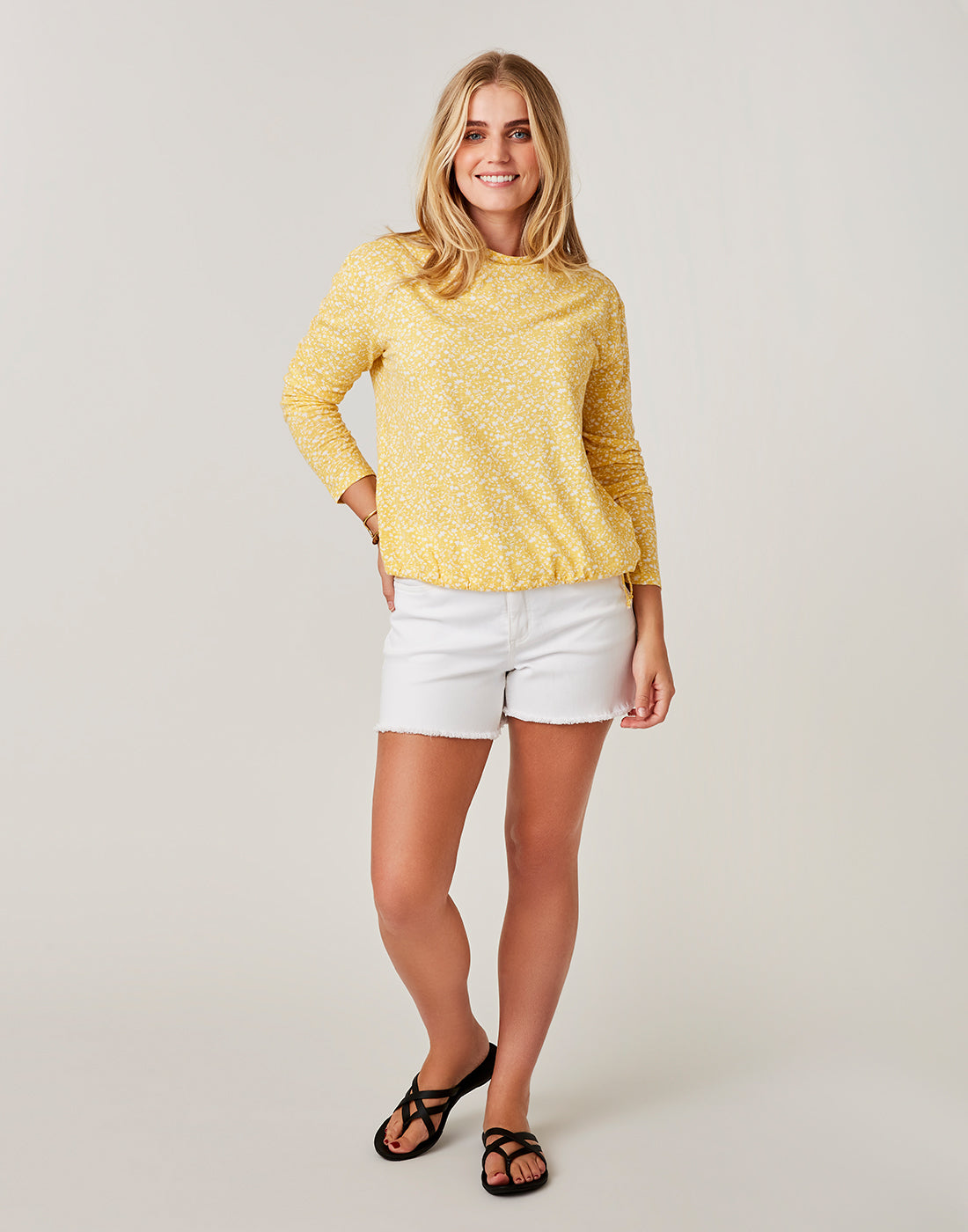
Women's fitted denim shorts combine the familiar character of jeans with a close-to-body silhouette that follows the waist, hips, and seat. Unlike a relaxed or wide-leg cut, a fitted shape keeps the profile streamlined without needing to feel restrictive. The difference is in the proportions: enough room to sit comfortably, pockets that lie smoothly, and leg openings that stay comfortable when walking or bending. A good fit feels secure at the waistband without pinching, while the fabric rests against the body rather than pulling sharply across it. Rise changes both the look and the feel. High-rise denim shorts sit higher on the torso and pair naturally with tucked-in tees or shorter tops, while mid-rise shapes place the waistband closer to the hips for an easy, familiar feel. Lower rises sit farther down, making the relationship between waist and hip measurements especially important. Inseam length matters just as much as rise. A shorter inseam leaves more of the leg uncovered, while a longer fitted cut extends coverage without adding the volume of a loose silhouette. The same inseam can look different on different bodies, so measurements tell a clearer story than a style name alone. Waist, hip, rise, and inseam details help narrow the choice, particularly when comparing shorts with a favorite pair already in the closet. If a waistband gaps while the hips fit comfortably, a different waist-to-hip proportion may be more useful than simply choosing a smaller size. Likewise, persistent pulling across the front or hems that dig into the thighs can signal a need for more room or a different cut. Fitted should describe the shape, not a requirement to stand perfectly still. There is room for personal preference here, too: a smooth, body-skimming fit and a more closely contoured fit can both belong in this category. Comfort during an ordinary sit, step, and reach is a better measure than the number on a tag.
Fabric gives fitted jean shorts much of their personality. Traditional denim is a twill-woven fabric, usually made primarily from cotton, with a diagonal texture that contributes to its recognizable look and sturdy feel. All-cotton denim generally feels more structured at first and can soften with wear, developing creases and fading that reflect how it is used. It may relax through movement, but it does not provide the same elastic give as stretch denim. A cotton blend containing elastane or spandex can offer more flexibility through the hips and thighs, making a close fit easier to move in. Stretch content is only part of the picture, though. Fabric weight, weave, finishing, and overall construction also affect softness, support, and how well shorts recover their shape after sitting. A very soft fabric is not automatically the most durable, and a substantial fabric is not automatically uncomfortable; the balance depends on the intended feel. The appeal of
women's cotton denim shorts starts with cotton's familiar texture, whether the fabric is rigid or blended for added stretch. Fiber labels are the clearest source for understanding that distinction, along with any stated use of organic cotton or recycled fibers. Those details describe material choices, but no single fiber claim tells the entire story of a garment's environmental impact. Thoughtful construction and a fit worth wearing repeatedly matter, too. Reinforced pocket corners, even stitching, and neatly finished seams can help denim handle regular use. Hem treatments bring another practical difference: a sewn hem offers a defined edge, a cuff adds a little structure, and a raw edge has a more undone character that may develop additional fraying. Wash treatments influence appearance as well, from an even indigo tone to softer-looking faded areas. None of these details needs to be elaborate to be useful. Together, they determine whether fitted denim shorts feel crisp and structured, soft and flexible, or somewhere comfortably between the two.
The everyday appeal of fitted denim shorts is their ability to work with pieces that already earn their place in a wardrobe. A close-fitting bottom balances a roomy cotton shirt, an easy tank, or a relaxed knit without making the outfit feel overthought. A tucked front can define the waist, while an untucked button-down creates a looser outline over a fitted base. Flat sandals keep the look simple for lunch near the water; sneakers suit a day of browsing galleries, running errands, or wandering a new neighborhood. For travel, comfortable shorts can move from a long café stop to an afternoon of sightseeing, provided the waistband and leg openings feel good after time spent seated. Fitted denim has its limits, too: everyday walking and casual outings are different from swimming, running, or activities that call for purpose-built performance fabrics. Choosing shorts for the way they will actually be worn helps keep them in regular rotation. Care supports that longer relationship. The sewn-in care label should always take priority, since fiber blends, dyes, trims, and finishes can call for different treatment. When machine washing is permitted, turning denim inside out and washing with similar colors can help reduce surface abrasion and limit visible dye transfer. Dark denim may release color, especially early on, so care around pale upholstery and lighter clothing is sensible. Washing when needed rather than automatically after every brief wear can reduce unnecessary laundering, while spills and stains benefit from prompt attention using a method suitable for the fabric. High heat may cause shrinkage or affect stretch fibers; air-drying or a lower-heat setting, when allowed by the label, can be gentler options. Raw hems may need occasional tidying, and a loose thread or small seam issue is often easier to address before it grows. With comfortable proportions, suitable fabric, and consistent care, women's fitted denim shorts can become a dependable part of an easygoing wardrobe: familiar enough for everyday plans, with enough character to feel like a personal favorite.