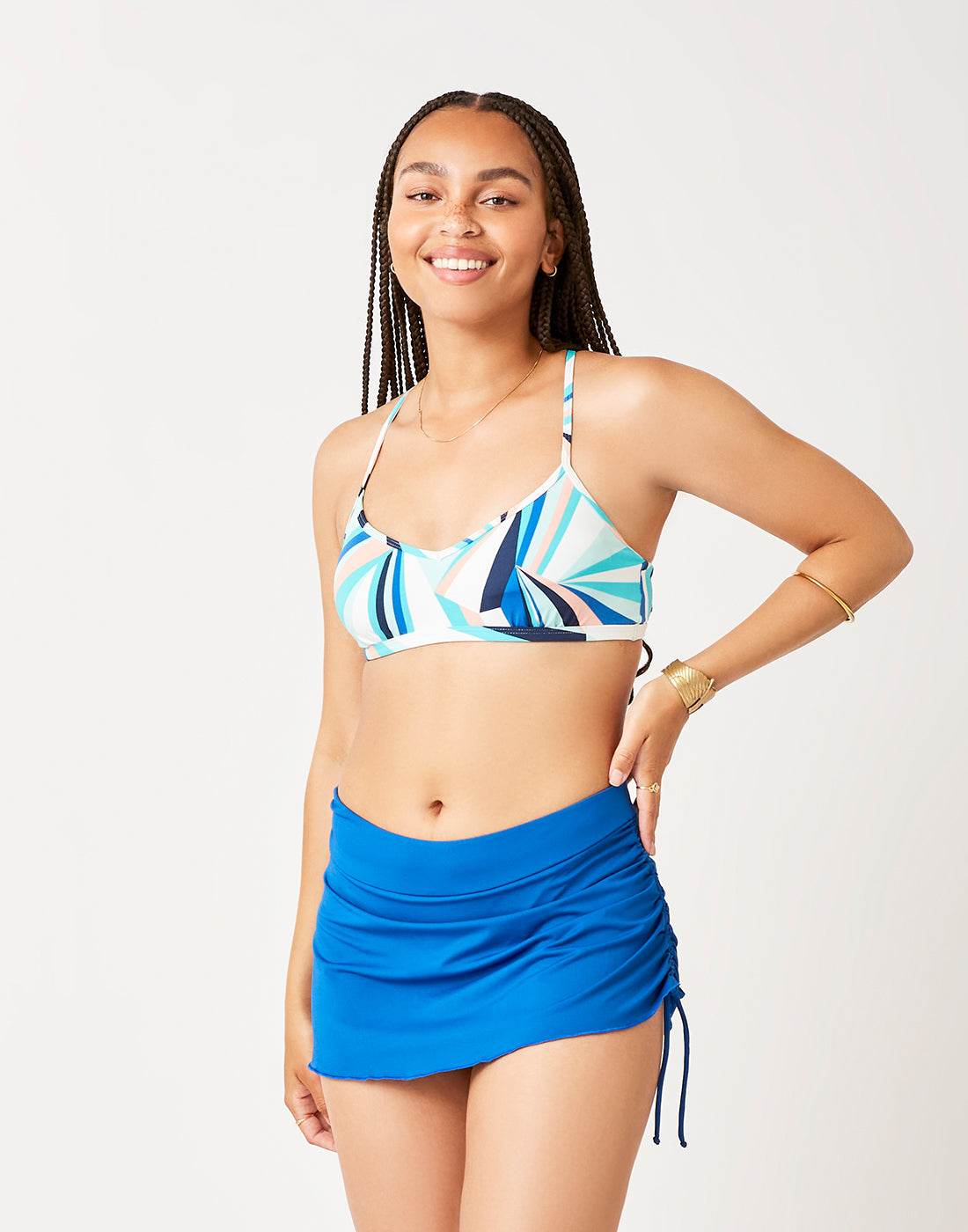
Women’s fitted swim shorts bring a close-to-the-body shape to swimwear, pairing the easy coverage of shorts with stretch designed for time in the water. Unlike loose board shorts, which leave more space around the legs, fitted styles follow the hips and thighs for a streamlined feel while swimming, paddling, or climbing back onto a dock. The silhouette can resemble bike shorts, but swim-specific fabrics and construction make the difference: everyday exercise shorts are not necessarily designed to handle repeated soaking, salt water, or pool chemicals. Fitted swim shorts work as swim bottoms with a bikini top, tankini, or rash guard, creating a combination that suits the activity and feels like an expression of personal style. Shorter inseams offer coverage around the seat and upper thigh with less fabric along the leg, while longer cuts extend farther down the thigh and may help reduce skin-to-skin rubbing. Actual coverage depends on both the inseam and the wearer’s proportions, so the same length can land differently on different bodies. Neither cut needs to be reserved for a particular shape or age; comfort and the day’s plans are better starting points. A few laps before breakfast, a paddle across a quiet inlet, or an afternoon keeping up with kids in the shallows each puts a slightly different spin on the same practical silhouette. During the cooler months, fitted swim bottoms still have a place in an indoor pool routine or a suitcase headed somewhere with palm trees. Their appeal is straightforward: a little more coverage, a secure feeling, and freedom to move without a loose hem floating around. For time beyond the water,
Women's Fitted Shorts offer a related silhouette, though fabric and intended use should always distinguish everyday shorts from swimwear. The best fit is the one that leaves attention free for the next stroke, the next wave, or the excellent snack waiting on the beach blanket.
Fabric plays a large part in how fitted swim shorts feel once the water reaches the waistband. Swimwear commonly uses nylon or polyester blended with elastane, also called spandex, to balance a smooth surface with stretch and recovery. Four-way stretch describes fabric that stretches across both its length and width, useful when crouching beside a tide pool, taking a long swim stroke, or stepping onto a paddleboard. Recovery matters just as much as stretch: fabric should return toward its original shape rather than remain stretched out after wear. A snug silhouette does not automatically provide compression, and a supportive feel should not require squeezing into a smaller size. Recycled fibers may be part of a swim fabric blend; the fiber content identifies what is used, while construction and care also influence how long the shorts last. Quick-drying fabrics can make the transition from a swim to a shaded lunch more comfortable, although drying speed varies with fabric thickness, lining, humidity, and airflow. A lined pair may feel more substantial, but additional layers can also take longer to dry. Opaque coverage deserves attention, particularly where fabric stretches across the seat, and lining details can help clarify the construction. For regular pool use, an explicit chlorine-resistance claim is more useful than assuming every swim fabric tolerates frequent exposure equally well. Similarly, extra thigh coverage is not the same as a tested ultraviolet protection rating. Where sun protection matters, check for a stated rating and pair swimwear with sunscreen on exposed skin and other protective layers as appropriate. Seams and finishing deserve a look, too. Smooth, low-profile seams may help reduce friction during repetitive motion, while neatly finished edges and resilient stitching contribute to durability. No fabric detail does every job, so the most useful combination is one suited to the places the shorts will actually go, whether that means saltwater dips, pool lanes, or leisurely lake swims.
Fit brings all those details together. A higher rise places the waistband farther up the torso, while a mid-rise cut sits lower; neither is automatically more secure, because waistband construction and body proportions influence how a pair stays put. A broad waistband can distribute pressure across a wider area, and an adjustable drawcord, when included, allows some fine-tuning. The waist should feel comfortably anchored without digging in, and the leg openings should lie close without leaving deep pressure marks. Using waist and hip measurements alongside a size chart is more reliable than treating a familiar clothing size as universal. Sitting, bending, and taking a few full steps during a try-on can reveal pulling at the seat, a rolling waistband, or hems that creep upward. Those small distractions tend to feel larger halfway through an active afternoon. Longer inseams may help with rubbing where the thighs meet, but seams, fit, and wet fabric also affect comfort; more length alone is not a guarantee. Pockets can be useful for small essentials on shore, though an open pocket is not secure storage for swimming, and a fabric pocket should never be assumed waterproof. After a day in the water, a prompt rinse in cool fresh water helps remove salt, sand, and pool residue. Follow the care label for washing, use a gentle detergent where directed, and avoid harsh treatment that can weaken stretch fibers. Gently pressing out excess water rather than twisting the fabric helps preserve shape, while drying away from direct heat limits unnecessary wear. Leaving wet swimwear bundled in a tote overnight is an easy habit to skip; give it space to dry before putting it away. Rough pool edges and abrasive surfaces can catch or scuff fabric, so a towel under the seat is a simple precaution. For a gift, fitted swim shorts make the most sense when the recipient’s size, preferred coverage, and water activities are familiar. Whether chosen for a regular swimmer or a friend who turns every getaway into a beach day, lasting comfort comes from thoughtful fit and care, not from asking a body to suit the shorts.