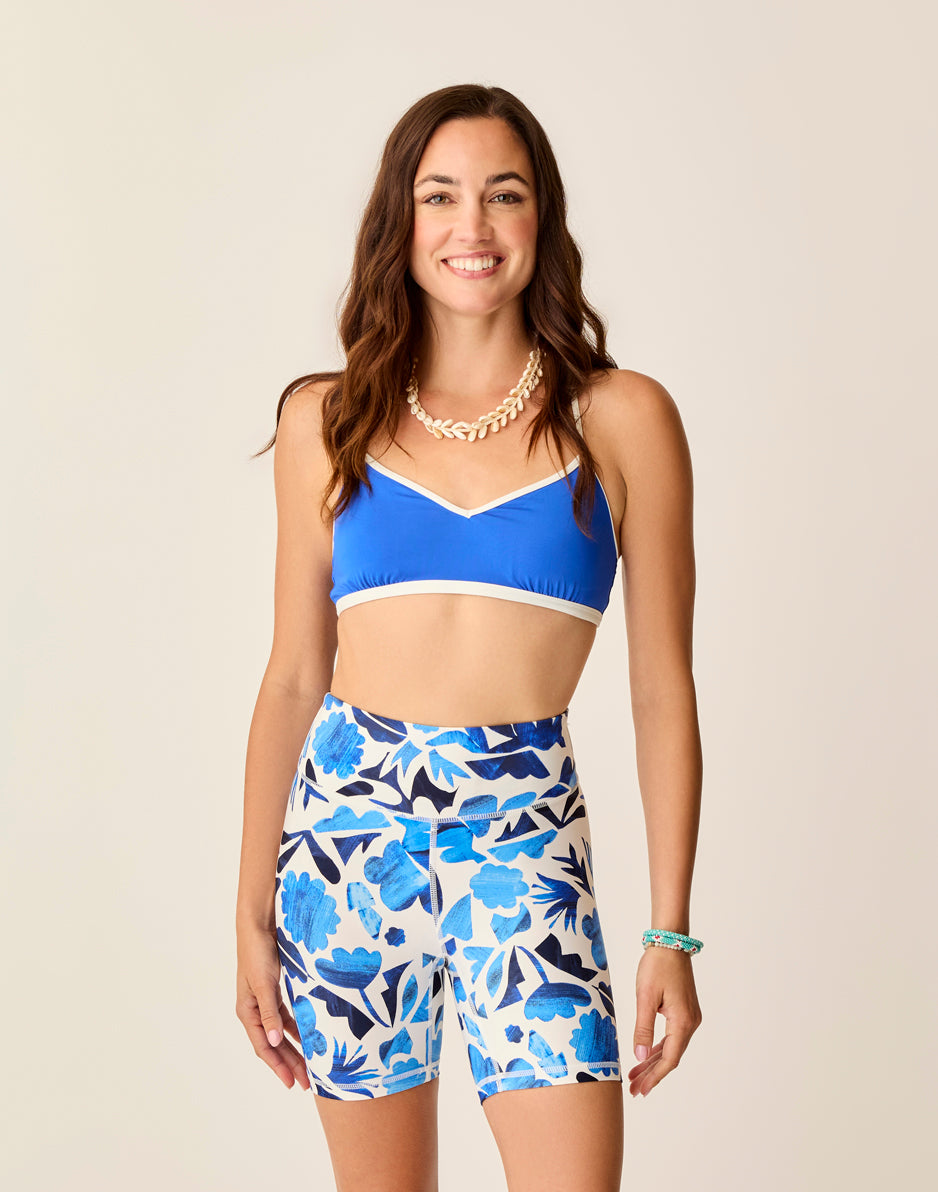
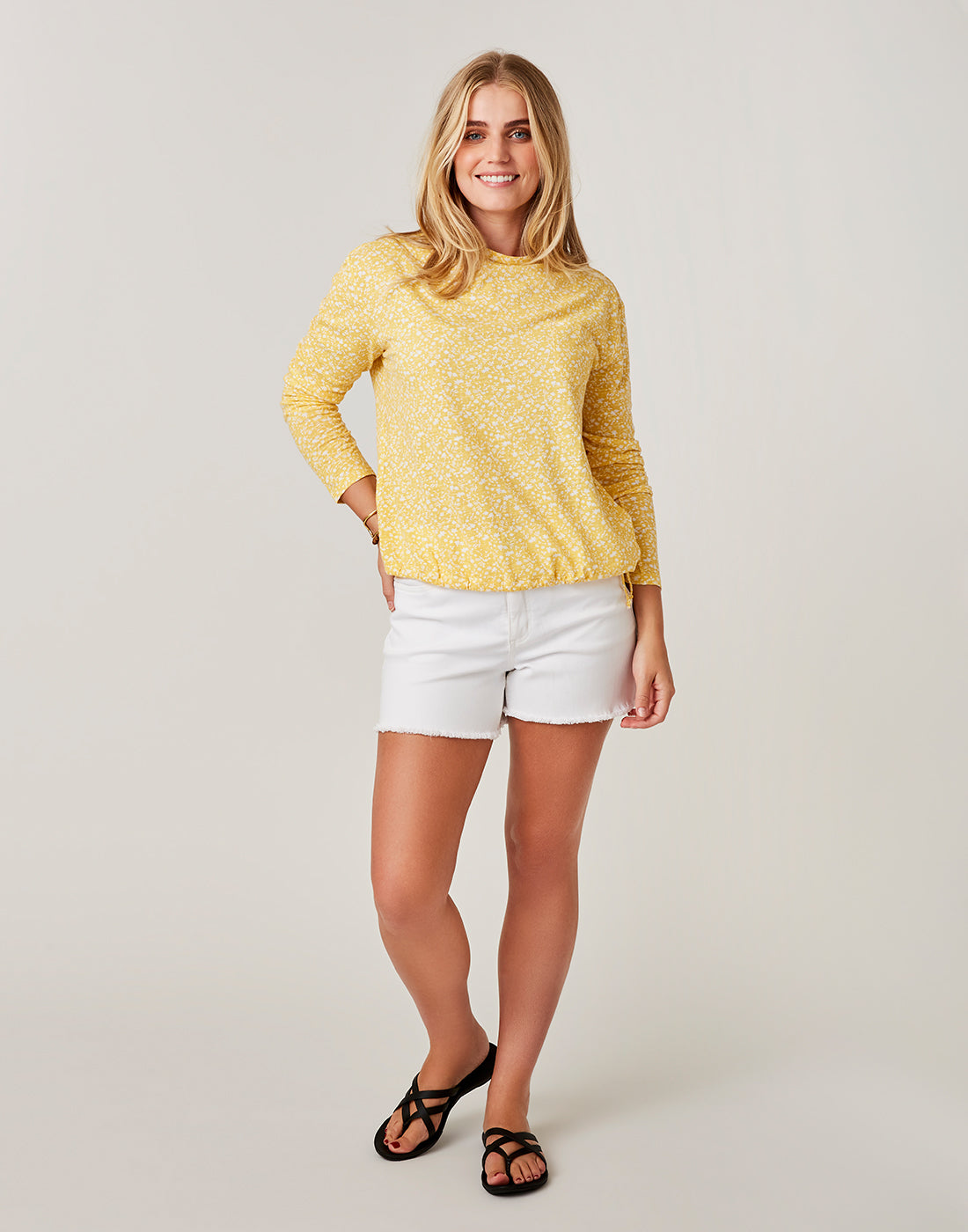
Women’s high rise active shorts bring a little extra ease to days that move between a workout, a walk, and whatever comes after. Their defining feature is a waistband designed to sit at or near the natural waist, with some higher cuts reaching above the belly button. That higher placement can create a secure, held-in feel without requiring a tight fit through the legs. The category spans close-fitting stretch shorts for studio sessions and strength training, along with relaxed athletic silhouettes that leave more room for a long stride or a winding trail. Both have a place in an active closet; the difference comes down to how the fabric follows the body and how much coverage feels comfortable. A fitted leg can keep excess fabric out of the way during floor exercises, while a looser opening lets air circulate during a brisk walk. Inseam length matters just as much as rise. Shorter cuts leave the legs freer, while longer cuts provide more coverage through seated stretches, cycling motions, and everyday bending. A longer fitted inseam may also help reduce skin-to-skin rubbing at the inner thighs, although comfort depends on the fabric, seams, and individual fit. High-waisted workout shorts pair easily with a sports bra, a relaxed tee, or a lightweight layer tied around the waist after a warm-up. During cooler months, they can stay in rotation for indoor workouts or travel to milder weather, with a sweatshirt making the transition from studio to coffee stop feel effortless. Within the broader world of
Women's High Rise Shorts, active styles put particular emphasis on freedom of motion and comfort during exercise. The appeal is practical rather than complicated: coverage where it feels good, room to move where it matters, and a shape that fits naturally into a day with more than one destination.
Fabric gives high rise athletic shorts much of their personality, from smooth and lightly supportive to airy and barely there. Nylon and polyester blends are common in activewear because they can offer durability at a light weight, while added elastane or spandex supplies stretch. Four-way stretch describes fabric that stretches across both its length and width, a useful quality for lunges, squats, and reaching into a deep side stretch. Stretch recovery is equally important: fabric should return toward its original shape rather than stay loose at the seat or leg openings after activity. Moisture-wicking and quick-drying properties are related but not identical. Wicking moves moisture through the fabric away from the skin, while quick drying describes how readily that moisture evaporates. Neither feature should be assumed from fiber content alone; the textile’s construction and finish also play a role. Breathability helps heat and moisture escape, making it especially relevant for warm studios and sustained exercise. Cotton-rich fabrics can feel soft and familiar for easy walks, stretching, and downtime, though they generally hold moisture longer than performance-oriented synthetics. Where recycled fibers are specified, they offer another material consideration alongside comfort, construction, and expected use. Waistband design can make a noticeable difference, too. A broad, flat band distributes contact over a larger area, while an adjustable drawcord can help fine-tune the fit on styles that include one. Gentle support should still allow a full breath and an easy seated position. A waistband that pinches, folds, or slips may signal a mismatch in size, rise, or cut rather than a need for more compression. Smooth seams and thoughtful seam placement can reduce friction, especially during repetitive motion. Pockets add everyday usefulness when their placement suits the activity: a close-fitting pocket may limit bouncing, while a secure closure can keep a key contained. Even a well-placed pocket can change the feel of lightweight shorts when loaded with a phone, so carrying needs belong in the fit conversation.
The most comfortable women’s high rise active shorts suit the way their wearer actually spends time, whether that means an early stretch on the living room rug, a strength session, or a coastal path with a few sandy detours. A high rise alone does not guarantee that shorts will stay put; waist and hip proportions, fabric recovery, leg shape, and the amount of motion all influence the result. Size charts are a useful starting point, with waist and hip measurements offering more clarity than a familiar size label alone. A few ordinary motions reveal what standing still cannot: sitting, stepping up, bending forward, and taking a deep squat can show whether the waistband stays comfortable and the leg openings allow enough room. For fitted styles, fabric should provide the desired coverage when stretched, not only when relaxed. For loose styles, an inner liner, if included, can affect both coverage and comfort, particularly during floor work. Softness is welcome, but a fabric that feels plush in the hand may feel warmer during a vigorous session than a lighter woven option. Intended use matters near the water as well. Athletic shorts are not automatically swimwear, and repeated exposure to chlorine or salt water may be unsuitable unless their care and use information says otherwise. Lasting comfort also depends on everyday care. Following the sewn-in care label takes priority, with cool washing and lower heat often appropriate for stretch activewear when permitted. Fabric softeners can interfere with some moisture-management finishes, while excessive dryer heat can shorten the useful life of elastic fibers. Letting damp shorts dry rather than leaving them bundled in a gym bag helps keep them fresh between washes. Rough surfaces, exposed hook-and-loop fasteners, and repeated abrasion can snag or wear lightweight fabrics, so a little care goes a long way. For gifting, a known size and a familiar preference for fitted or relaxed legs make the choice more personal. The best match feels ready for real life: comfortable through the last stretch, easy on the walk home, and equally welcome when the day’s ambitious plan becomes a slow stroll instead.