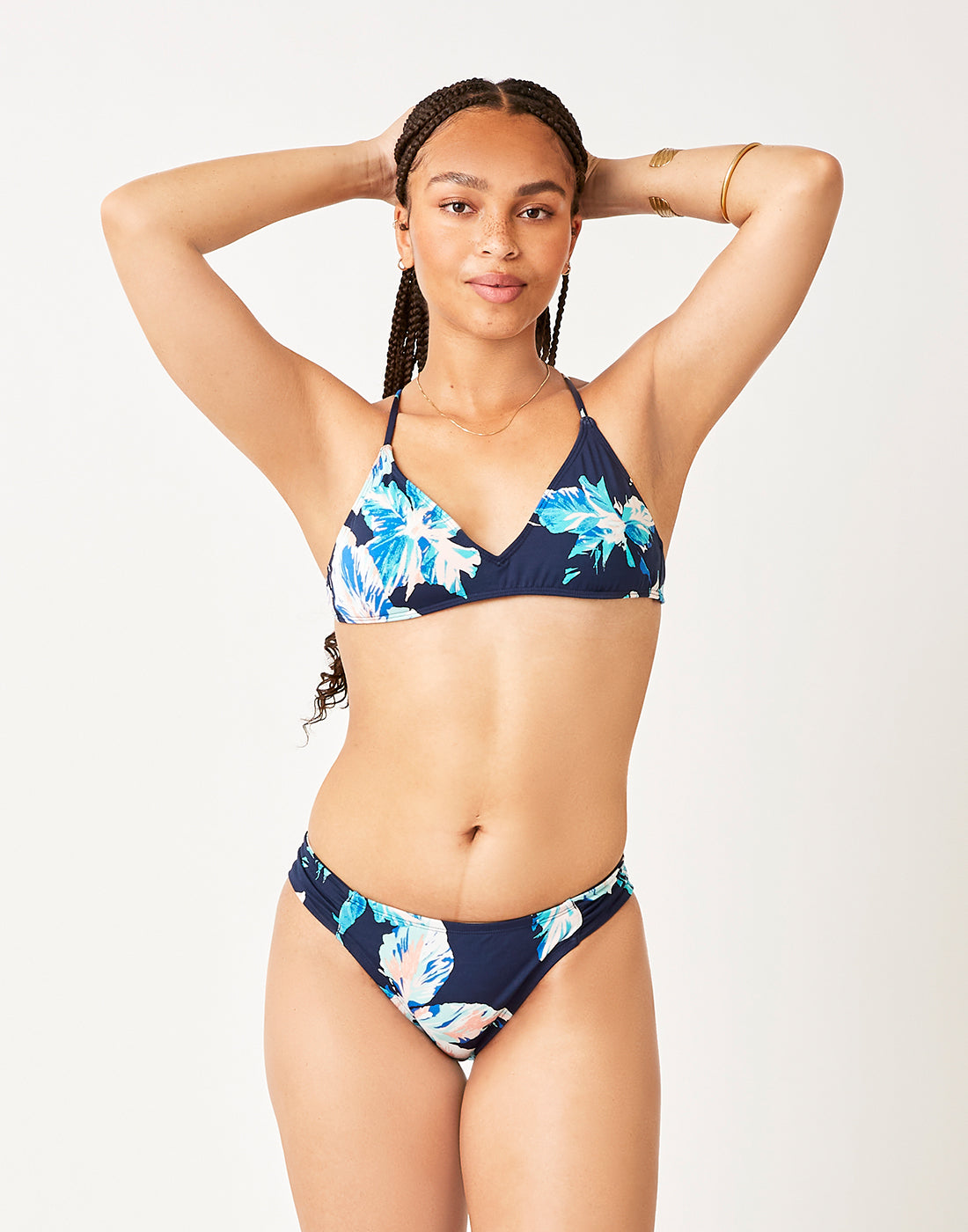
Women’s low-rise bikini bottoms sit below the natural waist, usually resting across the hips for a relaxed, open-waisted silhouette. Their defining feature is the position of the waistband, not the amount of coverage: a low-rise bottom can have a cheeky back, moderate coverage, or a fuller seat. That distinction leaves plenty of room to find a shape that feels like a natural fit, whether the plan involves swimming laps, stretching out on a beach towel, or taking the scenic route from the pool to lunch. Classic brief shapes offer a familiar outline, while narrow sides create a lighter look and wider side panels provide more fabric across the hips. Adjustable side ties let the waistband loosen or tighten slightly, and fixed-side styles keep the silhouette simple without knots or trailing strings. Ruched details add texture and can influence how fabric gathers across the back, though ruching alone does not indicate how much coverage a bottom provides. Leg openings make a difference, too. A higher-cut leg exposes more of the upper thigh, while a lower-cut opening creates a different line around the hip; either can appear alongside a low waistband. For anyone drawn to
stylish low-rise bikini bottoms, these small construction choices give a familiar swim shape its personality. A smooth, unfussy bottom can balance a top with textured fabric or an interesting neckline, while a printed bottom adds character beside a solid swim top. Matching separates create a cohesive look, but a shared color is often enough to make mixed pieces feel thoughtfully paired. The appeal is easy versatility rather than a single prescribed look. Low-rise swimwear suits anyone who prefers fabric to sit lower on the torso, enjoys the feel of a two-piece, or wants a waistband that leaves the natural waist uncovered. No particular body shape is required, and coverage is a personal preference rather than a rule to follow.
A comfortable low-rise fit feels secure across the hips without pinching at the sides or pulling down at the back. Because the waistband rests below the natural waist, hip measurements are especially useful when comparing size charts, though each style’s sizing information should remain the reference point. Choosing a smaller size does not necessarily create better hold; overstretched fabric can dig in, distort the leg openings, and make the bottom shift during movement. A larger size may feel relaxed while standing but gap when sitting or pushing away from the pool wall. The useful middle ground is fabric that lies smoothly against the body and follows movement without constant adjustment. Sitting, bending, and taking a few long steps can reveal more about comfort than a still view in the mirror. The front should provide the coverage the wearer wants, the gusset should feel comfortably positioned, and the back should stay where it feels good rather than need repeated tugging. Side ties offer some flexibility around the hips, but they do not change the overall dimensions of the front and back panels. Likewise, wider sides may feel more substantial without necessarily adding seat coverage. Intended use helps bring those details into focus. For a leisurely float or a poolside conversation that outlasts the snacks, the priority may be a soft waistband and a favorite silhouette. For regular swimming, paddleboarding, or playing in the surf, secure elastic, well-positioned leg openings, and a dependable fit deserve extra attention. Low rise alone does not determine whether a bottom is suitable for active use; construction and individual fit matter more. Pairing the bottom with a swim top chosen for the activity gives each half of the suit its own job. A bikini top keeps the two-piece silhouette open, a tankini adds torso coverage, and a rash guard offers another pairing for time on the water. Separate sizing also makes it easier to accommodate different proportions through the hips and bust without asking one size to do everything.
Materials and construction shape how low-rise bikini bottoms feel in the water and how well they hold up afterward. Swim fabrics commonly combine nylon or polyester with elastane, which adds the stretch needed to move, sit, and swim comfortably. The fiber blend is only part of the story: fabric weight, knit structure, lining, and elastic quality all influence softness, support, and shape retention. A smooth knit offers a clean surface, while ribbed or textured fabric brings subtle dimension to a solid color. Lining can add comfort and coverage, but neither a thick fabric nor a lining guarantees opacity when wet; product descriptions and fit information are useful for understanding the intended construction. Flat, neatly finished seams can help reduce friction, particularly around the leg openings, and covered elastic should feel smooth rather than sharp against the skin. For frequent pool use, an explicit chlorine-resistance claim is more meaningful than assuming every stretchy swim fabric performs the same way. Recycled fibers may be part of a fabric blend when stated in the material details, while thoughtful care helps extend the useful life of any suit. Rinsing with fresh water after swimming helps remove salt, chlorine, and other residue. Following the care label, using a gentle detergent when washing, and avoiding wringing can help protect the fabric and elastic. Drying away from direct heat and letting the bottom dry fully before putting it away are simple habits that support shape retention. Rough pool edges, textured decks, and repeated contact with abrasive surfaces can snag or wear swim fabric, so a towel beneath the seat does more than make a lounge spot comfortable. Sunscreen belongs on skin, but allowing it to settle before dressing can help limit transfer onto fabric. For travel, an extra swim bottom makes it easier to give a rinsed pair time to dry between outings. As a gift, low-rise bikini bottoms are most personal when the recipient’s size, preferred coverage, and favorite colors are already known. The best fit leaves room for swimming, lounging, and making plans without the swimsuit becoming the main event.