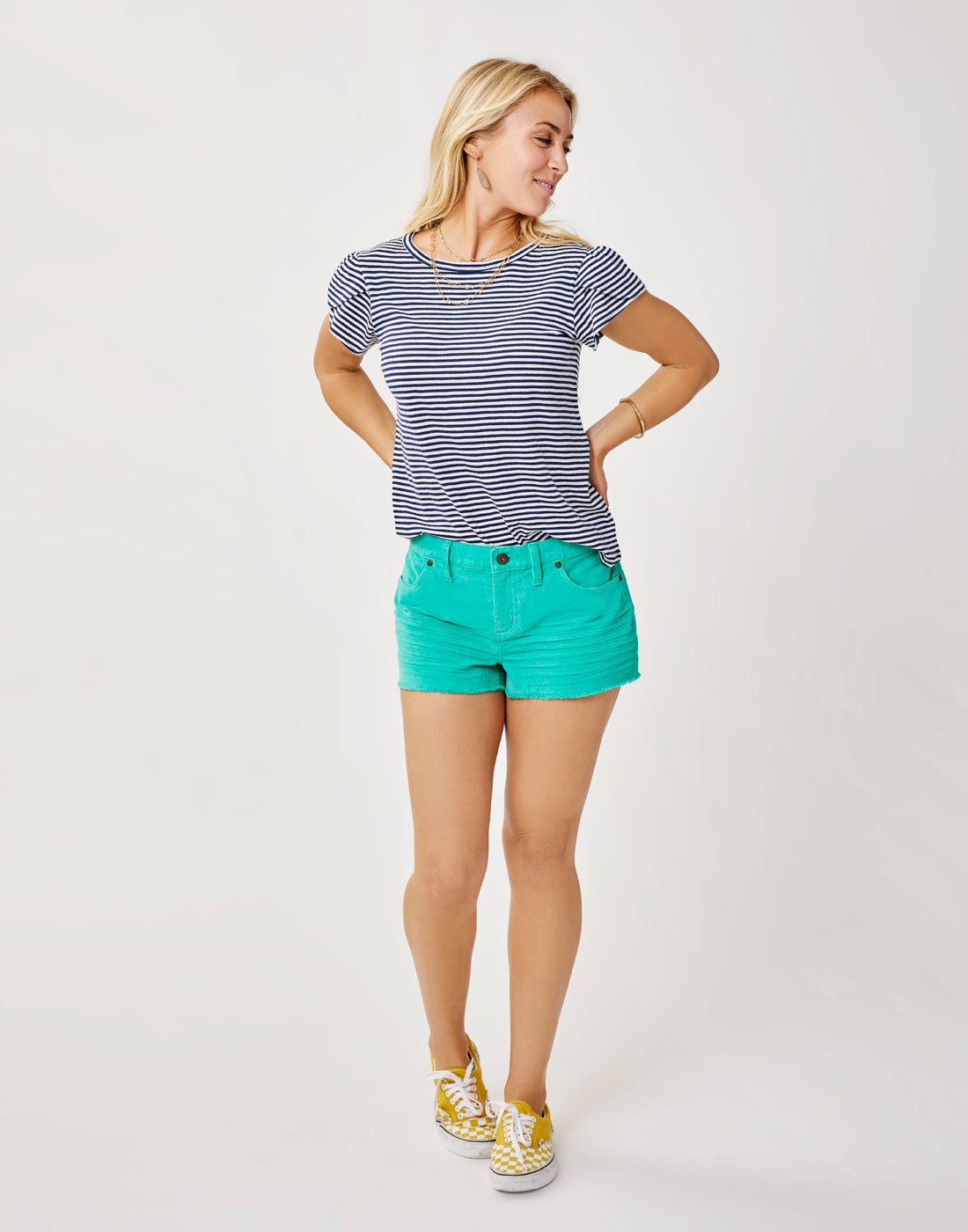
Women’s quick-dry hiking shorts are designed for active days when freedom of movement and comfortable, fast-drying fabric matter more than extra bulk. They suit everything from a familiar loop before breakfast to a winding trail with rock steps, creek crossings, and a well-earned picnic stop. Lightweight nylon or polyester blends are common choices because they generally retain less water and dry faster than cotton-rich fabrics, while a small amount of spandex or elastane adds stretch. Nylon is often chosen for its abrasion resistance, and polyester is widely used for its low moisture absorption; the finished fabric’s weave, weight, and construction also influence how it performs. A smooth, flexible fabric can feel easy against the skin without catching at the thighs every time the trail climbs. Quick-drying and moisture-wicking describe related but different functions: wicking moves perspiration across a fabric’s surface, while quick drying describes how readily that moisture evaporates. Neither term means waterproof. A water-repellent finish may help light splashes bead on the surface, but it does not make shorts suitable for keeping everything underneath dry during immersion. The most useful combination depends on the outing: a light, breathable weave for steady walking, a little extra stretch for scrambling, or a sturdier construction for frequent contact with rough surfaces. Fabric thickness alone does not tell the whole story, either. A thoughtfully woven lightweight material can balance durability with an easy drape, while a heavier fabric may feel more structured. For routes with exposed stretches, a stated sun-protection rating provides more meaningful information than fabric color or thickness alone. That protection applies only to the covered skin and does not replace protection elsewhere. These distinctions help explain what makes hiking shorts different from a pair chosen only for lounging: their appeal is in the balance of movement, moisture handling, and practical comfort.
Fit brings those fabric benefits to life. Quick-dry shorts should leave enough room through the hips, seat, and thighs for a full stride without feeling loose enough to shift with every step. Stretch helps, but it cannot make up for a cut that pulls across the front or digs in when sitting. A comfortable waistband stays in place beneath a daypack’s hip belt and feels just as agreeable on the drive to the trailhead. Flat seams, a smooth waistband interior, and a gusseted crotch, when included, can reduce bulky contact points and make stepping onto a boulder feel less like a negotiation with clothing. Inseam length is a personal choice rather than a measure of hiking ability. Shorter cuts offer an unrestricted feel, while longer cuts provide more thigh coverage and can help limit skin-to-skin rubbing. The right length also depends on body proportions, stride, and where the hem lands during movement; an inseam measurement is more useful than labels such as short or long. Trying a deep step, a squat, and a seated position reveals more about comfort than standing still in front of a mirror. Pockets deserve the same practical attention. A zippered pocket can keep a key or card secure, while a deeper side pocket may offer convenient access to a phone. Placement matters as much as capacity: a loaded pocket that swings against the thigh or sits directly beneath a pack belt can become distracting over several miles. Pocket closures do not necessarily provide water protection, so electronics still need appropriate protection near water. Streamlined storage often feels better for brisk walking, while roomier cargo-style pockets can be useful for small essentials. For longer outings, a daypack takes pressure off the shorts and keeps heavier belongings from pulling at the waistband. The goal is a fit that lets the route, rather than a slipping waist or persistent seam, hold attention.
The versatility of women’s quick-dry hiking shorts extends beyond a single trail. They can make sense for walking-heavy trips, campground mornings, nature-center visits, and days that move between an overlook and a casual lunch. A clean silhouette pairs easily with a breathable tee or a relaxed woven shirt, making a change of plans feel uncomplicated. For a broader look at the category,
Ladies Quick Dry Shorts brings the focus to easygoing versatility beyond the trail. Hiking still places particular demands on clothing, so intended use matters: frequent scrambling calls for attention to abrasion resistance, long-distance walking makes seam placement especially important, and travel rewards fabric that packs without much bulk. Quick-dry shorts can also be a thoughtful gift for someone who enjoys park walks, scenic detours, or weekends spent exploring, especially when their preferred rise, inseam, and size are already known. Those fit details are more helpful than guessing based on how active someone is. Long-term comfort also depends on care. The garment’s care label is the starting point, since stretch fibers, surface finishes, and different fabric blends do not all respond to washing and drying in the same way. Empty pockets, close zippers when directed, and remove grit that could rub against fabric in the wash. Fabric softeners can leave residues that interfere with moisture handling, and excessive dryer heat can be hard on stretch fibers or certain finishes. Air drying may be appropriate when the label allows it, with shorts opened out rather than left bundled in a bag. A snag is best handled gently rather than pulled, and loose stitching is easier to address before it becomes a larger repair. Durable construction and consistent care work together to support repeated wear. The result is clothing that earns its place through useful details: a waistband that stays comfortable, pockets that behave, and fabric ready for another stretch of trail.