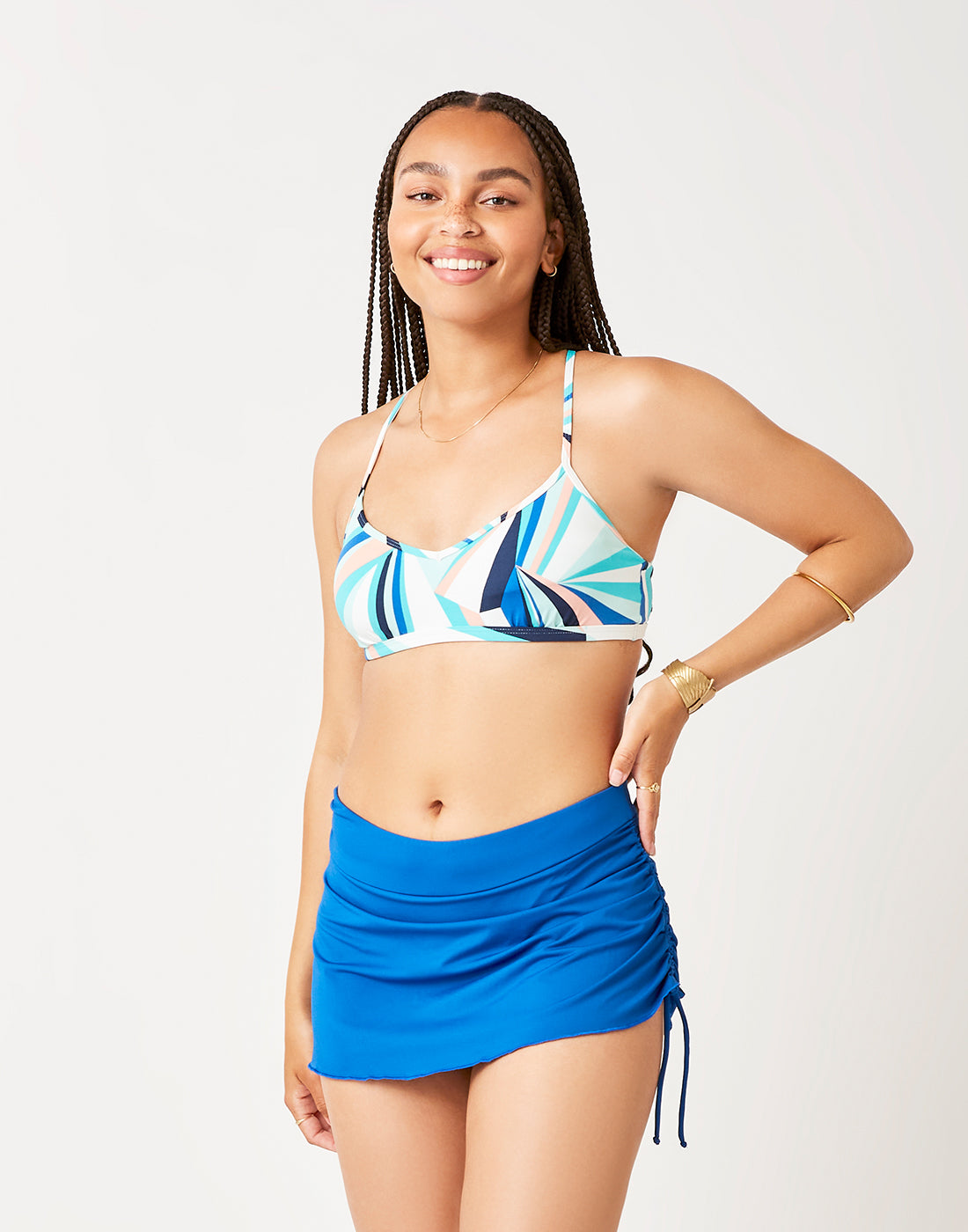
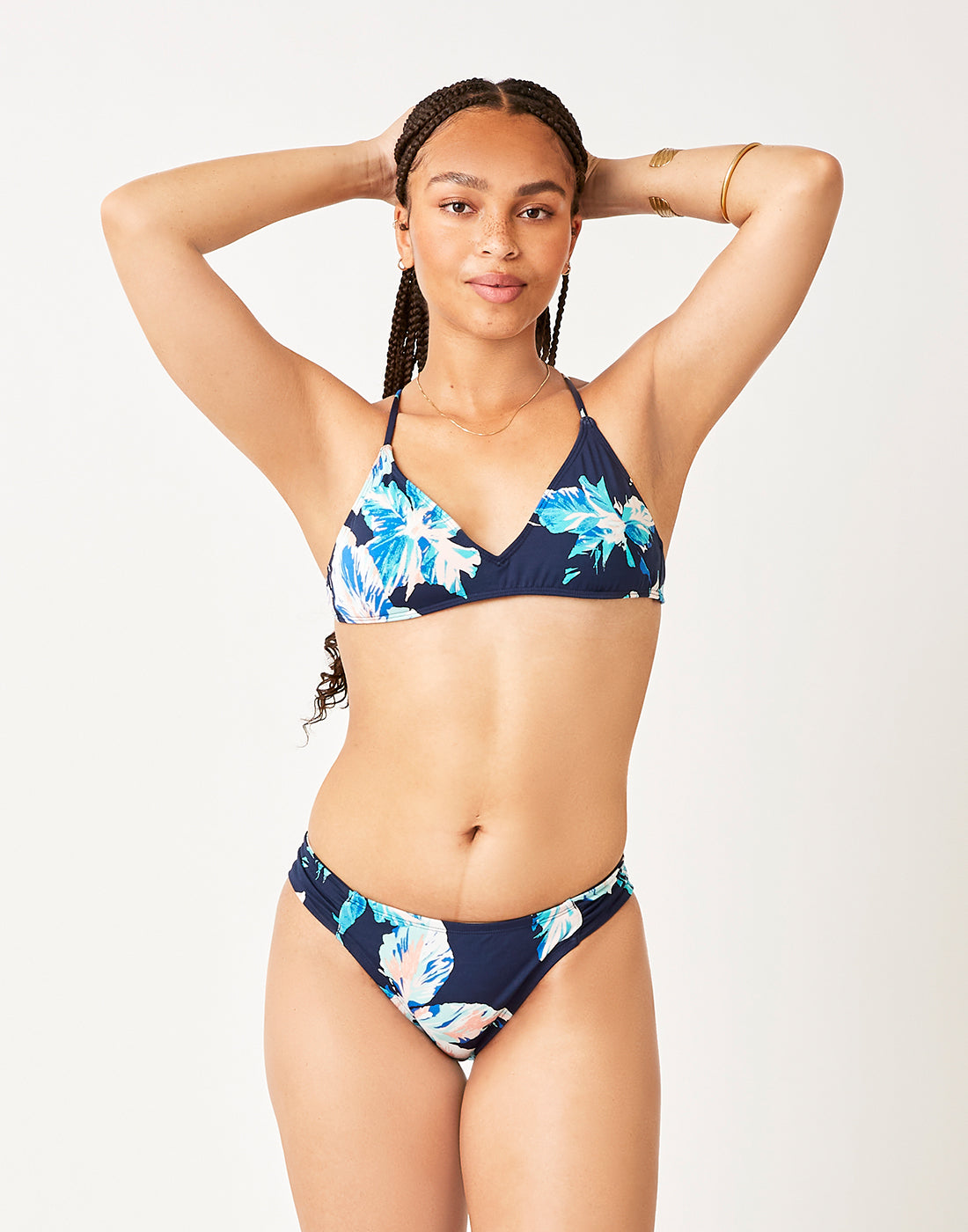
Bikini bottoms for moms bring together comfortable stretch, a secure fit, and coverage that feels right for the person wearing them. High-waisted cuts, mid-rise silhouettes, and fuller-coverage backs are popular choices for days that involve as much moving as lounging, but motherhood does not come with a required swimsuit shape. Some moms love a high rise that sits near or above the navel; others prefer a lower waistband and a little more open space through the hips. The best fit leaves room for personal style alongside the practical details of swimming, bending to pick up a dropped pool toy, or carrying a sleepy child back to a beach towel. High-waisted bikini bottoms offer more fabric across the belly, while mid-rise bottoms typically sit below the navel and can feel less enclosing through the torso. Neither rise automatically provides compression: that depends on the fabric, lining, and construction. Full rear coverage offers more coverage across the seat, while moderate coverage leaves a bit more exposed without necessarily changing the height of the waist. Leg openings matter just as much. A higher-cut leg creates a more open feel around the upper thigh, while a lower-cut opening offers additional coverage in that area. Ruched sides add texture and can help fabric follow curves, though gathering alone does not guarantee support or a stay-put fit. Broad waistbands can distribute pressure over a larger area, making them worth considering for anyone who dislikes a narrow edge pressing into the belly. Comfort around a sensitive abdomen or a healed surgical scar is individual, and a waistband that sits above or below that spot may feel better than one resting directly on it. There is no need to dress around an idea of what a mom should look like. A bikini bottom earns its place by feeling comfortable on the body wearing it and keeping pace with the day.
Fabric and construction make a meaningful difference in how bikini bottoms feel beyond the fitting room. Swim fabrics commonly blend nylon or polyester with elastane, also called spandex, to combine a smooth surface with stretch and recovery. Nylon blends often have a soft, flexible feel, while polyester is frequently used in swim fabrics designed for repeated pool use; actual resistance to chlorine depends on the full fabric blend and its treatment. Stretch helps a bottom move with the body, and recovery helps it return to shape instead of staying stretched out after a swim. A lining can add coverage and create a more substantial feel, but its thickness and placement vary. Smooth seams, evenly finished leg openings, and a waistband that lies comfortably against the skin are small details with an outsized effect when a quick dip becomes an afternoon in the water. For active use, a secure fit should feel steady rather than restrictive. Fabric that pulls sharply across the hips, edges that dig in, or a waistband that rolls repeatedly can signal that a different size or cut would be more comfortable. Loose fabric and gaps at the seat may also make a bottom feel less secure once wet. A few ordinary movements reveal more than standing still: sitting on a bench, taking a long step, and bending at the waist can show whether the coverage stays where it feels good. Size charts are useful starting points, especially when waist and hip proportions fall into different size ranges. Bodies can change through pregnancy, postpartum recovery, and everyday life, so a familiar size is not always the most comfortable choice. For frequent swimming, look for stated chlorine-resistance information rather than assuming every swim fabric performs the same way. Recycled fibers can also be part of a swim fabric blend; fiber-content details provide a clearer picture than broad sustainability language. Durability comes from the whole construction, along with how the suit is worn and cared for.
The appeal of a two-piece swimsuit is its flexibility, especially when the top and bottom need different sizes or different kinds of support. A high-waisted bottom can pair with a shorter swim top for balanced coverage, while a mid-rise cut works easily with a longer tankini silhouette. Solid colors make mixing separates straightforward, and prints bring personality without asking the rest of the outfit to work too hard. Bikini bottoms for moms can suit lap swimming, beach walks that turn into a dip, paddleboard outings, and the very specific athletic event of supervising children near water. For more movement, the fit at the waist and seat often matters more than decorative details. Adjustable side ties allow some flexibility through the hips, although fixed sides may feel simpler for anyone who prefers fewer knots to check. A swim skirt or boardshort layer can add coverage outside the water without requiring a different bikini bottom underneath; whether that extra layer feels comfortable while swimming depends on its design. For families choosing swimwear across age groups,
Bikini Bottoms For Teens offers a related place to explore, with each person's comfort and coverage preferences kept separate. The same personal approach matters when swimwear is a gift: knowing the recipient's preferred rise, size, and rear coverage is more useful than assuming all moms want the same silhouette. Once a comfortable fit is found, simple care helps preserve it. Follow the care label, rinse after exposure to pool chemicals or salt water, and wash as directed with a gentle detergent. Avoid wringing or twisting, which can strain elastic fibers; gently press out excess water instead. Drying away from direct heat helps protect stretch, and letting swimwear dry fully before storing it keeps damp fabric from sitting bundled in a bag. Rough pool edges and textured seating can catch or abrade fabric, so a towel underneath offers a useful buffer. Thoughtful fit, reliable construction, and consistent care leave more attention for the water—and less for adjusting a waistband between splashes.