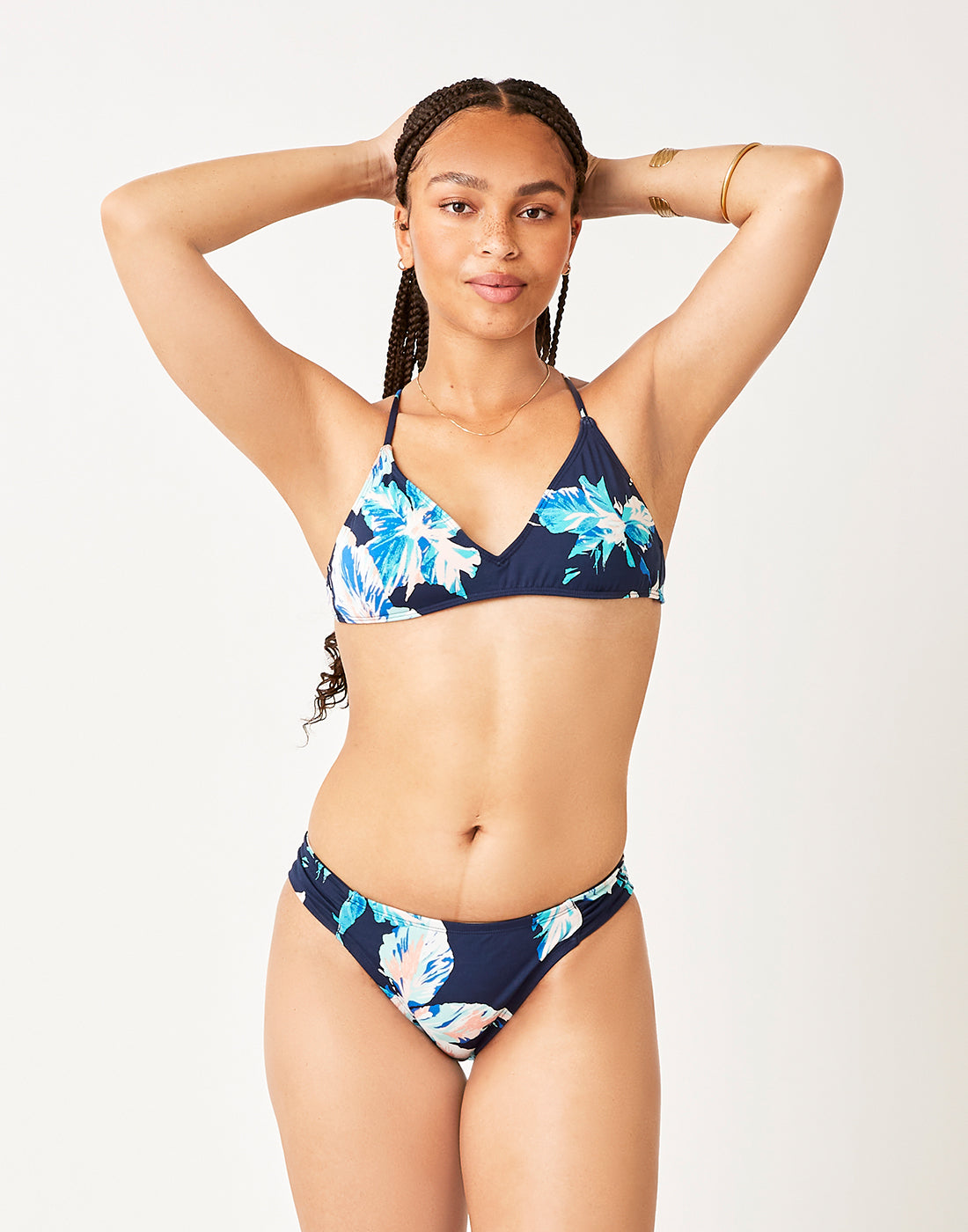
Bikini Bottoms That Stay In Place

Shopping for bikini bottoms that stay in place? Start with a snug, comfortable fit that doesn’t pinch or dig in. Browse the selection and compare each style’s sizing and coverage details to find a bottom that suits your swim plans, with less adjusting and more ease in the water.

Bikini bottoms that stay in place leave more room for the good part of getting in the water: a few extra laps, a paddle past the dock, or a wave caught just right. A secure fit is less about squeezing the body and more about finding a shape that follows it, with enough stretch to move and enough recovery to settle back into place. That balance matters when climbing a pool ladder, sitting on a paddleboard, or walking from the water to a towel without stopping to adjust a waistband. Coverage and stability are related, but they are not the same thing. A higher rise may feel reassuring around the waist, while a lower-rise silhouette can also feel secure when its proportions suit the wearer. A fuller back offers more fabric across the seat, but the placement of the leg openings and the shape of the back seam still influence how a bottom behaves in motion. A wide waistband can spread pressure across a larger area; a narrower band may feel comfortable when it sits naturally rather than cutting in or rolling. Leg openings should rest against the body without pinching, and the seat should lie smoothly rather than pulling tight or gathering in loose folds. Fit also changes with torso length, hip shape, and personal preference, so a size label alone cannot tell the whole story. Bending to pick up a beach bag or sitting cross-legged gives a more useful sense of comfort than standing perfectly still. Side ties offer a way to refine the fit, though their knots need to remain secure and their ends should not become a distraction. Fixed sides keep the silhouette simple and avoid dangling ties. Neither construction is automatically better; the right choice is the one that feels settled through the activities it is meant for. For swimmers who want less fuss and more freedom, a well-matched cut can make a small but welcome difference.

Fabric and construction give that fit its staying power. Swim fabrics commonly combine nylon or polyester with elastane, bringing together a smooth feel, flexibility, and the ability to recover after stretching. Nylon blends often feel soft and supple, while polyester blends can offer useful resistance to repeated pool exposure; performance depends on the complete fabric and its care, not one fiber alone. Elastane helps a bikini bottom flex through a kick, a squat, or the step onto a board, but a higher percentage does not automatically mean a more secure fit. Fabric weight, knit structure, lining, and the way elastic is sewn into the edges all play a part. A bottom that feels supportive without feeling rigid is often more comfortable for a long stretch of activity than one that relies on tightness alone. Lining can add a smoother feel against the skin and help the outer fabric sit evenly, while neatly finished seams reduce distracting bulk. At the waist and legs, elastic should feel consistent rather than creating one tight spot and another loose one. Wet fabric may feel different from dry fabric, which makes swim-specific construction especially relevant; a fit that already sags before entering the water is unlikely to become more reassuring afterward. Different activities also ask different things of a silhouette. Steady lap swimming favors a streamlined feel, paddleboarding involves frequent changes between sitting and standing, and playing in the surf adds moving water to the mix. Secure edges and balanced coverage matter in each setting, even when the preferred cut varies. A bikini bottom can feel easy and look beautiful without being built for every water sport, so its intended use matters alongside its appearance. Recycled nylon or polyester, when identified in the fabric details, can also be part of a considered choice. Those materials still need the same attention to fit, construction, and care as other swim fabrics. Lasting usefulness comes from the whole combination, not a single feature on a label.

Keeping a dependable fit over time is partly a matter of treating stretch fabric gently. A fresh-water rinse after swimming helps remove salt, chlorine, and other residue before they settle into the fibers. The care label remains the best reference for washing, since fabrics, linings, and finishes can have different needs. When hand washing is recommended, cool water and a mild detergent allow for a gentle clean without unnecessary agitation. Twisting or wringing can strain elastic, while pressing out excess water with a towel is a kinder option. Drying away from direct heat helps protect stretch and shape, and putting swimwear away only after it is fully dry avoids trapping moisture. Rough pool ledges, textured decks, and abrasive board surfaces can also wear on a smooth fabric, so a towel beneath the seat is a simple habit with practical value. Durability shows up in small details over repeated wears: a waistband that still recovers, seams that remain comfortable, and leg openings that continue to sit where expected. Beyond performance, the best fit leaves room for personal style. A clean-lined bottom can balance a patterned top, while a textured or printed fabric adds character to a simpler pairing. Blue Bikini Bottoms offer a natural color direction for water-inspired looks, pairing easily with crisp white, soft neutrals, or a contrasting print. Matching sets create a cohesive look, but mixing colors and silhouettes can feel equally intentional. There is no need for the top and bottom to follow the same sizing or coverage preference; each piece has its own job to do. For regular swimmers, paddleboard enthusiasts, travelers planning time by the water, and anyone who prefers a bikini with a little less adjusting, comfort is a worthwhile starting point. A secure bottom should complement the wearer’s routine rather than complicate it, leaving attention on the next lap, the next paddle stroke, or a conversation at the water’s edge instead of another tug at the waistband.

FAQs