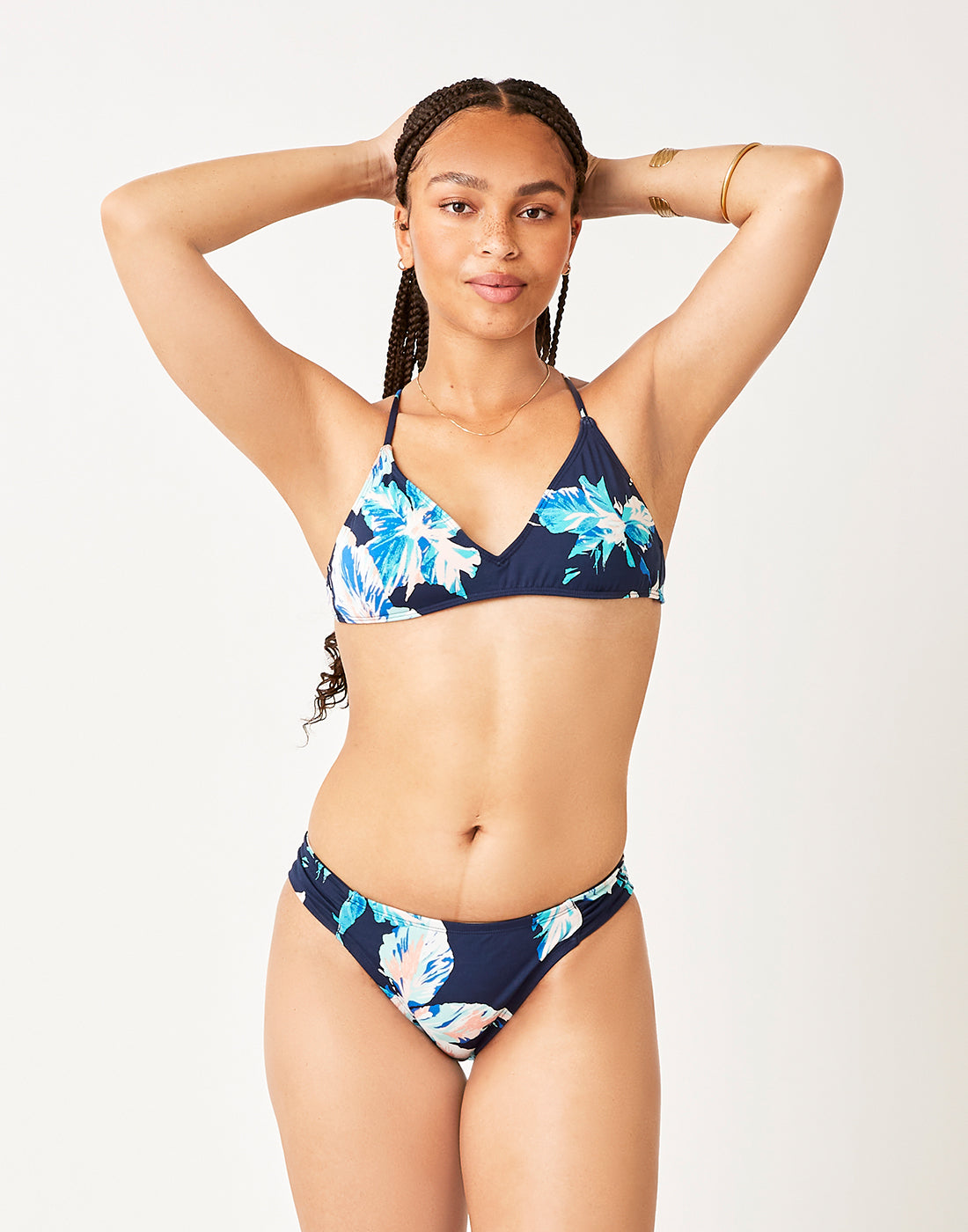
Medium coverage bikinis offer a balanced silhouette: more coverage through the seat than a cheeky cut, with a less expansive shape than full-coverage bottoms. That middle ground leaves room for personal style without making coverage the whole conversation. For Labor Day beach trips, poolside gatherings, and long afternoons that wander from a towel to the water, these bikinis bring an easygoing feel to a swim wardrobe. Medium coverage generally describes the back of a bikini bottom, not its waistband height, so the category can include different rises and leg openings. A higher waist may provide more coverage across the stomach while keeping a medium-coverage seat; a lower rise can offer a similar back shape with a different feel through the hips. Neither silhouette belongs to a particular body type. The most comfortable fit follows the body without digging at the waist, pulling across the seat, or leaving loose fabric where a closer fit is needed. Size labels are only a starting point, especially when proportions vary between the waist and hips. A waistband that sits comfortably while standing should also feel comfortable while sitting on a beach chair, bending to pick up a paddle, or climbing a pool ladder. Leg openings deserve the same attention: gentle contact feels different from tight elastic that leaves a pronounced edge. Medium coverage is also distinct from support. A bottom can offer the preferred amount of fabric without being designed for vigorous swimming or surf, and a flattering shape still needs a secure fit for its intended activity. For relaxed dips, beach walks, and time beside the water, comfort often comes down to those small details that disappear once the day gets going. The goal is a bikini that feels like part of the outing, rather than something that needs constant attention between every swim and snack break.
Fabric and construction give medium coverage bikini bottoms much of their character. Swim fabrics commonly combine nylon or polyester with elastane, bringing together a smooth surface, stretch, and recovery. Nylon blends can feel soft and supple, while polyester blends can offer useful color retention and durability; the finished fabric, dye, and construction all influence performance. Elastane helps fabric move with the body and return toward its original shape, but a higher stretch percentage does not automatically mean a better fit. The balance between flexibility and recovery matters more than stretch alone. Recycled nylon and recycled polyester are used in some swim fabrics, offering an alternative to virgin fibers when those materials are specified in the fabric details. That information gives a clearer picture than a broad sustainability claim. Lining also affects how a bikini feels against the skin and how confidently it covers, particularly once wet. A smooth lining can reduce friction, while thoughtfully finished seams help keep the edges comfortable during longer wear. Waistbands vary in feel, too: wider bands may spread pressure across a larger area, while narrower bands create a lighter visual line. Side ties allow some flexibility around the hips, although they cannot change the overall shape or amount of seat coverage. Fixed sides offer a cleaner outline with fewer knots beneath a towel or cover-up. Prints and colors add another layer of personality without changing the fundamentals of fit. A small-scale pattern can feel playful and easy to mix, while a solid shade keeps the silhouette in focus. Texture may add dimension, but its feel, drying time, and stretch can differ from a smooth knit. For swimming laps, paddling, or spending time in moving water, secure construction and activity-appropriate support matter alongside coverage. For a leisurely float or a good book by the pool, a soft waistband and comfortable seams may be the details that earn a repeat invitation.
A two-piece also makes it possible to choose fit separately above and below the waist, which is useful when the same size does not feel equally comfortable in both places. Medium coverage bottoms can pair with different
bikini tops according to the support, neckline, and overall feel desired. A simple top can keep a patterned bottom feeling relaxed, while coordinated colors create a pulled-together look without requiring an exact match. Adjustable straps and bands may help fine-tune the fit of a top, but coverage alone does not indicate bust support; construction and sizing remain important. The same practical approach carries into care. A freshwater rinse after swimming helps remove salt, chlorine, and residue before they linger in the fabric. Sunscreen belongs on skin, but excess oils and lotions can transfer to swimwear, so following the garment’s care label helps protect both the fabric and its finish. Gentle washing, when directed, and drying away from direct heat are generally kinder to stretch fibers than hot water or a tumble dryer. Twisting a wet bikini tightly can strain elastic and seams; gently pressing out water treats the fabric more carefully. Rough pool edges, textured decking, and repeated contact with abrasive surfaces can also cause wear, making a towel a useful buffer beneath a seat. Letting swimwear dry fully before putting it away helps keep it fresh for the next outing, whether that means a lap swim, a coastal getaway, or another Labor Day gathering. For gifting, a bikini is most personal when the recipient’s preferred rise, coverage, and separate top and bottom sizes are already familiar. Comfort is individual, and thoughtful fit matters more than guessing from appearance. With the right proportions, suitable fabric, and consistent care, medium coverage bikinis can become dependable favorites for days built around the water, with enough versatility to feel at home beside a pool or along a sandy shoreline.