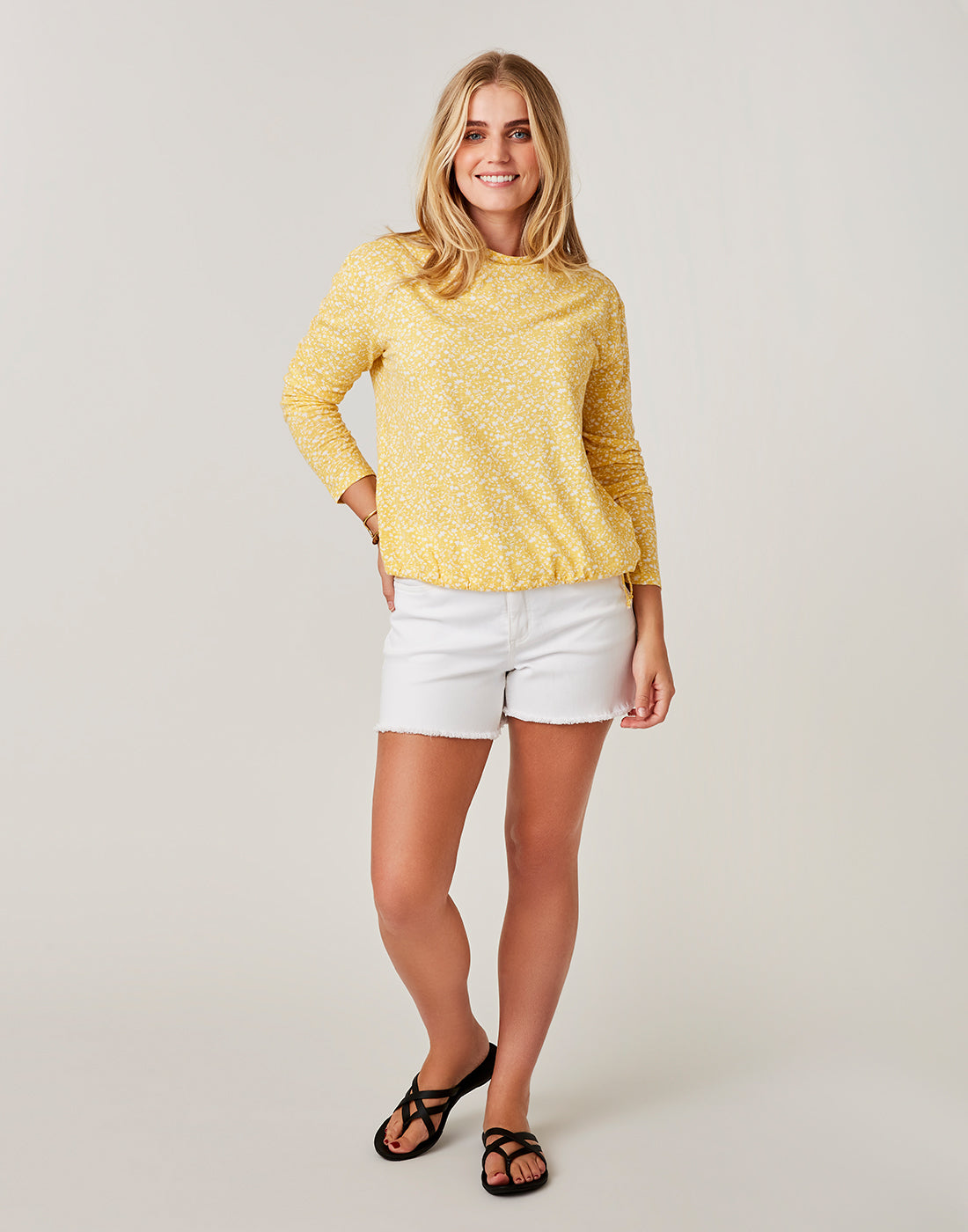
Longer denim shorts bring the familiar character of jeans to a silhouette with a little more leg coverage and plenty of room for personal style. Often called long jean shorts, longline denim shorts, or Bermuda denim shorts, these styles commonly have inseams around 8 to 11 inches, though some extend farther toward or below the knee. Bermuda typically describes a near-knee length, while “jorts” is a broader, casual name for jean shorts of any length. The actual landing point depends on both the inseam and the wearer’s height and proportions, so the same pair can look distinctly different from one person to another. That flexibility is part of their appeal: a straight leg can feel clean and understated, a relaxed cut adds easy movement, and a wider leg offers a draped shape that looks right at home with a simple tank and canvas sneakers. Longer denim shorts work especially well for anyone who likes the texture and everyday usefulness of denim without a full-length leg or a higher hem. Think browsing a neighborhood bookstore, settling into a picnic blanket, or taking the scenic route between a coffee stop and the farmers market. Extra length can also create more coverage while sitting, although comfort depends as much on the leg opening and rise as it does on the hem. A finished edge gives the silhouette a neat outline; a raw edge keeps things a little undone. Neither needs much fuss to feel intentional. Light indigo often has a lived-in character, deeper blue creates a more defined look, and washed black offers another versatile foundation. For a different proportion,
Short Denim Shorts offer a higher hemline within the same easygoing denim family. The appeal of a longer cut is its balance: enough structure to build an outfit around, enough ease to keep the day from revolving around the outfit.
Fabric and fit shape that balance more than any single length measurement. Denim made entirely from cotton generally has a more structured feel at first and may soften and relax with wear, while blends containing a small amount of elastane can add stretch for sitting, bending, and moving around. Stretch does not automatically mean a close fit, and rigid denim does not have to feel restrictive; the pattern, fabric weight, and amount of room through the hips and thighs all matter. Lighter-weight denim can feel more fluid, while heavier fabric tends to hold a distinct shape. Organic cotton is another material to look for when the fiber source matters, with the fabric label providing the clearest picture of what a garment contains. Across these materials, a comfortable waistband should sit securely without digging in, and the seat should allow movement without pulling at the pockets or seams. A high rise sits farther up the torso and pairs naturally with a tucked tee or cropped shirt; a mid-rise silhouette sits lower and can leave more space between the waistband and rib cage. Neither rise belongs to a particular body type. The best match is the one that feels good through an ordinary day, including the part spent in a car seat or curled up on a couch. Inseam measurements are most useful alongside waist, hip, and rise measurements, rather than as a stand-alone promise of fit. Comparing those details with a comfortable pair already in the closet gives a more useful reference than relying on a size label alone. With longer jean shorts, a little room at the lower thigh can help the hem move freely instead of catching with each step. A cuff changes both the length and the visual weight of that edge, while an uncuffed leg keeps the line uninterrupted. Practical details deserve attention, too: pocket depth, a smoothly working zipper, and belt loops that accommodate a favorite belt all contribute to denim that earns repeat wear.
Styling longer denim shorts can be pleasantly uncomplicated, with the longer hem providing a useful counterpoint to different tops and shoes. A roomy pair with a closer-fitting ribbed tank lets the leg shape stand out, while a straight-cut pair and a loose button-front shirt create an easy, unforced outline. A partial tuck can define the waist without making the whole outfit feel buttoned up. Flat sandals keep the look relaxed, low-profile sneakers suit days spent exploring on foot, and loafers add a little polish for a casual lunch or gallery visit. These are everyday shorts rather than technical activewear, so flexibility and coverage are helpful for casual movement but do not replace the specialized fabric or construction used for swimming or demanding exercise. For travel, denim’s ability to work with several familiar tops makes longer shorts a useful part of a small, thoughtfully packed wardrobe. They can also make a personal gift for someone who already enjoys denim, especially when their preferred rise, inseam, and measurements are known. Longevity starts with fabric and construction, then continues with care. Even stitching, secure pocket corners, and well-attached hardware are useful details to notice, particularly in areas that receive frequent tension. The care label should always set the routine, since fiber blends, finishes, and dyes can respond differently to washing. When the label allows, turning denim inside out and washing in cold water with similar colors can help limit fading and surface abrasion. Washing when needed rather than automatically after every brief wear can also reduce unnecessary laundering. Air-drying, if recommended, avoids the heat that can contribute to shrinkage or affect stretch fibers. Dark indigo may transfer color, especially early on, so any dye-transfer warnings are worth following before pairing it with pale upholstery or accessories. Raw hems naturally develop more fraying, while finished hems tend to keep a cleaner edge. Small repairs made before a loose seam or worn pocket becomes a bigger problem help extend a pair’s useful life. With a comfortable cut and thoughtful care, longer denim shorts can become the familiar pair reached for without a second thought—ready for a full itinerary or a day with very little on the list.